
Remembering a memorable theatre experience that opened (now, yikes) EIGHT years ago tonight. I wanted to write an “update” to the thoughts here, and might do so in two days, which was the closing performance in 2006.
The shadow of the pearl earring
 This weekend I had the opportunity to see current cinematic work from onetime costars Colin Firth and Scarlett Johansson (again) – pictured at left while they were promoting their film Girl with a Pearl Earring in 2003, with Johansson looking noticeably younger – she was only 19 at the time!
While I saw Johansson’s latest film Under The Skin first, followed by Gambit with Firth, I’ll discuss them in opposite order, as I feel there is more to say about Under The Skin.
So, Gambit. Umm… not quite sure why I caught this one, aside from it being one of three films that were all showing at the Birmingham 8 last night that I was interested in, and I arrived too late for the other two…so I found myself in Cinema Two sitting down for a British comedy, written by the Coen Brothers.
Firth, who seems to have had a case of “I’ve won the Oscar, now what?/how do I live up to these high expectations?” (IMO) over the past few years, stars as Harry Deen, a meek art curator in London who, with an elder colleague (Tom Courtneay) comes up with a high – concept scheme to dupe his boss (Alan Rickman) into believing a piece of fake art is real. They decide that their plan will have to work with the cooperation of a frothy Texas belle (Cameron Diaz…) who comes to London after their initial legwork – and the stage is set from there. Among the featured actors, the film also includes supporting work from Stanley Tucci, doing a slight variation on his Devil Wears Prada character that generated a career renaissance, several Japanese actors, and a bizarre cameo from veteran actress Cloris Leachman.
Given this level of talent, why is this film receiving a tiny US release 18 months after it premiered in the UK? I can’t give specific reasons here, but I’m sure that the film did not turn out the way the producers might have been hoping for. It seems an oddly difficult sell, in that it’s supposed to take place in the modern era but clearly wears its 1960s origins (from the original movie) on its sleeve, and Diaz and Firth don’t really gel well as an onscreen couple.
To confound matters further, Firth’s “good guy” plot proves to be less interesting than the angle afforded to Rickman’s character, and Rickman chews up the screen in a portrayal not that far away from his real self, based on how I observed him on one memorable instance at a London theatre in 2004, which would be a great blog entry sometime.
Once her character is allowed to calm down, Diaz acquits herself solidly, though I found it hard to shake the seeming incongruity of seeing her very American presence alongside two very British actors.
Everything comes to a head in the film’s best sequence, an extended interlude at London’s Savoy Hotel (where I once attended a terrible yet oddly memorable theatre performance that would also be worth a blog entry) where all the characters collide and engage in the most heightened forms of physical and situational comedy. British actress Selina Cadell, who taught some of my classmates in our London theatre acting program, also appears in this part of the film.
I haven’t mentioned the Coen brothers contributing to the script – and they are the sole credited screenwriters – and I guess I felt that the dialogue was sharp, but not stupendous, and especially with their high profile involvement I wonder why they are not saying more about the project.
This may well be a case of more intrigue existing behind the scenes than what the audience sees in the finished product. I’d say it’s highly likely that the film will quickly appear in DVD bins as if it just floated there. But the film’s Wikipedia page gives some insight into its troubled production history, and while the actors probably won’t say much (if anything) about it, I’m sure it will take its place as a curious career anomaly for Firth, Diaz and Rickman.
_____________
I think I’ll save a post on Under the Skin until tomorrow….
Popcorn season returns but the candy is still present
I returned to the Michigan Theatre this evening to catch Annette Bening (who defines selectivity in her screen roles) and Ed Harris (who is a hard working actor and manages to project commitment into every part) in a new film called The Face of Love. It was great to see those two pros working together (had they appeared onscreen together before?) but the film had its pros and cons, and was somewhat overwhelmed by a larger gloss of an ultra contemporary Los Angeles/Southern Pacific Coast setting.
Bening stars as Nikki, an LA-based “house dresser” (or something like that – we only get one scene to see what she does for work…) who has lost her husband of many years (Harris) in an ocean accident during an anniversary trip to Mexico. The film flashes forward several years, and, by chance, Nikki encounters a new man, Tom (also Harris) who, naturally, looks exactly like her late husband. Nikki puts on her sleuthing hat to find more about him, ultimately tracking him down as an art instructor at Occidental College, and the two develop a connection initially as teacher-student that quickly turns to a more romantic vein. However, Nikki choses to conceal the similarity between Tom and her deceased husband, also leading her to conceal the new man’s identity from an inquisitive neighbor (Robin Williams, of all people…) and her 20-something daughter who is in and out of the house and LA area.
 I really appreciated this film’s premise, and found that there were flashes of insight both from a psychological standpoint (how long does it take a widow or survivor to move on from loss? do they ever move on?) and a more character-based standpoint (will she tell him the truth? what are these characters doing in their self-contained Los Angeles worlds?)
But then the film missed several opportunities to take the story in a deeper or surprising direction; several reviews note that Tom looks up Nikki on the internet, but somehow fails to come across an obituary for her husband. And she actually drops a hint of the details she is leaving out in an early scene in their budding relationship — but both characters forget to follow up on it, leading to an inevitable confrontation sequence later in the film.
In fact, that sequence near the end of the film takes the characters back to the “scene of the crime/incident” in Mexico (kind of a spoiler but whatever) and at that point the film toyed with becoming a female-led version of Vertigo, with Bening doing her best impression of a more amicable and feminine Jimmy Stewart. I wish that the script had gone one step further (again) with a coda in that sequence, which presented an opportunity to make it all much more fantastical, similar to something like… Vanilla Sky or anything by Pedro Almodovar… but it went for the conventional, and then skipped ahead for an affecting though too rushed resolution to the story.
Clearly this film struck a chord with my thoughts and analysis, probably tied in with my psychology background. And despite the unevenness of the material, Bening and Harris offer committed performances (Bening more so) throughout the film. It sure was weird seeing Robin Williams in a dramatic supporting role (I can’t remember the last time I did) and his character appeared underused, as if he had more scenes but they might have been cut down. The film makes excellent use of a variety of Los Angeles locations but they veer on the edge of a modern design catalog and sometimes distract from the story.
___________________
I didn’t write about last week’s viewing of Captain America: The Winter Soldier back at the Quality 16. This film has started the summer movie season (hence my “popcorn season” post title) earlier than ever before, and has been well covered in other outlets as it continues the ongoing saga of the Marvel Universe.
So instead of offering a full review I’ll just note that I especially enjoyed the interplay between Chris Evans as the eponymous captain and Scarlett Johansson as the Black Widow. The two of them should clearly set off on their own series of movies rife with international intrigue, hot sexual tension and fearless crime fighting. I’m sure a lot of fans would line right up.

Two Days of Two Handers
I finally returned to the theatergoing life this weekend by taking in a play on Saturday and another show on Sunday afternoon, both of which were “two-handers”, only starring two actors, just talking with each other, for an hour and a half or so. Clearly time well spent!

Saturday afternoon took me to the somewhat far afield but well regarded Willamston Theatre for their production of Frankie and Johnny in the Clair de Lune, a play that seems to be well known in the theatre canon but I had never seen performed. It was also made into a 1991 film that I recall seeing in video stores for some years afterward, though also have never seen.
This production took on a realistic look at two co-workers (I want to say “lost souls” but that seems a little too harsh) getting to know each other more intimately on a Saturday night in the New York City of 1987. We see them move through the motions of a first date, starting at the peak and going back down… and up again… and through their differing stages and perspectives of intimacy and acceptance.
As the couple, John Lepard and Suzi Regan are clearly acting pros, showcasing an easy, yet caustic rapport with each other and mostly believable roller coaster of emotions in reaction to one another. They were helped by an extremely detailed set, squeezed in to a narrow thrust/theatre-in-the-round type space, with a working refrigerator, stove top, sink and adjacent bathroom all helping to add realism to the story. Not to forget the wide range of costumes visible in a closet and artfully strewn about the floor.
While the script has dated slightly, giving the impression of a grimier and more violent NYC than exists today, along with some now-anachronisms like calling a radio station to ask for the title of a song, I felt that didn’t distract from the impact of the performance. I also felt like the actors effectively conveyed a sense of not overly dramatic, but urgent desperation in each other’s role — they want to connect with the other partner, but they might not know just how to do that.
This afternoon I walked steps from my front door to catch Performance Network‘s closing performance of Venus in Fur, a play that holds the honor of being the most-produced title at US theaters this season.
While this version didn’t feel quite as lively as it could be at times, in my opinion, it clearly showed the spark of David Ives’ writing and why the play has become so popular. Stressed out writer Thomas Novachek has completed a round of unsuccessful auditions for the new play that he’s also directing, based on a 19th century novel. As he’s getting ready to leave, in walks Vanda, who holds the same name as the play’s protagonist and quickly establishes a game of verbal cat and mouse with Thomas as she reveals more than she initially lets on.
The constant shift in balance of power – and characters not being what they seem – reminded me of a 2011 film, Certified Copy, which I promptly checked out from the Ann Arbor library and hope to revisit this week.
Actors Sebastian Gerstner and Maggie Meyer showed a deft command of the piece as they navigated the twists and turns of the plot. Meyer, in particular, seemed to be having fun with the demands of her role, requiring her to vamp it up to Noo Yawk levels at times, while building up the English/European character at other moments… and parade around in a sexy costume at the same time. I felt that Daniel C. Walker’s lighting design was another star of the show, emphasizing shadows at many instances, which added complexity to the pauses and banter of the two characters.
But I did feel like the production could have been livelier or snappier at times. I can’t put my finger on exactly what needed to be quickened, and it could be a reaction to seeing David Ives name as the writer, where he is best known for snappy comedies. I wouldn’t count this as a major fault, though, and it was clear that the simplicity of the piece – just two actors, etc – and relative modernity (a simple tale becomes more than it seems) have contributed greatly to the show’s appeal across the world.
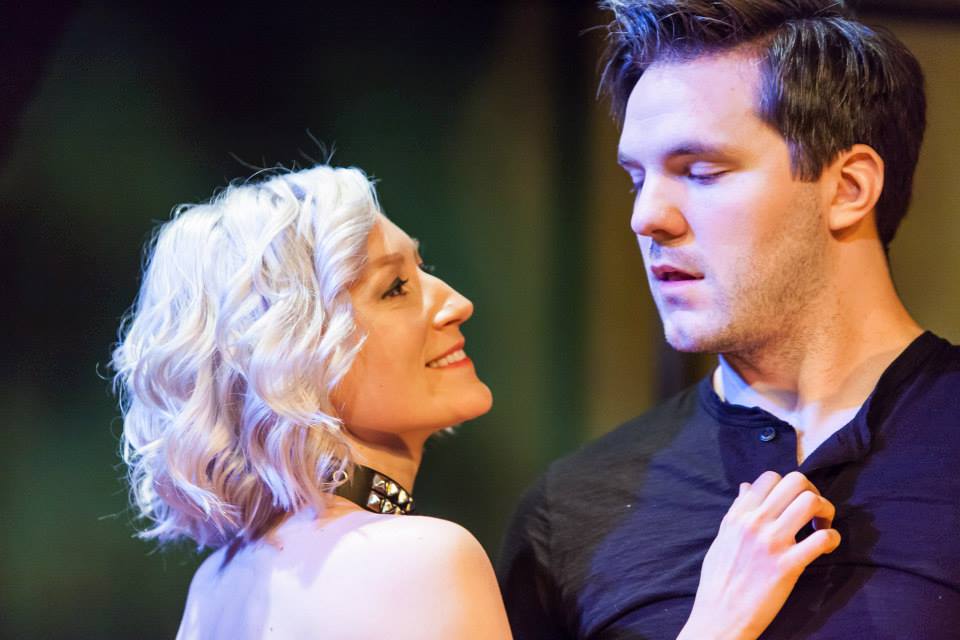
Photo from main Performance Network VENUS IN FUR page, copyright Sean Carter photography
The Muppets pass by The Grand Budapest Hotel
Attempting to round up two recent films in this entry with a certain combination of brevity and detail.
As a lifelong Muppets fan I was eager to catch their latest romp Muppets Most Wanted. While the central casting (Ricky Gervais et al) seemed to hint that it might be a lesser entry in the series, the gang has an undeniably enduring charm. And their camaraderie shined in this escapade. It borrowed liberally from The Great Muppet Caper, and seemed to veer between homage and copying plot elements of previous Muppet films, but it’s hard to fault the lovable characters for that — and they are clearly enjoying their “comeback” in popular culture.
I did feel that the writers made the central plot conceit (the rest of the gang does not recognize Kermit after he is kidnapped/swapped out for an evil frog lookalike) slightly disingenuous to the history of the series and emphasis on teamwork/working with your friends … surely those that have known Kermit so long would know other ways to recognize him? As well, the task of recognition oddly fell to the “new” character, Walter, who I feel continued to get too much screen time at the expense of some of the other more established characters… but I know those are adult-minded criticisms for a film designed for a younger audience.
It seems that the film also lacked the transcending/moving/timeless elements of the Muppets, such as the iconic Rainbow Connection, countless scenes from the Great Muppet Caper (my personal favorite of the films) and the arc of the gang conquering Broadway in The Muppets Take Manhattan, not to forget the numerous guests and gags that came fast and furious during The Muppet Show days. While I ultimately enjoyed the film (and it was a great payoff for an exceedingly stressful Wednesday), I’m having a hard time remembering key standout moments as I write this commentary 10 days later.
I decided that today would bring a visit to The Grand Budapest Hotel, the current art house film of choice from inimitable (and well on his way to becoming – if not there already) iconic filmmaker Wes Anderson. While this film is showing (on both screens!) at Ann Arbor’s downtown State Theater, I changed it up and incorporated it into a visit to western Oakland County and Novi’s Emagine complex, since it was an appealing early spring day and it was good to get out of the Ann Arbor fishbowl. I’d also heard good things about the Emagine chain, but somehow had not been there yet. They definitely are the large scale complex that needs to exist in 2014, with a spacious but not cavernous interior complete with beer and wine offerings (!), well thought out design of the complex, and a reasonable $6 matinee admission price.
Ralph Fiennes refreshingly loosens up in the central role of Gustave H., the head concierge of the massive Grand Budapest Hotel somewhere in Europe. He’s joined by a typical for Anderson large group of supporting players, including — in no particular order — Edward Norton, Willem Dafoe, Adrien Brody, Saoirse Ronan, Bill Murray, Jude Law, F. Murray Abraham, an unrecognizable Tilda Swinton, Jeff Goldblum (who seems to have been off screens for some time) and many others.
While the title emphasis on the hotel suggests that the movie is going to be a situation comedy set there, the hotel itself is really the central character and launching point for the rest of the plot. I enjoyed how the film often took an unexpected old-school James Bond style air of intrigue as a mystery plot is hatched involving Fiennes and other characters. As often happens with other Anderson films (IMO), the premise may not live up to the payoff, plot-wise, but the journey getting there is so appealing (design, framing of shots, performances, overall production values, and so on and so forth) that it makes the experience worth the effort along the way.
Impressions and Recollections of an Artistic Leader
I recently learned that a past theatre collaborator, Vincent Dowling, died 11 months ago in Boston. I was sorry to hear this news, though Dowling was 83 and apparently in declining health. I was also sorry to learn it belatedly; the discovery was prompted by googling his name to see what he might be up to after learning that one of his granddaughters is currently appearing onstage at a prominent San Francisco theatre.
It was very inspiring to be able to work with Vincent at an early juncture in my career, when I was getting accustomed to a freelance-based work lifestyle I would enjoy more or less full-time for the next four years. He always had a glint in his eye and could clearly have lots of stories to tell, though I was both awestruck and respectful about his extensive theatre accomplishments and history, so I didn’t ask “so, what’s Tom Hanks like?” or “what’s it like to work at the Abbey Theatre?“… but I certainly thought it at times. An Irish op-ed sums up his legacy well – and adds an intriguing, and unsurprisingly slightly shocking, post-script.
The production at hand for us in Chester in 2007 was actually a double bill – “Dear Liar” and “The Gravity of Honey” – and will likely continue to stand as one of my most intense ever theatrical production experiences. We had six weeks to put up the two shows, and they almost completely shared a production team (I served as ASM) with Vincent directing one show and acting in the other, his daughter Bairbre appearing in both shows, and acting opposite David Birney appearing in the other show. By the time tech week rolled around, I was really feeling the intensity of the project, which had progressed from a modest start rehearsing in an old town hall to actually being in the performance space (in another town hall) and going right from one show to the next, while really living and breathing the theatrical environment in my staying in accommodation a short walk away… but I look back on it and know that I wouldn’t have had it any other way. (Something about that theatrical intensity!)
Regardless of the intensity, Vincent brought a graceful and spirited touch to the whole rehearsal and production process, nearly always offering a smile and twinkle in his eye along with a dedicated commitment to the craft. He seemed to inspire much loyalty in his collaborators (nearly everyone involved with the shows had worked with him before) and a recognition of the artistic commitment involved in putting on a play. I recall that I even felt inspired to come to rehearsals and performances in almost (but not quite) suit and tie garb … unheard of for a stage manager, but I felt that the project deserved that level of respect and commitment.
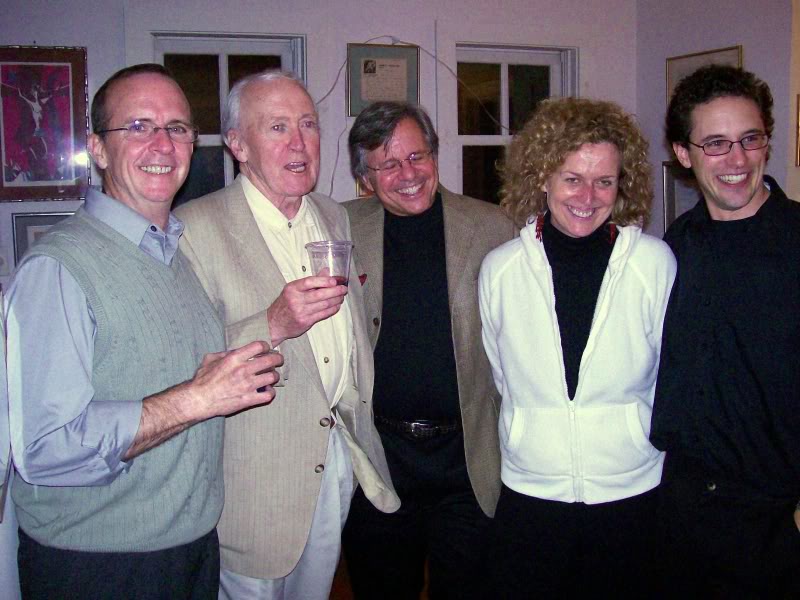
The opening night party at Vincent’s home, with Vincent himself second from left.
Stylish Filmgoing in Toronto

In Toronto two nights ago I found myself spoiled for choice on things to do – a natural conundrum for a Saturday night in a big city. If I had planned the night more effectively ahead of time, I would have ended up at a hockey game or theatre performance, but the spontaneity card took me to a movie theatre instead… and the venue itself (seen above) was a highly memorable one.
The TIFF Bell Lightbox functions as the year – round home of the Toronto Film Festival, and even at this time of year, the opposite end of the film festival, it remained busy and active. An impressive four or five floors of cinemas rise up from the main lobby, which reminded me more of a European museum than a cinema with a bright, white interior and very high ceiling.
This entry is taking way too long to write (oh, distractions and the internet), so I’ll try to do just a quick summary…
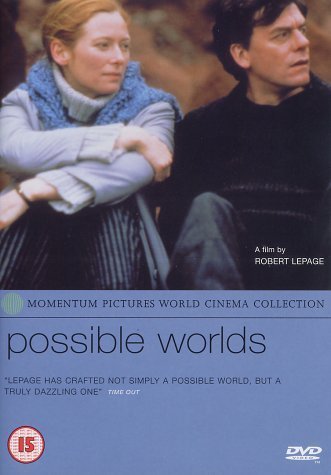
Of a plethora of diverse and unusual films to choose (best seen here) I went for the unknown and chose a screening of Possible Worlds, directed by noted Quebec-based theatre & film maker Robert Lepage. whom I’d actually seen perform in Berkeley several years ago. Turned out he was there for the screening and gave some brief introductory remarks about the film along with the producer and writer. Lepage was also being feted in Toronto for a prize of some sort… I don’t recall the specifics.
The film at hand, Possible Worlds, was highly impressive. Originally released in 2000, I’m not sure if it enjoyed a US release, and I don’t recall hearing about it at the time. It offered a typically strong lead performance from Tilda Swinton, just before she transitioned to more “mainstream” roles (or perhaps just more well known roles) and beautiful location photography in Montreal and the Magdalen Islands region of Quebec. I don’t want to say too much more about it, except that it was provocative and thought provoking, and you should Google it.
The Wind Rises to thought provoking anime
I returned to the State Theatre again last night to catch The Wind Rises, reportedly the final film of noted Japanese animator Hayao Miyazaki.
I wasn’t quite sure what to make of this fact-based animated drama, focused on the life of Jiro Horikoshi, an aviation designer who contributed to the building of Japanese fighter planes during World War II. The film boasts typically beautiful designs from Miyazaki and his cohort, with one image pictured here. But the storyline confuses somewhat (admittedly likely due to my unfamiliarity with the topic) jumping around in time and seeming to go back and forth with the main character’s focus and motivations. I also wished that I had chosen to see it with subtitles rather than dubbing, as the American voice cast (Joseph Gordon – Levitt, Emily Blunt and others) performed well but also distracted from the story.
A provocative tale for sure. I’ll be thinking about this one further in the near future.

Canadian Filmgoing leads to a treat

On my third visit to Windsor, Ontario, I enjoyed a first visit to the Devonshire Mall Cinema, which also served as my first Canadian filmgoing experience since 2001. It was oddly jarring to not experience the usual US filmgoing motifs before the film (i.e. “the following preview has been approved by the Motion Picture Association of America…) but only in a “wow, didn’t realize I take that for granted!’ kind of way.
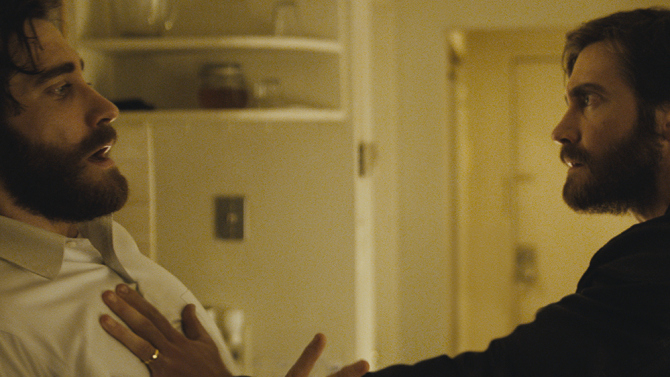
The film at hand, Enemy, was a sneak preview of sorts, as it’s not due to arrive in Ann Arbor for another two weeks, and currently seems to be only viewable in New York City for its initial US release. I felt a bit like I’d cracked a hot story, getting to see it before the rest of metro Detroit and most of the rest of the USA.
The film “re-teams” director Denis Villeneuve and actor Jake Gyllenhaal, who collaborated on last fall’s Prisoners, but was actually shot before that film, and offers a much more satisfying cinematic experience than the wider-released recent film, which I thought was well – made, but too full of dread and gloom. Interestingly, in some reviews and press that I looked at after seeing Enemy, Villeneuve states that he could not have made Prisoners without having done Enemy… so go figure.
Gyllenhaal masters a dual role, giving one of his finest screen performances in the last several years, initially drawing the viewer’s attention as Adam, a loner college professor who ambles through a workaday life in Toronto, droning to students at a local university and coming home to a dingy apartment, which he seems to share part-time with an attractive girlfriend (Melanie Laurent) and then repeat the same cycle for days on end.
One day a co-worker recommends that Adam, who isn’t much of a film fan, seek out a particular movie. After some thought, Adam rents the film (from a charmingly old – fashioned neighborhood video store), and discovers that a bit player in the film bears a strong resemblance … to himself. Adam decides that he wants to find more information about this actor, who is indeed a real person in the film’s universe, Anthony, leading Gyllenhaal into an impressive dual performance where the latter man is portrayed with startlingly and strikingly different characteristics as their lives begin to irreversibly intertwine…
As seen to a more somber effect in Prisoners, Villeneuve masters elements of mood and style here, letting an omnipotent Bernard Hermann-esque music score racket up the tension in key moments, alongside cinematography of metro Toronto seen in hazes and sepia tones. I’m strongly tempted to see the film for a second time when it does arrive in Ann Arbor, not only to re-interpret the complex plot, but to soak up the compact and layered cinematic experience again.
A road trip for a practically secret film and a road trip in another more public film
Yesterday brought Chapter 4 in my occasional series of “will travel to Oakland County for film in limited release”, this time for a screening of In Secret (worst title ever?), the new adaptation of the “Therese Raquin” story known in French drama. (Until recently this film was just “Therese” – it should have stayed that way.) The film’s distributor, Roadside Attractions, recently slammed by Robert Redford, may or may not have used poor judgement in creating a tiny release for the film – it’s only playing at this one theatre in the Detroit area. And so off I went, mostly based on curiosity and nostalgia from seeing the story told onstage in London in one of my favorite productions I saw there early in 2007. (the link goes to a review roundup since the production’s main page appears to have gone offline.)
I found the film to be mostly stellar, with an impressive lead performance from Elizabeth Olsen and nuanced support from Oscar Isaac (doing a quick turnaround from Llewyn Davis and seemingly enjoying a chance to show some dramatic range), Tom Felton (leaving Draco Malfoy behind with a sense of earnest joy) and Jessica Lange (chewing the scenery in style). The performances were really the showcase of the film… I also want to mention British character actress Shirley Henderson, who popped up as a neighbor knowing more than she lets on.
 The rest of the film proceeded as a highly committed if not four/five star adaptation, with the strongest take on the story coming in the middle of the film as a devious plot is hatched and its consequences take full force after the fact. But after one of those consequences hits one of the main characters, I was disappointed with how workmanlike the story became as it marched towards the finale. I missed the atmosphere and particularly the sound design – with lots of low menacing noises – of the stage version’s take on that part of the story.
It’s too bad that the film is receiving such a limited release, as I think that others would find it intriguing based on the cast and storyline, especially with Lange appearing onscreen for the first time in (seemingly) several years and Olsen demonstrating great character actress potential in a more dramatic role.
For some reason the movie theatre itself, the Birmingham 8, offered some of the worst examples of audience etiquette I have seen in recent years. At least eight people (not all together) walked in to the individual theatre about 3/4 of the way through the film, two of them staying through the end credits, and the others loudly asking their companions if they were in the right theatre, when obviously they were not. I think the theatre needs to work on its signage…
________
 I didn’t note my viewing of Oscar contender Nebraska last week at the State Theater here in Ann Arbor, and just wanted to make a quick mention of it as being a delightful film, much better than I expected, with winning portrayals from the central trio of Bruce Dern, Will Forte and June Squibb. Dern and Squibb in particular offered a highly believable impression of a long-lasting marriage, with all of the history and emotion that would entail.
 Theatrical Buddha Man