I spent the afternoon at a Theatre Bay Area sponsored event, and wanted to express my appreciation for their endless efforts in coordinating and supporting ALL aspects of Bay Area Theatre.
Thanks, TBA!!!!
I spent the afternoon at a Theatre Bay Area sponsored event, and wanted to express my appreciation for their endless efforts in coordinating and supporting ALL aspects of Bay Area Theatre.
Thanks, TBA!!!!
Last Sunday I decided to go to the matinee of Company on the big screen, thinking that would be the last chance to see it. I was therefore moderately annoyed when I discovered there will be another round of screenings this weekend. If I’d known that on Sunday, I wouldn’t have gone that day – and probably would not have encountered the screening mishap at the end of the show.
This does remind me of the choices that the arts patron must make, especially in the theatre world where runs are not constant and ultimately finite. I’m making similar decisions with my time this weekend and intending to see two plays that close on Sunday.
But you can always trust the Muppets! I sometimes will think of this video when engaged in theatrical gig searching…
I visited my favorite cinema in Marin County today (the Sequoia Theatre in Mill Valley) for their screening of COMPANY by Stephen Sondheim. This production premiered for a strictly limited engagement in NYC this April, and was filmed (and since edited) for the cinema broadcast. So for me it is show #35.
A starry cast (Neil Patrick Harris, Patti LuPone, Stephen Colbert, and others…) led gravitas to Sondheim’s loose narrative. I was not familiar with the show as I should be, and appreciated the energy of the performances – especially for such a short run.
Being rooted in the theatre, I noticed more acutely the differences in the LIVE experience of seeing this in a darkened cinema. I’m all for the expansion of theatrical media through these very en vogue live broadcasts. However, I missed the shared reaction of seeing the live performance. In this case, there was minimal clapping, some modest audience reaction, and most obviously yet sharply, the performer was not there in the flesh in front of us. This actually came to a head near the end of the screening, when the visuals failed on the final 10 minutes of the show, and the performance became a listening concert, to many audience members displeasure. (I was annoyed as well, but chose not to complain about it.)
I would have liked to have been there for the actual performances in April. A slight to modest Broadway aesthetic was visible to me, with many actors playing to the audience rather than to each other on the stage. The staging itself was innovative with a series of modular furniture units moving around the downstage. Upstage was contained with the New York Phillarmonic orchestra, and Harris almost broke the fourth wall with a very funny reference to the conductor being onstage. Not sure if that was in the original script.
Watching this show here in California made me aware of a few geographically specific references for which I seemed to be the only one that “got” them in Mill Valley. A moment where one character says they are “moving back to Cape Cod” comes to mind, but I know there were at least a few more.
They even made a theatrical trailer which I am embedding in this entry.
I ventured out to San Geronimo in West Marin today to catch the San Francisco Mime Troupe‘s preview of their new production 2012: The Musical. I could call this show #331/2 or #34… I’ll go with #34.
To my surprise, this was quite literally a preview, and came to an abrupt stop about 3/4 of the way into the story. I will respect the Mime Troupe’s creativity and confidentiality, and not offer public comment, where they don’t officially open until July 4. In the journalistic world, it is considered offensive to offer reviews before a show officially opens to the wider world.
I enjoyed the experience of this show, with the strong community flair at the San Geronimo Valley Community Center, and the Mime Troupe’s tight attention to detail and social commentary. The audience modeled three Hs: happy, hearty and hippie. I look forward to seeing …the rest of the story … at some point this summer.
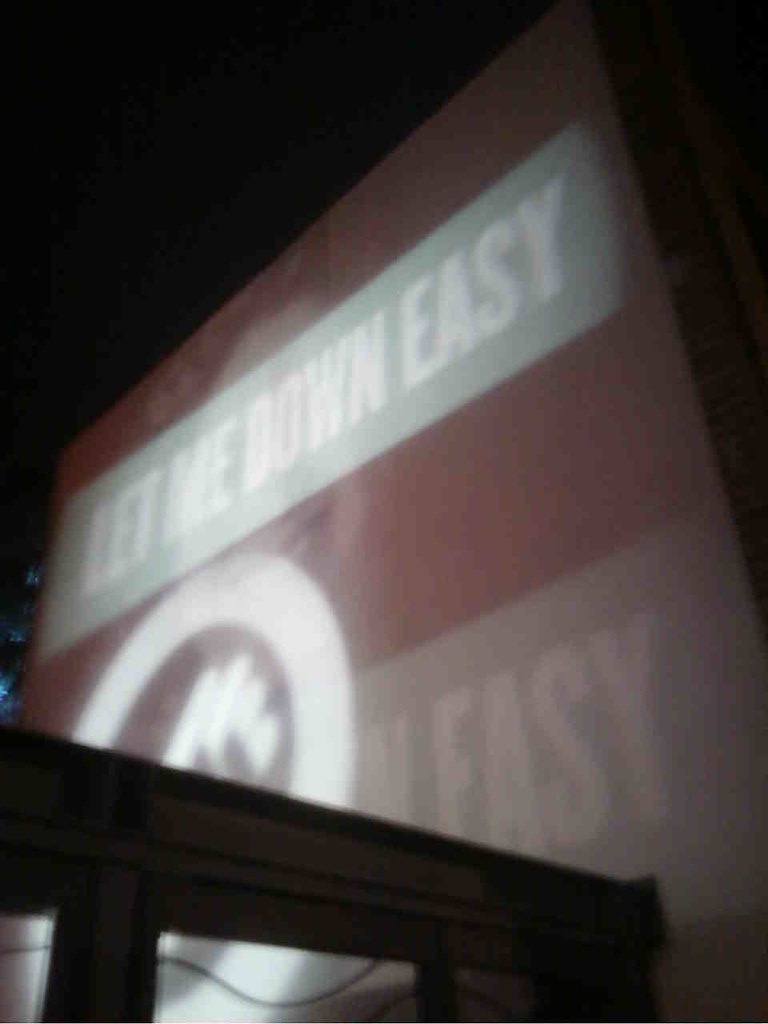
Last night’s show (#33) has vaulted to the top of my list of top shows for the year. I don’t like to make lists of favorites in a business that should value collaboration more than competition. In this case, I am sure that I’ll remember this production throughout the rest of this year. I knew it would be memorable from the start, where Anna Deavere Smith has such a strong and distinguished reputation for her documentary theatre work. This was the first time I had seen her perform live, after being familiar with her film and television work for a long time – going all the way back to the movie Dave in 1993. Because of this long knowledge, I found the show initially to be a slighly cathartic experience reminiscent of the first time I saw childhood favorite musician Carly Simon perform live in Boston in 2005. (I soon settled down.) I was also rewarded with a front row seat to the performance, a likely happy byproduct of identifying myself as an under 30 theatergoer. I remember a similar arrangement when I saw The Lieutenant of Inishmore at Berkeley Rep just over two years ago. I’d chosen this particular night to attend the show as Berkeley Rep was hosting its monthly “30 Below” post-show party in the courtyard following their performance. This led to an intriguing photograph of their wall projection as I left for the evening…
It goes without saying that Smith doesn’t let anyone down easy, in the basic sense of the term. What intrigued me was how Smith became the conduit for each individual voice to come through. She interviewed between 10 and 20 people for the project – I’m not sure if everyone she spoke with was included in the show. Following the initial “recruitment” process, Smith reviewed any tapes, notes, etc that she made in the interviews. It was clear that she soon followed this with a meticulous physical and vocal training to embody any and/or all characteristics of the subject. In the final product, this method created a haunting vitality and lucid directness to each character – coupled with the knowledge that everyone is a real person. No fiction and no fooling. Smith also poignantly included at least two individuals and celebrities, Ann Richards and Joel Siegel, who have since died from cancer complications. She added a family touch, including her aunt in Baltimore in one segment. All of the interviews structured themselves around some minor to major health care issue that had affected the subject or continued to challenge them.
The theatrics of the piece were never lost and always present. Smith carefully moved from one subject to the next, signifying a transition with a brief jazz interlude and sometimes a costume change. As I noted above, her vocal shifts were striking, ranging from the deep inflictions of Harvard minister Peter Gomes (whom I met once and didn’t know had recently died until Googling him just now…) to the twanged inflictions of an Oklahoma/heartland truck driver. Sometimes Smith engaged other media to tell the story, as with two instances when onstage video cameras swung into action (while she faced away from the house), instead of her projecting directly to the audience. She inventively used props throughout the show, including real, fresh, food, and offered a complimentary beer to the couple sitting next to me as part of one story.
Clearly I could go on about this show in further detail. What I most appreciated is its total freshness and topicality: the stories stayed vivid in my mind as I sailed back over the Richmond Bridge home to Marin at 11pm last night… and will continue to linger. It demonstrates a true power of theatre and social change that I always embrace, using stories and artistic media to tie directly to the present moment.
I returned to Marin Theatre Company (MTC) last night for their season closer and my 32nd seen show for this year, Tiny Alice, by Edward Albee. Albee is notorious for exerting strong control over productions of his material, and I’m sure this show was no exception to that rule. In fact, this script may be where his desire for artistic management began, right here in San Francisco. The dramaturgical notes revealed extensive details about an ACT production of the play which made extensive cuts and revisions, to the great ire of Albee. Tiny Alice has also not been seen here in the Bay Area since that production in 1975. As a consequence, ACT did not produce an Albee script again until the mid 2000’s, and Tiny Alice gained a certain cult status, seemingly becoming an “untouchable” of the theatre world. This was not the case for MTC’s artistic director Jasson Minnadakis, who described an “obsession” (I thought that was a surprisingly strong word choice) with this script over a 20 year period. He claimed to be waiting for the perfect combination of cast, crew and theatrical setting to stage it himself. And for the most part, the team at MTC has succeeded with this revival. Last night’s audience, about a 3/4 full house, seemed to be thoroughly devouring the material, with two people standing up in their seats at the end and several local theatre industry folk visible to me within the audience.
The play is constructed like an elaborate jigsaw puzzle, and just when you think the material is all set in its perfect picture, someone (Albee) shakes it up again. This quality was particularly apparent in the first scene, a confusing and seemingly nonsensical interaction between two supporting characters. The second scene began to lay out the storyline, introducing the main character, a lay brother named Julian. We never truly find out why he has been summoned to “Miss” Alice’s home, a wealthy benefactor of his church. But various circumstances, some instigated by Alice and some not, combine to ensure that Julian remains in the house for quite some time. Supernatural elements gain prominence and symbolism, whether it is a fire that reveals itself through an onstage house model or an increased blurring of lines between reality and religious potency.
The play is presented in three acts, and while I was riveted and compelled for most of the production, there were several later instances where I felt the writing could have been tighter. In particular, the climax of the play goes on far too long and might have been more intriguing if it was presented in a “quieter” – and more intense – form. The third act on the whole seemed to repeat itself (from act 2) and not really advance the story.
Characterizations were suitably and memorably layered among the five person local cast. Actors Carrie Paff and Andrew Hurteau sharply etched the leading roles of Alice and Julian, with Hurteau in particular adding clear range to his performance within the initial character arc. Among the three supporting players, Mark Anderson Phillips stood out with an impish portrayal of Alice’s butler, who may have more to offer than it seems.
I can’t forget about the incredible set design, easily the best use of the MTC Lieberman Stage that I have ever seen. The set opened and closed as the story progressed, to denote different areas of Alice’s home. The model of the house (which can be seen here on MTC’s site) was extraordinarily large and vivid. Use of original music to transition between scenes added an evocative Masterpiece Theatre-ish flair to the story that I appreciated.
With this show, more than ever, MTC continues its manifesto of “Provocative Plays by Passionate Playwrights“.
And on the other hand, it is just swinging into action. The NY Times has the scoop on tonight’s opening performance all the way in N Y C.
During this past weekend’s visit to Los Angeles, I made time for show #31, Hamlet: Prince of Denmark at the Doghouse Theatre. This production reminded me of my past enjoyment of site-specific pieces, where it was performed in someone’s own home in Hollywood. It also featured a good friend as part of the cast, so those connections also make the experience even more enjoyable.
I had somewhat of an opposite impression going into the show than what it actually turned out to be. Because of my friend’s performance background, I assumed that the play would be an improvised riff on the story of Hamlet. Instead, it is a straight-up abridgement of Shakespeare’s text. I didn’t mind the cuts as much as I did with another edited version I saw last year. The difference here was that the story progressed in a non-linear fashion, so that the production focused on epic moments of Hamlet’s tale. This approach climaxed in the ghost sequence, where several cast members took on lines of the Ghost and were directed to echo them across the performance space. The story proceeded with some verve, finding an energetic end point for Act 1, at the climax, and magically rewinding for Act 2.
If anything, the challenge or problem with Shakespearean interpretations like this is that the text is often so familiar that the absorption process, for the audience member, is less about how the actor is doing it and more about what they are doing. The creators seemed to understand this challenge and maintain their creativity.
I’ve just finished reading Judi Dench’s new memoir (NOT an autobiography) which was my only impulse purchase, along with one other book, as part of my tax refund money.
Some reviewers on Amazon complain that the book is a laundry list and does not drop any information about Dench’s personal life. However, she explicitly states in the preface to the book how that is not her point. Instead, she clearly lays the intention to re-visit her career in a roughly chronological manner, occasionally stepping aside for family anecdotes and recollections.
I found the volume to be charmingly evocative throughout her stories. More importantly to me, it exuded the natural richness and clarity of the British Theatre that I so greatly miss from my times in London. Over there, of course, theatre is a way of life: not highbrow, at least decently funded, and popping up in places all over the United Kingdom. It’s ingrained, and Judi Dench knows she is near the top of the crown.
 Theatrical Buddha Man