Movies

Cold Comfort Farm continues to comfort its appreciative audience

I haven’t been doing too great on the “film flashback Friday” initiative, probably due to my grad school schedule. So here is a belated entry for that series.
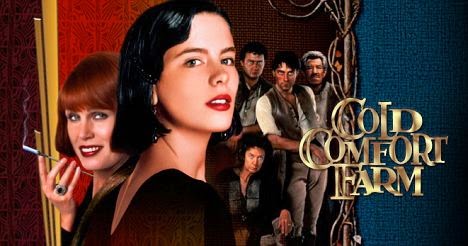
cold comfort farm poster

I recently reacquired a DVD copy of (what is probably) my family’s favorite movie, Cold Comfort Farm. I was delighted to watch the film again a few nights ago for the first time in too long.

Originally made for British television by well – regarded director John Schlesinger, the film premiered there in 1994 or 95 and later enjoyed a successful and long running US cinema run in the summer of 1996. My parents and I caught it at the Gloucester Cinema at the tail end of that summer, and it was a staple in our VHS and DVD players for many years afterwards. We continue to enjoy occasionally quoting lines from the film.

The film features a British dream team of actors: Kate Beckinsale in the lead role, Eileen Atkins, Joanna Lumley, Rufus Sewell, Ian McKellen, Stephen Fry, Freddie Jones and other performers. It’s adapted from a  1930’s era novel and proudly wears its period origins on its sleeves.

The story follows young London socialite Flora Poste (Kate Beckinsale) who looks at the bright side of life, even following the death of her parents. While briefly living with an older socialite friend (Lumley), Flora solicits distant relatives on whether or not they can host her in their homes. She receives a quick response from cousin Judith Starkadder (Atkins) who tells her “there have always been Starkadders at Cold Comfort Farm (and they’d be happy to host) Robert Poste’s child.”

And so Flora travels out to the farm, in Sussex, discovering a wild assortment of characters in residence, including young, servile sons Seth and Rupert, flighty Elfine, patriarch Amos, and great aunt Ada Doom, who rarely comes out of her upstairs room and has not left the property in a number of years. Ada was forever traumatized by an incident in her youth where she saw “something nasty in the woodshed” and doesn’t shy away from reminding her family of that, even though she can not remember the specifics of the event.

After an initial adjustment period, Flora takes it on herself to better the lives of the farm residents. She also navigates her own path of empowerment and an entanglement with shy yet wily London suitor Charles, and an unwanted suitor, noted author Mr. Mybug, played by Fry.

The story unfolds in a whimsical and playful style without being played for cheap humor. Each of the actors knows exactly how to play their scenes, whether dryly or broadly humorous, and contributes to the timeless feel of the comedy. As I watched it now in 2014, I still laughed at the same lines, but felt it was a natural and not anticipating reaction. They’re aided by an excellent attention to period detail and careful evocation of mood and style, with the jaunty musical score (regrettably never released in a recorded form) significantly contributing to the flair of the film.

When I had the pleasure of meeting Eileen Atkins in 2007, she appreciated my interest in the film and told me an interesting trivia detail about her role. (that experience was recapped in an entry on this blog last year.)

Watching this film again in 2014 brings up mixed feelings about Kate Beckinsale’s subsequent career trajectory. My parents and I observed with dismay as she began a sharp move away from British and independent dramas in 2001, a move that appeared to be solidified just two years later with her participation in the Underworld series. And now having recently passed age 40, noted as a difficult decade for film actresses, Beckinsale may be facing tough choices about where to go with her career. She also continues to be noted more for her beauty and cinematic ass kicking, as this blog article bluntly reinforces. I’d like to see her go back to the London stage or to a more character – based drama, but she appears to be well – settled into a Hollywood based lifestyle.

Perhaps in the present day Cold Comfort Farm has a dual role as a comedy classic and a time capsule. I will continue to appreciate it.

Standard
Movies

Gone Girl hits a Home Run

I was very impressed with the new release Gone Girl, which I caught today at Royal Oak’s Emagine complex alongside a nearly sold out crowd.

It is difficult to construct a review around films that rely on plot surprises, and this one includes multiple twists and turns. So I will try to single out a few notable elements from the movie as a whole.

Ben Affleck shows he’s fully back in business from his comeback with a commanding, persuasive performance. The actor doesn’t shy from testing the viewer’s allegiances at multiple junctures in the story, and carries the film on his shoulders with a new maturity and complexity. He benefits from multiple scene partners and story angles throughout the movie, not only with lead co-star Rosamund Pike but also actresses Carrie Coon and Kim Dickens, who I was not familiar with.

Rosamund Pike has seemingly flown under the US radar for quite awhile; I remember seeing her featured in the James Bond film Die Another Day way back in 2002. Here she gets to show everything her acting skills are made of, in a multifaceted role that requires sex appeal, stature, cunning and dexterity in multiple ways. Pike passes the test and also shifts the viewer’s allegiances throughout the story, creating an intense and highly memorable 360 degree character portrait.

The entire supporting cast seemed to be carefully chosen to bring something unique to the screen and how the story is told. The aforementioned Carrie Coon and Kim Dickens do excellent work, with Coon and Affleck getting multiple scenes to play an intriguing sibling dynamic. Popular filmmaker Tyler Perry appears in a serious role, and seems to be having fun with the experience, bringing a sharp mix of focus and brevity to his scenes. Neil Patrick Harris makes a rare screen appearance and also gets to flex his dramatic muscles.

Director David Fincher continues his mastery of film with this release. He also offers small nods to several of his previous projects (IMO) or a clear evidence of evolving cinematic vision. Fincher again invited Trent Reznor and Atticus Ross to compose the film’s score, but this time, I felt that the two composers were not as on the ball as their Academy Award winning work in The Social Network. Their score is distractingly under tracked for multiple two person scenes which might have played more effectively without accompaniment. It still bears their unique industrial sound, and there are segments that stand out.

I detected a possible satirical element to some segments of the film, and found it unusual that as the story went along, it became a commentary on 2014 media obsessions. Not sure if that was a directorial or writer intention.

Author Gillian Flynn adapted her own novel here, and where she purposefully constructed the film version in a different way than how the story unfolds in the novel, it makes me intrigued to read it. Her dialogue moves the film along at a brisk pace, though Fincher might bring a more kinetic orientation than another filmmaker. However, Flynn shows her expertise in stacking and switching the narrative, which (I speak from experience) requires careful planning and sharp focus.

Standard
Movies, Theatre

Rita Moreno visits Detroit (another classy evening at the Redford Theatre)

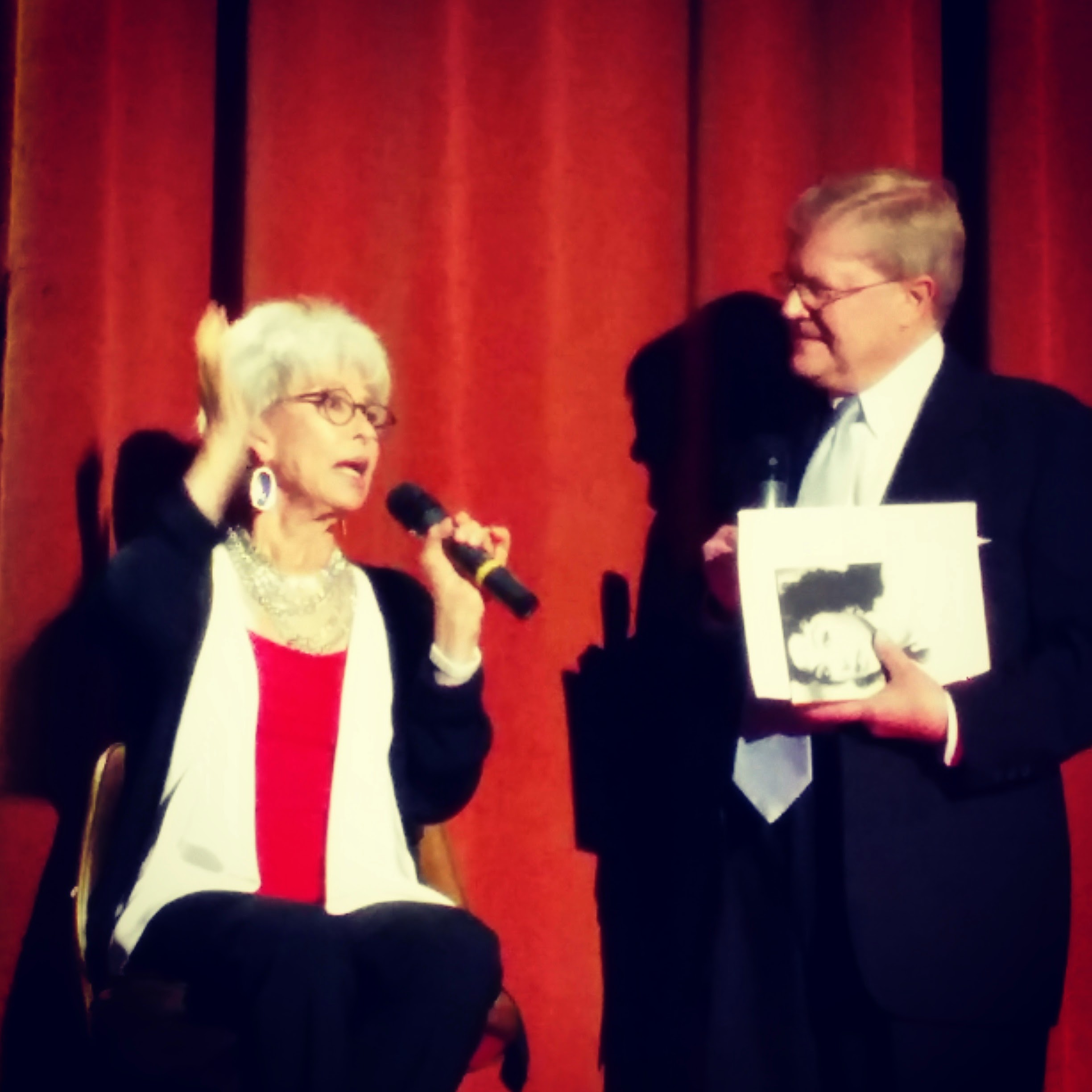
IMG_20140927_192324This past weekend, I was pleased to join a large and nearly sold out crowd at the Redford Theatre to welcome acclaimed actress Rita Moreno to Detroit. The theatre offered three opportunities to meet Moreno and watch her classic West Side Story on their beautiful screen, and I’m sure that the Saturday night screening I attended was the most popular. I first heard about this event over six months ago at the theatre’s similarly festive winter evening to honor Pam Grier (recapped in a blog post) and didn’t think I would attend. But a few days before the weekend, I thought about it again and figured it was worth it, especially since Moreno is a Bay Area resident who I had not encountered during my time there, though she appears semi – frequently at events related to Berkeley Repertory Theatre. I did not expect her to be so classy and elegant in all aspects of her presence, which was a wonderful surprise.

IMG_20140927_195123The theatre was packed as I scanned the main level for a place to sit. Surprisingly, there were several seats left in the first couple of rows, and so I snagged a spot in the second row. Once the lights went down and Ms. Moreno appeared alongside a local radio interviewer, I realized I’d gotten the best seat in the house! The two of them stayed in that far stage right area and did not move around the stage, which made for optimum photo taking from my seat just six feet away or so.


IMG_20140927_201336Moreno offered numerous past and present anecdotes from her career in a warm, honey silk tone of voice. When the two of them returned at the film’s intermission, she playfully used his sweaty state as a way to raise the tension and immediacy as they talked in full view of the audience. The interviewer (wish I’d written down his name, but he’s definitely based in Ann Arbor) guided Moreno through what seemed to be some repetition from the previous night’s topics and some new material. She seemed to particularly appreciate The Electric Company‘s historical place in her career, while also noting later roles such as her work in Oz and multiple series work with Fran Drescher.

Regarding West Side Story, Moreno’s stories focused on the understandably grueling process of learning difficult choreography from (the reportedly difficult) choreographer Jerome Robbins, who took no favorites among the cast and crew, and was reportedly not well liked by anyone involved in the production. But at the same time, she noted that his keen visual sense contributed to the film’s precise and enduring visual style. She also noted that her most well – known song, America, featured a style of dancing different than what she was accustomed to at the time.

The Redford later played a recap of her amazingly brief 1962 Academy Awards acceptance speech, and Moreno seemed slightly embarrassed to revisit the memory, saying that she had made peace with the moment in her past, but would have honored more of her Puerto Rican and Hispanic compatriots if she could do it again. She noted that her receipt of a SAG lifetime achievement award early this year, presented by her past co-star Morgan Freeman, felt like a more fitting tribute for her and opportunity to pay homage to her entire industry work as opposed to a single performance.

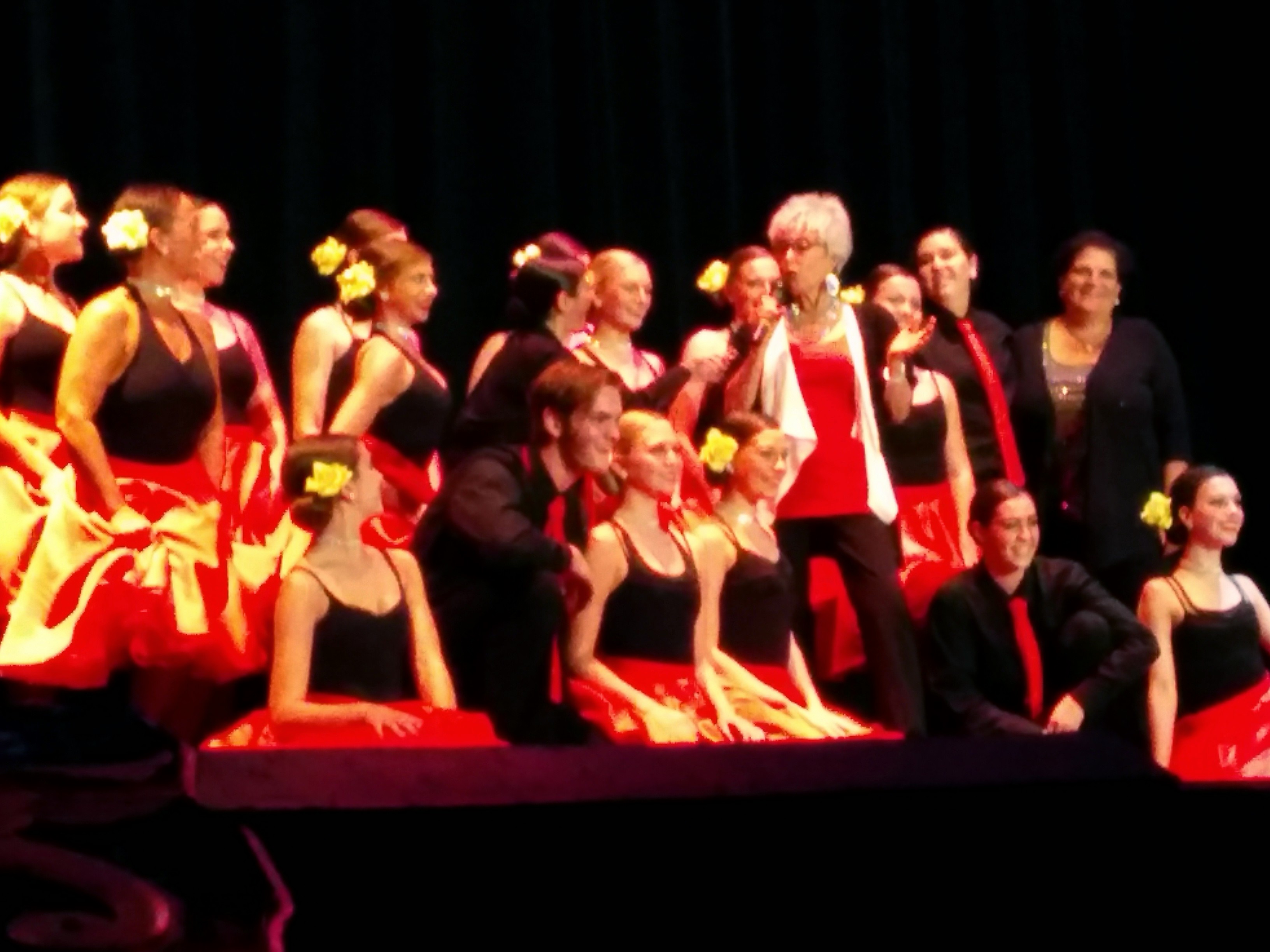
The Redford had a surprise up their sleeves for Ms. Moreno and those of us in the audience. The West Side Story intermission included a special performance by a local dance troupe perfuming new choreography to America, with Moreno watching in the audience from a seat specially engraved with her name. The troupe members appeared to be mid to late high school age, and deftly navigated the stage with style and flair in their movement. I’m sure it was a thrill for them to meet Moreno directly following their performance and get a photo with her, while being witnessed by those of us in the audience.

IMG_20140927_223540Ms. Moreno’s verbosity, appeal and good humor almost overshadowed the screening of West Side Story itself. She and the interviewer even left their pre-show conversation by saying “we’ve got to show this movie!”

I found it appealing and intense to see a classic in its rightful place on the big screen. Elements of the film, including its choreography and slightly psychedelic 1960s visual moments, seemed to POP more on the big screen. On the other hand, my more mature viewpoint observed various acting choices I most likely did not notice in my early viewings of the film as a pre-teen. And, later, I found myself wondering about the career trajectories of various members of the cast, most notably Natalie Wood, who died in 1981 under mysterious circumstances.

But Rita Moreno’s in-person presence and integrity stood out in the film viewing – the audience erupted into applause on several occasions when she appeared onscreen – and proved why she has been and continues to be an enduring legend in the entertainment world.

Kudos to the Redford Theatre for another memorable tribute evening. I’m greatly looking forward to seeing who they next line up to visit their movie palace.

Standard
Movies

Her, Him or Them? (The Disappearance of Eleanor Rigby)

The film criticism will likely continue to keep a slower pace over the next few months, but I’ll still be doing it.

The Birmingham 8, formerly my distant arthouse/indie film destination, is now a local destination of choice. And so I made another visit there yesterday to catch The Disappearance of Eleanor Rigby: Them, the first installment of a trilogy of films telling the same story.

Having known about the “bigger picture” of the other films, I question the necessity of this one, subtitled Them, after seeing it. The story gets a detailed outline in this two hour version, but there are multiple instances where it feels like something is missing, or it’s an awkward switch from one perspective to another. I can’t completely tell if the decision to truncate the longer versions was solely a commercial decision, though I’m glad to know that the full version will still be coming to theaters in October, and hope that it will appear locally – perhaps again at the Birmingham 8.

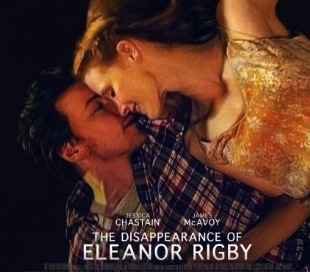
eleanor rigbyJessica Chastain and James McAvoy give passionate performances as the central couple, subtly shading their characterizations as the story jumps around in time, showing both their initial attraction and later distancing after an (unseen) traumatic event. As the title character, Chastain particularly impresses with her initial free-spiritedness changing to a trauma-induced restraint and (seeming) coldness, until she (as the character) begins to let the changes settle in and re-focus her life. McAvoy does the opposite challenge, both in reacting to Chastain’s changes and conveying his own redirected journey.

The central pair is supported by a handful of supporting characters, and the film feels like it could be an intimate stage play at times with that narrow yet compelling focus. And I suspect that the full version (subtitled Him and Her) may feel like a reverse-persepctive novel brought to film.

Viola Davis, who previously appeared onscreen with Chastain in The Help, stands out in the supporting cast. (Why is Davis not top lining a film???) She delivers several initial tart lines with relish, and easily conveys a seasoned (yet weary) point of view as a college professor interacting with Eleanor and trying to get her back on her feet. Isabelle Huppert appears in a rare English – speaking role as Eleanor’s French mother, who seemed to always have a glass of wine in her hand. Oddly, the full view of the character is only expressed in scenes when she is not with Eleanor, but I suspect that is a writing trick to show what family members do and don’t say to their other relatives. Similarly, William Hurt conveys restraint as Eleanor’s father, but isn’t given a chance to show his full feelings until the very end of the film.

Additional supporting roles are filled by Jess Weixler, Ciaran Hinds, Nina Arlanda and Bill Hader. I’m sure that the full film gives more shadings to each of those roles, although Weixler and Hader do get a few notable scenes in the abbreviated take, and Hader also shows a surprising ease with the drama, given his status as a better – known comedy actor.

It is unfortunate that economics seemingly dictated the release of this abbreviated version of the story, but I’m relieved to know that the full film will still appear, where it received an apparently appreciative festival response and would certainly stand out as a novel take on how to tell a cinematic story.

Standard
Movies

This one goes out to the one I love, but how do I love them and they love me?

The One I Love is a new film from celebrity progeny Charlie McDowell, son of Malcolm McDowell and Mary Steenburgen. The younger McDowell has fashioned an impressive full – length feature debut, borrowing some elements from Hitchcock and other suspense masters, but ultimately crafting a film in a unique style of his own.

Film poster courtesy IMDB

Film poster courtesy IMDB

Mark Duplass and Elisabeth Moss star as a Southern California couple who have developed strains in their marriage stemming from a confluence of issues. One day, their marriage counselor (Ted Danson, the director’s stepfather) suggests to the couple that they travel out to an estate in Ojai where some of his other clients have found space and reconciliation. The couple agrees, and initially is impressed with the surroundings, but a sudden turn of events finds them reconsidering why they are there.

And that’s about all I can say of the film’s plot, which cleverly does not spell everything out for the viewer and leaves several elements up to discernment and imagination — something I always appreciate and often prefer in published or written works. Duplass and Moss rise to the challenge of the material and are tasked with carrying nearly the entire film only on their shoulders.

The actors are supported by equally luminous and ominous photography of the Ojai estate, a tricky music score that pops up to aid in the plot, and a minimalist air that reinforces the uncertainty of the setting and the plot’s unspooling. Even more impressive is the filmmaker’s decision to not tie up all loose ends when the end of the story arrives.

I have a feeling that this film will stand out as one of my favorites from this year. It’s intriguing to see actors such as Duplass push themselves in a wide variety of independent projects, and refuse to typecast themselves into the studio system. While I’m less familiar with Moss’ output, it seems that she also shares the wish to remain an individualistic actress and one that’s ready for a variety of roles.

Standard
Movies

Film Flashback Friday begins

I’ll make quick headway on my new mandate with this early morning post. From a young age, I’ve made a note of where I was when I saw a particular film, in addition to the film itself, so I hope this series will be a way to explore those memories and experiences in greater reflective detail.

Reflecting on current events in the entertainment world, the clear cinematic choice for this week has to be Joan Rivers: A Piece of Work, an acclaimed documentary from 2010 that “briefly” (since she was such a hard and consistent worker) turned the conversation about Rivers to one of her legacy and impact on other comedians. That same mindset is once again in the mix today following her unfortunately sudden death.

(From a quick look at the internet, it seems that other writers are also re-visiting this title today.)

This film was the only movie I ever saw at the Stonestown Twin on the south side of San Francisco, and I’m fairly sure that I specifically chose to catch the film there, rather than one of the downtown SF cinemas or one back in Marin County. The cinema, which is still in operation today, offers an oddly aged 1970’s twin complex – in the sense that it has not been upgraded or changed hands, etc – and obviously began life as a single screen. At some point, the complex was twinned, but not all of the seats were adjusted, and some of them face closer to the wall than the actual screen. The screen I visited, on the right side of the complex, was a long bowling – alley style auditorium that I remember being popular prior to the rise and eventual ubiquity of stadium seating in movie theaters.

The film itself took an uncompromising and honest examination of Rivers’ career, initially focusing on her in a downturn moment of her work, where she was not stopped working, but not enjoying the same level of fame and success that she had in the past. Rivers brought the filmmakers and the audience right in to her process, explaining how she feared not having anything to do with her life and followed a workaholic type schedule of her bookings and performances to hide that fact. The film also gave a look at some of her earlier work, including appearances on The Tonight Show and other stand – up performances.

I was disappointed, however, that the film did not include a clip from my first introduction to Rivers’ work, in the classic Muppets Take Manhattan:

Ultimately the documentary continued to follow Rivers as she regained momentum in her career through winning the Celebrity Apprentice and other related activities. It’s clear that she continued to maintain that energy all the way to the end.

It is sad that Rivers’ death came suddenly and under what sounds like questionable circumstances, but it seems appropriate that she left on a high note and with a sense of the acclaim she maintained, and the legacy she secured.

Standard
Movies

The fall of the dollar house, and those that still support it

Yesterday I was pleased to discover the CInemark 16 on the border of Oakland and Macomb counties, and its selection of second – run movies that may or may not have arrived on DVD, but in this case, were still showing on the big screen.

I find this style of moviegoing to be a lost art. Not so in the Midwest, but very much so in my New England home turf, and on the other coast as well. 

It’s unfortunate, because I remember 15 – 20 years ago, second run movieplexes were still very widespread in New England. If I missed something at Danvers 6, it would show up later on at the Warwick Cinema, and maybe after that at the Cabot Street Cinema, and the same thing could be seen within a range of different small towns around Boston. 

Nowadays, a kid growing up on the North Shore will go to the Liberty Tree Mall 20, which I’m sure is showing its 15 years of age, and the Gloucester Cinema is still hanging in there. Other spots have either changed (the Warwick Cinema was re-born as a classy cinema restaurant within the past year) or closed down, with the Cabot Street Cinema sadly for sale.

And so it’s been refreshing to know that tradition of seeing movies past their initial expiration date continues here in the Midwest, as I initially saw in Dayton, Ohio, several years ago and now see to be true around Detroit. Although I bought a ticket for a movie yesterday, I didn’t actually go in (!) but will consider the $1.50 as a donation to the complex. I’ll look forward to finding the right time to go back.

Standard
Movies

Whether or not to embrace the “Life of Crime”

I returned to Birmingham 8 again this evening to catch Life of Crime, in a deliberate choice to see the new Elmore Leonard adaptation right in the author’s own backyard. It’s a shame Leonard did not live to see this film through to its release, though he receives an “executive producer” credit, as the film was finished shortly before his death last year. The film is set right here in Oakland and Wayne counties in Michigan, but was filmed in Connecticut. I could tell the difference, but also noticed a few Michigan – local touches placed onscreen at random moments, such as a sign for Interstate 696.

The filmmakers ought to have licensed my friend Zach’s same-titled song for use at some point during the movie. Instead they rely on a series of tunes from the 70’s, when the film is set, and an appropriately vintage tinged music score by the Newton Brothers.

life of crime posterThe film serves as an origin story for three characters also seen in Rum Punch/Jackie Brown (another Leonard story), previously played by Samuel L. Jackson, Robert DeNiro and Bridget Fonda, and portrayed here by Mos Def, John Hawkes and Isla Fisher. This story doesn’t make an overt attempt to tie the characters together, or match the portrayal to the previous actor, but I found it fun to know how “they aged” and are seen later on “in their lives”, since Jackie Brown (which I saw again in the theatre earlier this year) takes place 20 years after these events. And I’m sure that if the viewer looked closer at this portrayal, there may indeed be some links to tie it to the later story.

As it is, the main story of this film follows Mickey, a suburban housewife somewhere in Oakland County who is at wits end with her older husband, played by Tim Robbins. Circumstances leave Mickey at home one day, where she is kidnapped (not a spoiler) by Def and Hawkes over to a nearby house and essentially held for ransom. Meanwhile, her husband has flown down to the Bahamas to meet up with “friend” Melanie (Fisher) and other dubious associates. The characters find themselves in an increasingly complicated web where actions are not what they seem and there are several switchbacks leading towards a winking finale.

I found the film to be redeemed by its third act. Prior to the story setting up its conclusion, things with Mickey and her captors pitted against her husband and associates seemed to be going in an increasingly predictable and slightly unpleasant line. However, Melanie introduces a series of complications — as she also does, later, in Jackie Brown — that take the story to an unpredictable and wacky edge. This last third is also where Aniston is given her best opportunity to shine, as the earlier part of the story finds her seeming dour and confused.

An unrecognizable Will Forte isn’t given much chance to show his comedy roots in a mostly serious supporting role as “a family friend” who has eyes for Aniston. Robbins, looking much older, carries effective presence in his scenes, but seems to drift in and out of the story. Another reviewer pointed out that the role directly contradicts Robbins’ well – known sociopolitical views, but that is what we do for our art… Getting back to the earlier point, I feel that the trio of Hawkes, Def and Fisher fare the best throughout the film, especially in their last few scenes when they can relax in the roles and be in on the joke.

On the whole the film only seems to settle in that last third. If the filmmakers had set up this tone earlier, and let the pieces fall into place in more of a coy manner, along the lines of Get Shorty, they would have done themselves a favor. I think the film is still worth seeing in a “wait for the video” type of way and with an awareness of the unevenness. And if Def, Hawkes and Fisher want to team up with Jackson, DeNiro and Fonda, they’d really have some fun.

Standard
Movies

You’ve seen this type of story before, but what if you see it again

The previously mentioned What If, which I really ought to have written about sooner after catching it on the big screen August 17th, served as my final filmgoing as an Ann Arbor resident and final film prior to returning to academic life. It was a fittingly optimistic and fresh finale.

what ifThe contemporary story finds Daniel Radcliffe and Zoe Kazan living among people their age in Toronto, which is seen as the hip, multicultural, walkable city it really is. Radcliffe portrays a med school dropout who is disillusioned with life and not finding focus in what he wants. He attends a party one night and starts talking with Kazan, who happens to be a distant relative of his roommate (Adam Driver) although they have not gotten to meet before. The two of them seem to hit it off, and then Kazan’s parting shot of “it was great to meet you, but I’ve got to get home to my boyfriend!” seemingly throws an arrow on the evening.

It would be a short film if they left it at that, and so the rest of the story follows the unlikely couple as they continue to get to know each other better after an initial re-meeting following the party, and whether or not their connection will blossom into something more, and if either of them truly want to get to know each other as more than friends — and possibly change their lives along the way. A subplot develops with Driver’s character settling down with a vivacious blonde (Mackenzie Davis) after several years of serial dating, while Kazan’s sister (Megan Park) casts her own opinion of Radcliffe and the situation, and her boyfriend (Rafe Spall) tries to make sense of it all.

The freshness of the story, from Kazan’s character’s profession (an animator) and Radcliffe’s consistently game, committed approach to his scenes, along with a chirpy soundtrack from AC Newman and appealing emphasis on the real streets and locations of Toronto, kept it engaging, even as it veered towards a somewhat inevitable positive conclusion. And the story didn’t shy from hints of “real world” or “real life” drama, as Kazan worked hard in her portrayal to emphasize the many choices thrown at her character, while Driver and Davis used their limited screen time to give a broad, but charming portrayal of their life as a couple.

And of course it’s great to see Radcliffe getting more comfortable as he continues to put distance from his Harry Potter role. His performance here may be his most engaging non-HP portrayal yet, and he seemed relatable, which is key for a modern comedy-drama/romantic comedy, like he just walked off the screen and down the street outside the cinema.

(I wouldn’t have minded seeing it under its original Canadian title, The F Word, and it’s playing right across the river in Windsor under that guise. No surprise that US audiences don’t like risqué film titles.)


Standard
Movies, Theatre

Live with John Cleese in Santa Barbara (a memory from May 2008)

My previous post reminded me of That Time I saw John Cleese live in person, which I wrote up on LiveJournal soon after the fact. Here it is again:

Went back down to Santa Barbara on Thursday night to catch a special event on the UCSB campus: Mr. John Cleese introducing a screening of Monty Python and the Holy Grail, followed by a question and answer session with Cleese. It wasn’t quite what I expected it to be, though worth the trip, and it was delightful to experience such a hearty dose of British wit that I’ve been missing. Cleese himself was on fine form despite being in a wheelchair due to a recent muscle injury. In fact, his wit was so sharp and very funny that I decided to write down what he was saying. Here are some soundbites.

“This movie was filmed in Scotland, a tiny area north of England.”

(On his in-process divorce): “I gave her $155,000 – can she live on that?”

“It is extremely good for people in their 20’s to be very uncomfortable.”

(Before the film started) “I’m off to a banquet. We’re eating far better than you.”

Audience Member: “Uhhh….”
Cleese: “Do you speak English?”

(On SPAMALOT) “The play was directed by Mike Nichols. He’s been around for 400 years! The late 50’s was just after the Second World War.”

“I get $5000 a year for being God.”

“I will possibly get married again. I’ll find someone I don’t like and buy her a house”

(On his wife’s spending habits) “I have an idea for a new show. Lifestyles of the Seriously Demented.”

Audience Member, about to ask a question: “John?!”
Cleese: “Who said you could call me John? It’s fucking Professor Cleese. It makes me feel so smart.”
(Laughter, then:)
Audience Member: “Fucking Professor Cleese?”
(More laughter.)

(On a moment while making the film) “There was a silence, as though someone had said let’s all go fuck Queen Elizabeth.”

“That’s a very good question, and I don’t think I can tell you the answer.”

“I love those kind of flattering words.”

“Would a drugstore have any cheese? It would be medical cheese. You would need a prescription.”

“Most of the really interesting people are here in America, where you can make things better.”

“What a fucking marvelous man.”

Standard