Movies, Theatre

From the cosmos to the mind

This past weekend’s filmgoing spanned two countries (and more onscreen) and went from the wide galaxy to the inner mind.

I turned my first visit to Downtown Detroit’s RenCen 4 cinema into a Yelp review, visible in standard form here but I will re-post it below in italics.

I picked the wrong movie (INTERSTELLAR) for my first visit here, but think I will be returning from time to time for the convenience and mostly pleasant experience.

The cinema is nestled in to the checkerboard of the Ren Cen, on the second level of the main atrium area. Signs direct you where you need to go from any of the main entrances, although you need to look closely, as the cinema is highlighted in a different font color than the rest of the signage. A weird circular atrium area is immediately outside the cinema itself, but it does have a small seating area and actual display of the movie posters currently showing; the latter detail seems to be an increasingly lost art of moviegoing.

I was very surprised by the inexpensive $8.50 admission, especially on a Friday night. The box office and concession employees seemed happy and comfortable working as a team. Concessions are also on the lower end of average prices; I paid $5 for a medium popcorn that had smaller kernels than your average offering, and was thankfully not overflowing. The theatre also offers Little Caesar’s pizza slices and cocktail choices, which I may take advantage of on a future visit.

Parking in the nearby Beaulieu Garage is just $2 with validation – be sure to ask for this sweet deal when you buy your ticket! And be sure you’ve parked in the right garage, where the Atwater Garage is confusingly adjacent to the Beaulieu’s entrance. If you’re getting to the cinema via the People Mover, the Ren Cen of course has its own stop.

Finally, the screening rooms themselves. The one I visited, second from the left, was shockingly small by modern standards, with the now-anachronistic “bowling alley” style seating layout and a narrow wide screen. Although this arrangement is not well suited, IMO, for blockbuster-style visually expansive movies such as INTERSTELLAR, I can see it working okay in other settings. Just be sure to sit closer to the front of the room, as long as you are comfortable with that.

The theatre seems selective with its programming, not always grabbing what’s expected to be the #1 movie of the weekend. I’m not sure if this was a trend this fall or has lasted for a longer period of time.

Once I got settled in to the smaller than current standards viewing arrangement, I felt it was an ultimately comfortable experience, and continued to appreciate the ease and opportunity of coming to see a film downtown, rather than driving to Royal Oak, Southfield, Dearborn or some other metro area location. It is this ease, and the pleasant, welcoming demeanor of the staff, that will probably draw me back to the RenCen for another film before too long.

Getting back to the film, INTERSTELLAR, I was impressed (again) by Christopher Nolan’s bold and enormous vision, but felt that this film ultimately overreached and stayed at a cool distance from the viewer… or at least this viewer.

Matthew McConaughey continues his recent acclaimed streak in the lead performance, showing more humanity than ever before (although I did not catch DALLAS BUYER’S CLUB) in the role of Cooper, a veteran NASA astronaut who is led into a mission to save humanity from a dusty, uncertain future. A respected supporting cast unevenly filled out the other central roles. Anne Hathaway seemed more ill at ease than confident in the role of a co – pilot scientist, who is connected to Michael Caine back on Earth as her character’s father and the principal behind the scenes architect of the mission. Caine offered a familiar and comfortable presence, but no unique shadings, to a character he has portrayed before, and I longed for a sense of menace or uncertainty that he’s displayed in some of his other Nolan projects. Jessica Chastain, in really the third lead role, continues to maintain an impressive command and intensity of the screen, but was subject to wide and sometimes incomprehensible swings in character.

Among the secondary supporting cast, John Lithgow makes a notable appearance as a relative of McConaughey’s, while Ellen Burstyn has an extended cameo as another primary character, and a Surprise Hollywood Veteran (an unbilled and well – known actor) appears in a few crucial scenes. Actor Wes Bentley, who seems to be enjoying a modest career revival, also appears as an underdeveloped character.

Technically the film is a masterwork. Nolan and company reach their biggest heights on a series of uncharted planets and universes, including a tidal wave toting water planet, an icy world that is not hospitable to many forms of life, and several variations on what the Earth’s landscape might look like at some point in the future.

While the story makes every effort to tell a humane story, and succeeds at points, I couldn’t shake a broader feeling of distance and observation, thus preventing my full identification with the story. I do have to wonder if the tiny confines of the RenCen cinema affected my perception of the film, and if my opinion would be different having seen it on an IMAX or stadium seating style large format screen.

Yesterday brought an encore visit across the river for one of the final screenings featured in this year’s Windsor Film Festival. I would have liked to have seen more of the films that this festival offered, but am satisfied with having seen at least two.

The Sea has film prints in such short supply that WIFF had to show one with German subtitles. Made in 2013 with Irish backing – and on location along the coast of that country – the film features a notable ensemble of British actors, including veterans Ciaran Hinds, Charlotte Rampling, and Sinead Cusack, younger veterans Natascha McElhone, Rufus Sewell, Bonnie Wright (moving on from Harry Potter fame), and a trio of even younger newcomers.

This film also shows a fine sense of technical craftsmanship, especially for a directorial debut. Shifts in time are keenly delineated with strong differences in filming style, fades in and out of memory, and occasional uses of creative segues between the time periods. An often plaintive musical score adds depth by being selective as to when it fades in and out, and chooses to feature violin solos that also serve to accentuate different thematic strands of the narrative.

The three elder veteran actors offer expectedly strong portrayals, although the two women fare better than Hinds. Rampling, who is always a welcome and intense presence onscreen, and I had the pleasure of seeing onstage in a 2004 production (referenced within this past blog post) brings focus and attention to the role of an innkeeper who knows more than she lets on. However, the character is not a kindly Miss Marple type, and Rampling effectively balances a sense of sharp awareness with a feeling of the character’s past and wider presence. Cusack has a smaller part, but knows just how to bring a brittle awareness to her scenes, which are all opposite Hinds. As for him, he has a difficult role, and only partially succeeds in evoking a sympathetic portrayal. Apparently the source novel adds more shadings and rationale to his character.

Natascha McElhone seems not to have aged at all since her string of mid – 1990’s art house and Hollywood releases, such as Surviving Picasso, Ronin, Mrs. Dalloway and The Truman Show, among others. She portrays a character that is seen by others rather than given her own voice, but succeeds in the portrayal. Sewell has less success as an eccentric womanizer – his role could have been simplified without problems for the narrative. Wright, unrecognizably grown up from her Harry Potter role as Ginny Weasley, also embodies a “seen” character, but is allowed a few moments of strength.

I didn’t feel that this film offered a completely satisfying narrative, but I certainly enjoyed the chance to see the veteran performers shine in new material.

Standard
Movies, Theatre

An unlikely pair in a meta-drama

The Windsor Film Festival began yesterday on the other side of the river from Detroit. I was pleased to be in the audience for one of the first films screened, and hope to go back to see at least 1 – 2 more before the festival concludes a week from today.

Clouds of Sils Maria introduces us to Maria Enders (Juliette Binoche), an aging French actress who is invited to perform in a revival of a play she became well – known for earlier in her career. This time, Maria is slotted in to the older woman role, with a younger ingenue (Chloe Grace Moretz) taking over her lead performance. Many complications come with Maria’s agreement to perform the part: the playwright has recently died, she has to confront the memories of her previous work and the actors associated with it, and she has to re-learn the script, from a different character’s point of view, with the help of her loyal younger assistant, Valentine (Kristen Stewart).

I just outlined the plot, but the plot really isn’t the point of this film. It’s structured into a three act motif, with title cards delineating each section.

The film’s first third could be seen as unnecessary in retrospect, but captivates the viewer with an emphasis on dark, moody European location photography and characters moving in and out of the crowded frame. The initial sequence of Binoche and Stewart traveling on a (presumably real) European train is a masterclass on how to film in a constrained environment. Director Olivier Assayas and associates put us right there in the tight confines of the train, moving in and out of tunnels and heightening the tension as Stewart’s managerial efforts are laid out.

At least two-thirds of the film (the middle section) zeroes in on just Binoche and Stewart, residing at a remote Swiss mountain house, learning the lines for the play but also blurring the lines between reality and fantasy and the actresses’ individual careers. In a manner similar to Binoche’s earlier film Certified Copy, the film begins to surprise and delight as the viewer doesn’t know what’s “real” and what is not for the characters, or where they are going with the story.

The two actresses rise to the challenge of working together and carrying the film almost completely on their shoulders. Binoche, accustomed to the lead role both in fiction and real life, commands with an increasingly dislocated sense of reality and heightened awareness of the passage of time for someone in the acting industry. The French actress performs primarily in English for the part, but is allowed a few scenes in French with a markedly different vocal pacing and physicality.

The film deserves to be seen as a return to form or start of a new chapter for Stewart. Shedding the notorious vapidity of her Twilight role, the actress instantly commits to a serious yet relatable and believable character. In her increasing power play with Binoche over the course of the film, Stewart holds her own with integrity and surprising grace. Recalling (her personal mentor) Jodie Foster at points with her character’s level of commitment and natural relatability, Stewart is the soul of the film.

Moretz is talked about throughout the movie and finally appears late in the game. The much-in-demand actress channels some of her more TMZ-focused contemporaries in her role. Her few scenes are conveyed with unexpected ease, showing wide potential for more dramatic roles in her future.

This is easily one of the most unique films I have seen this year. Director Assayas embraces his actresses but loses focus towards the end of the film, with several overly ponderous nods to the titular clouds and a starkness that doesn’t register. The changes don’t diminish the film’s broad effect, though.

IMDB says the film isn’t slated to hit US screens until next March. Needless to say, it’s definitely worth a look. The trailer is embedded at the end of this post.

(For another and more in – depth take on Stewart’s current career, check out this piece.)

Standard
Movies, Theatre

Nightcrawler crawls into the eyes and under the skin

Devonshire Mall CinemaI enjoyed my third visit to the Cineplex Odeon Devonshire Mall cinema (pictured at left) last night to catch new release Nightcrawler. Having caught star Jake Gyllenhaal’s previous release Enemy there last March, my return was a deliberate choice and a fortunate coincidence that the film’s release coincided with the start of the Windsor Film Festival which had drawn me across the border.

While this cinema is obviously a chain, I appreciate their large wraparound screens, display of the film’s poster outside the auditorium it is showing in, and a seemingly more informal approach to pre-show entertainment than their increasingly commercialized United States equivalents. This particular cinema occasionally shows independent films in addition to standard Hollywood fare, and so I have continued to review their listings on a weekly basis. Thanks to geography, it’s also the closest megaplex to my apartment, even though it is in another country!

Of course Nightcrawler is a cinematic voyage (back, for me) to Los Angeles, which feels worlds away in Detroit’s rapidly approaching winter climate and with the intense yet rooted in brutal reality storyline of the film. We’re quickly introduced to Lou Bloom (Gyllenhaal), a fast – talking loner who wanders the streets of LA in a beat – up old Toyota, looking for opportunity and removed from the mainstream of society.

One night while driving home on a freeway, he sees an accident with victim and a film crew quickly appearing to document the event. You can see the lightbulbs coming on in Lou’s sunken, distant eyes as he decides that he wants to try that profession of “night crawling”, monitoring the LAPD radios for the most immediate drastic event, and then documenting it for sale to the highest bidder.

After hitting the ground running with filming and questionable tactics, Lou’s search for a buyer leads him to downmarket TV station KWLA and its overnight news director, Nina, played by Rene Russo. Nina treats their interactions cordially and tells Lou that he has potential, which, for Lou, means that he should develop a deeper relationship with the station and Nina herself. The story continues as Lou takes on an “intern”, played by Riz Ahmed, and plunges deeper into the murky underworld of Los Angeles urban violence. Throughout his efforts, Lou coldly focuses on building the business of his enterprise, and resorts to increasingly extreme measures to get the footage that will get the most results.

The film is clearly Gyllenhaal’s star show, and he hits the mark with a creepy, unsettling performance. Not only does he boast a physical transformation, appearing nearly gaunt for the part, but he also afflicts a vocal transformation, with a high yet neutral and somewhat irritating pitch to his lines. One has to wonder how many people like the character may exist in our current social media and information obsessed age, where everyone jockeys for position in a constantly shifting and occasionally unsettling game of looking for attention, ratings and results.

Russo makes a refreshing return to the screen in the taut role of the veteran news producer. Her part is initially treated more anonymously than one might expect – as fits the setting, perhaps – but is later allowed to expand as Lou pulls her into his web. She also delivers some of the film’s most biting commentary on the power of news, how stories are constructed for their audience, and how the media manipulates its own audience to also get those results. It would be great if the Academy Awards voters consider Russo in their Best Supporting Actress deliberations.

Nightcrawler is constructed coldly yet beautifully for the audience, with sleek cinematography by Robert Elswit and several fitting themes composed by James Newton Howard. Writer and director Dan Gilroy, making a later career debut behind the camera, shines a light on an unsettling angle of contemporary culture. His script veers into exposition at times and inevitably falls pray to a series of “how can this get worse” or “what’s going to happen next” questions that lead into a “how is this going to end” deliberation. But the topicality of the subject matter ensures that the viewers might continue to think about their own role in taking in current media, and the pros and cons of continued life engulfed in the digital age.

Monday edit: go here for another — and compelling — take on the film.

Standard
Movies

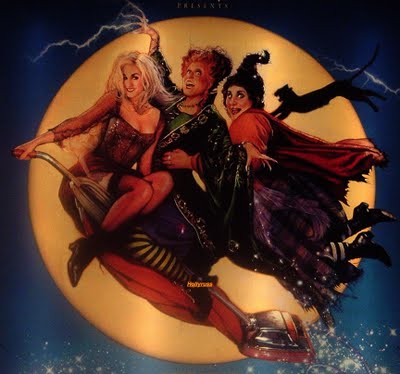
Film Flashback: Hocus Pocus!

As another Halloween proceeds towards a gusty climax here in Detroit, it seems appropriate to look back to a film that has come to define this holiday for many members of my generation.

Hocus Pocus also stands out in my personal cinematic history in that it was the first film I ever observed shooting, thus becoming my unofficial first extra-ing gig.

As an impressionable eight year old, it was very exciting to see bright Hollywood set lights on a familiar street not far from my family’s home in downtown Salem. The production had come into the area for a couple weeks of location shooting, turning a community center off Salem Common into a school, a house not far down that road into a main character’s residence, the Common itself into a brief visible character, and various areas around the city into backdrops for several short exterior sequences. They may have also traveled into nearby Marblehead for a few shots – I don’t recall for sure.

The film’s visit in October 1992 also happened to take place in the 300th anniversary year of the notorious Salem Witch Trials, so there was an extra – large level of pomp and circumstance around the town. The annual (and seemingly endless if you are a resident) Haunted Happenings festival was well underway.

I do clearly recall standing in front of the Old Town Hall with a modest crowd as the cameras rolled on an early evening crowd scene. The director asked us to make a lot of noise as he did a couple of panning shots, and so we willingly obliged. It was fascinating and surprising (again, eight year old point of view) to see the large construction lights illuminating a familiar area that didn’t usually get that much attention.

I also remember observing the film crew in residence around town for a week or two before and after the town hall scene, with much curiosity directed towards the film trucks around Salem Common and the presence of extra cars and crew members around other familiar locations. At the time, Massachusetts did not enjoy its current status as a regular destination for Hollywood filming, and so it was A Big Deal for anyone in the area to observe the production activities.

A handy Boston.Com guide to the local filming of the movie — amusingly claiming that “it’s a little known fact that some scenes of the film were really shot in Salem” — reveals that the filming I recall was the scene leading into the film’s Halloween party sequence. The filming locations are also referenced in another article, and I’m sure there are others.

Fans of the movie might not know or recall that the finished film arrived in theaters in the summer of 1993, just a few days before my 9th birthday, and was not a box office hit. Why Disney chose to bring an obvious fall – themed film into theaters at that time of year is inexplicable. The film eventually found its longevity in the home media market, first through a video release and then through a regular seasonal presence on cable channels.

A bit of film nostalgia and history on the now 21 year old movie:

  • Its IMDB trivia page says that star Bette Midler considers this movie to be her favorite film project.
  • Co-star Sarah Jessica Parker was just five years away from starting her most iconic and well – known role in Sex and the City, but was also an industry veteran by this point in time.
  • Third trio member Kathy Najimy performed a role originally intended for Rosie O’Donnell and led the cast representation at a 20th anniversary screening last year.

hocus-pocus illustration

Standard
Theatre

Theatrical Throwback: the enchantment of Cinnabar and the charms of modern technology

In the fall of 2010 I had one of my most spontaneous theatre experiences ever. This memorable evening took place in the bucolic setting of the Cinnabar Theater in Petaluma, CA.

Cinnabar is just like that warm and cozy family member’s house that you wish you could stay longer at. Set high on a hill, with a very narrow driveway and sweeping views down to the Petaluma and greater Sonoma countryside, it invites guests to enjoy a wide array of theatre, opera, musical, dance, and other types of performances.

On this particular evening, the theatre offered a double – bill of one act performances. The first production, “We *Heart* U, Nosferatu!”, stood out more for me in the audience. The elaborate stage set – a husky interior with a random large screen for the benefit of the audience – felt like stepping in to someone’s home.

The uniqueness of the staging, where the primary actor (Keith Baker) was the only one seen onstage, while Allison Baker and Mary Gannon Graham appeared via an offstage and live Skype feed, certainly contributed to the memorable experience. As a backstage theatre person, I was excited by the risk taking and unknown of the production – what would they do if the feed failed? were the two actresses going to appear in the flesh? how did they manage to connect all of that technology?

The show was revived the following year at Main Stage West, using the same cast. I would have liked to have seen that production and am sure it maintained the same commitment to comedy on an even more intimate scale.

Standard
Movies

Birdman impresses but also overrates

I eagerly joined the first preview crowd to catch Birdman at the Main Art Theater last Thursday night, but it took me awhile to write it up here. Probably because the film felt like it fell victim to its own hype, while still being a solid and impressive feat.

Michael Keaton stars in a role with deliberate parallels to his well – known Batman alter ego. “Has – been” actor Riggan (Keaton) has chosen to adapt the Raymond Carver story “What We Talk About When We Talk About Love” for the stage, in a bid to restore his artistic creed to a variety of audiences and prove that he can be a triple-threat actor, writer, director… plus financier and more. He is backed up by a motley crew of associates, including a troubled daughter (Emma Stone), an ex who seems somewhat still interested in him (Amy Ryan), a loyal assistant (Zach Galifianakis) and a trio of actors supporting him on the stage: Edward Norton, Naomi Watts and Andrea Riseborough.

Director Alejandro González Iñárritu stages the film in almost one uninterrupted take, a choice that initially was disorienting, exciting for awhile, and ultimately felt like it wore out its welcome. Apparently the actors had to match choreographed movements in order to maintain the fluidity of the visual story. Iñárritu is one of several credited writers on the script, and the story can’t seem to decide if it wants to focus solely on Keaton’s character, Riggan, and his challenges, or show the side of a satirical backstage drama, casting attention on the strong egos and challenges coming from every direction within a theatre production.

The film also includes numerous fantastical elements that initially seem to be a homage to Star Wars, but later take on an unclassifiable approach. Eventually the film itself seemed to become a male – led version of Black Swan, where Keaton, like Natalie Portman’s character in the earlier film, continues to feel competition and torment coming from a wide variety of sources, and struggles with a way to achieve balance. I might have appreciated the film more if it had dared for a darker ending than the one it contains, which felt tacked – on and overly hopeful.

Ultimately the film stands out as a technical achievement and a return to form for the esteemed Keaton, who has called it the most challenging performance of his career. While the supporting cast is not given much time to shine, especially as the film goes on, they do make impressions, especially Norton, Stone and Watts, leading to an ensemble feel and knowing acknowledgment of the challenges and rewards of show business.

Standard
Theatre

Honoring Chekov in Contemporary America

Vanya and Sonia and Masha and Spike, which seems to be this year’s “regional favorite”, meaning that it’s appearing at many theaters across the country, will conclude a successful Michigan premiere run at the Tipping Point Theatre this afternoon. I was happy to be in the audience for Friday evening’s performance.

The play explores a modest web of relationships among siblings living in Bucks County, Pennsylvania. The titular Vanya and Sonia, so named by their theatre professor parents, live a quiet life in the country with occasional visits from neighbor and housekeeper Cassandra. The characters suggest they are not exactly happy with their idyllic existence, and it is quickly upended by the arrival of their sister Masha, a flashy and dramatic New York actress who pays the bills for their family home. Masha brings along her much younger boyfriend, Spike, while the group is later joined by neighbor Nina, a younger budding starlet who is familiar with Masha’s acting career and has her own dreams about a life in the spotlight.

Christopher Durang’s script initially leans heavily on expository rather than natural – seeming dialogue, but seems to find its groove as the play goes along. Preparation for an important local party is a highlight of the story, as Masha initiates an idea for all of them to reference Snow White and the Seven Dwarfs, only to be upstaged by a different plan from Sonia. The party itself is left unseen, and the aftermath has a range of effects for all of the characters.

Tipping Point’s black box space was put to excellent use for this production, with a long promenade suggesting a sunroom or living room and an entry to the rest of the house in the rear of the stage. Modest sound design suggested the outer world of the play. Lighting design was also subtle and effective, with shadows on stage left in a morning scene giving way to the opposite effect for an evening scene, and brighter colors for solely interior sequences.

A tight knit ensemble of local actors had clearly been having a great time with the script and production, led by director James Kuhl. Real life couple John Seibert and Terry Heck feature as the siblings, and have many moments of playful, yet layered interaction. Janet Maylie brings suitably throaty and dramatic flair to the role of Masha, and seems to offer exactly the type of woman the script suggests. Brian Thibault has fun “playing dumb” and bouncing around the stage as Spike. Sonja Marquis brings inventive comedic choices and strong presence to what could have been an underwritten role as Cassandra. And Tara Tomcsik portrays Nina as an archetypal ingenue with a combination of starry eyed wanderlust and klutzy ditzy charm.

Standard
Movies, Theatre

European Film Expeditions

This week I have caught up on some recently released and filmed in Europe films, making me stoked to go back to The Continent during spring break next March.

Two FacesFirst up was the new thriller The Two Faces of January, adapted from Patricia Highsmith and from the writer of Drive. Hossein Amini retained his costar in the earlier film, Oscar Isaac, and added Viggo Mortensen and Kirsten Dunst into the mix as a central trio caught up in a deceitful web within 1962 Greece. All three actors find several elements to highlight of their roles, with Mortensen nailing the disheveled intrigue of a shady businessman, longtime cinema veteran Dunst offering a mature portrayal of a young woman caught between several worlds, and Isaac continuing to come up the ladder, cinematically, filling in the role of a man who has his hands in several parts of Athens life.

The actors are aided by carefully chosen photography and film work, emphasizing the colorful contrasts of Greece, and a reminder of an era when locations felt more far away (presumably) than they do in the present day, with real effort needed to get a specific plane ticket, to make your next travel connection, or make sure you still have everything you need for your out of the country identification and security.

The film might suffer from what I assume is a flimsy source material. Highsmith’s interest in shady characters, same-gender relationships and European locales is all there, but at a 90 minute running time, there isn’t much depth aside from the inciting event and what happens after that experience. A more seasoned director might have gotten deeper performances from the leads, though Amini’s experience with narrative tension comes in well late in the film with a series of “will they or won’t they succeed in _______ activity” sequences.

The second film of the week, My Old Lady, is a cinematic interpretation of a play originally seen at my “other” hometown theatre, Gloucester Stage Company, in 1996 and 2005. (I remember hearing of both productions but did not see either of them performed.) The film also marks the belated cinema directorial debut of Israel Horovitz, former artistic director of GSC and well – known in the theatre world. Throughout the film, its stage origins are clear, with some positive and some negative results.

my old ladyThe film also seems to be an excuse for its central trio – Kevin Kline, Maggie Smith and Kristin Scott Thomas – to flex their acting muscles in a new project. Scott Thomas has been seen onscreen before with both Kline and Smith, but not in the same film. IMDB says her role was originally scheduled to be played by Jane Birkin, which might have made more sense in the story.

As it is, the start of the film introduces Matthias (Kline), a down on his luck New Yorker who has recently traveled to Paris to inspect an apartment his recently deceased father has left him. He quickly learns that the apartment has been inhabited for many years by Mathilde (Smith), a woman now in her 90’s, and her daughter (Scott Thomas), neither of whom is receptive to his intention to sell the house for income purposes. The focus alternates between the three central characters as Matthias debates whether or not he wants to go through with the sale, while through a series of circumstances, Mathilde reveals that she knows more than she lets on about her family history and how the two younger people are connected to her and each other.

The script’s stage origins are clearly visible throughout the film, with several long monologues still in place and a few scenes clearly added to “open up” the plot and take advantage of the perennially picturesque Parisian locations. Most of the story settles in the central location of the Marais apartment, which seems to be quite large and endless, complete with an attached garden.

Kline seems to be enjoying the demands of the part, showing awkward alcohol – induced stodginess in several scenes, but then following it up with hints of long emotional neglect. Smith also goes beyond her current Downton Abbey stereotype of twinkling eyes and cutting comments, not hesitating to be forceful in several scenes while also showing genuine heart. Scott Thomas falls somewhere in between with a difficult part that seems to be in the middle of the two-character seesaw solely for reaction – based purposes. I can’t say that the film fully convinced me as a drama, but if its taken as an acting class from veterans and perhaps isolated out with just a few of the character monologues and moments, then the best parts come to light.

It was cool to see the full Art Deco experience of the Main Art Theater in action last night.

Main Art

Standard
Theatre

What does Romeo and Juliet mean to you?

(excerpt from an article in progress that will run in the program for The Hilberry Theatre‘s upcoming production of Romeo and Juliet)

Romeo and Juliet. In fair Verona. Two star crossed lovers. In fair Verona where we set our scene. Deny thy father and refuse thy name. Two households both alike in dignity. A plague o’ both your houses! But, soft! what light through yonder window breaks? Parting is such sweet sorrow.

Is there a Shakespeare production that has greater iconic impact and resonance? This one occupies a special place in literary minds. But this fascination takes many forms.

Consider film. Older audiences recall, and younger audiences might be familiar with, the 1968 cinematic version by Franco Zefferelli, with Leonard Whiting and Olivia Hussey portraying the lovers. In the 1990’s, filmgoers were treated to the romance again, with Leonardo DiCaprio and Clare Danes in the leads. Now, in 2014, that once modern portrayal is almost 20 years old and has begun to age. A more recent adaptation, with Douglas Booth and Hallee Steinfeld in the lead roles, was less well received following its choice to not incorporate all of Shakespeare’s traditional dialogue.

The story’s first true home is arguably right here in the theatre, and the play has been seen six times here at the Hilberry. With a play so familiar, we continue to look for ways to tell the story in a fresh and appealing way.

Director Blair Anderson itends for this version intends to be a postmodern approach to the classic, with an increased emphasis on the perspective of Juliet. In conceptualizing the story, Anderson notes that “different generations have different emotional contexts.”

Scenic Designer Tonae Mitsuhashi has fashioned a festival of light for this production, with many lines of string coming into center stage. The costumes will also take on the modern flair.

We hope this production will carry on the lovers’ story to new audiences through our ongoing student matinee series. Such a story can still find relevance in our frenetic modern world and cause audiences to pause to reflect on historical romance and the role of citizens and culture.

Standard
Movies, Theatre

A Master Builder stacks the deck of drama

The Detroit Film Theatre reopened for the season last night with Wallace Shawn’s adaptation of Henrik Ibsen’s play The Master Builder, here called Master Builder for its cinematic iteration. I joined a large crowd there tonight (and may have been the youngest member of the audience) for its second screening.

master builderShawn stars as the titular character, a manipulative architect who has long been used to bossing around his staff and family members, including a possibly mentally distressed wife, played by Julie Hagerty in a role worlds away from her more well – known comedic performances. It is quickly made clear that the Master Builder is on his deathbed, but he appears to have no remorse or last wishes. As the film opens, he’s visited by a colleague (Andre Gregory) who seems to have some unfinished business, but their conversation does not go completely satisfyingly for either party. Much pathos lingers in the air from all the characters and the old house setting, which appears in quick exteriors to be somewhere in New York or New England.

After a particularly intense moment, a mysterious woman (Lisa Joyce) appears, all dressed in white. She and the Master Builder have a lengthy conversation about an incident where they may have met ten years before. This particular section of the script is expertly tonally sculpted as the mood moves from somber to humorous – and back again – sometimes over just a few lines. Joyce, an actress whom I’m not familiar with, brings a luminous intensity to her role. Looking like a pop singer out for tennis in her white shirt and very short shorts, she seems to bring out a youthful side of Shawn and his character as they quickly focus on how they met before and what the Master Builder needs to do at the present moment. But they are still under the weary watchful eyes of his wife, and Hagerty continues to surprise with her intensity and range of emotional feeling as her role in the story becomes clearer.

Other coverage of the film suggests that Shawn made some modest changes to the play in adapting it for the screen. Unfortunately I have not seen it performed live in order to comment, but the general mood and feel reminded me greatly of a similar Ibsen story, John Gabriel Borkman, which I had the good fortune to see in a 2007 London production starring Ian McDiarmid, of Star Wars fame, and Penelope Wilton, of Dowton Abbey and numerous other film/television projects. (hey, look, that production is referenced on its directors website!)

Shawn and company have created a captivating film. Scenes are generally focused on two characters, with a few brief exceptions, but move fluidly from one segment to the next. Director Jonathan Demme has an extensive and acclaimed resume in film. I found his early scenes involving a hand-held camera to be overly kinetic and dramatizing, but appreciated a later focus on natural light in the scenes and a shift to letting actors do the talking and storytelling.A late sequence involving unshown off camera objects was an effective nod to the probable limitations of the stage.

The film unsurprisingly holds the story’s dramatic intensity through the entire length of the film without betraying its stage roots. Shawn seems to have achieved a timeless quality with the text, and where heis known for his immersive adaptations of other works, such as Vanya on 42nd Street, this one will join them in continuing to hold a rightful place in the theatrical – cinematic pantheon.

Standard