Massachusetts

Throwback Thursday: Remember Chain Emails?!

I thought I’d pull something off my LiveJournal for a throwback post today, and was surprised to see that I’d made this long-ish post around this time of year back in 2002.

> Directions
(Don’t try this at home!)
> Place CD-ROM on a small paper cup in the center of the oven. The CD-ROM should be at least an inch above the bottom of the oven and far from the sides.
> Turn out the room lights for best visual effects.
> Caution! be ready to stop the oven when the CD-ROM starts to smoke. The smoke smells bad, and is probably bad for you.
> Set the oven on high for 5 seconds.
> Watch the pretty blue light show.
> Turn on the room lights.
Look at the nifty fractal pattern etched into the aluminum. If you have several CD-ROM’s try some label side up and some label side down. In my experience, CD-ROM’s with thin ink in the labels work best. They are prettiest when the label side is up. CD-ROM’s with thick label ink start to smoke earlier. DEC CD-ROM’s work very well, as they just have a bit of black lettering on a clear background. I have a bunch of other CD-ROM’s with full color pictures that don’t work nearly as well.
> Remember, don’t try this with Mom’s Beatles albums!
>
This won’t harm a modern Microwave oven, unless you cook the CD-ROM too long and coat the oven with smoke. Old microwave ovens may have problems.
> If you can’t easily replace your oven, don’t use it for science
> experiments.
>
> The Science
The aluminum layer in a CD-ROM is very thin. The microwave oven induces large currents in the aluminum. This makes enough heat to vaporize the aluminum. You then see a very small lightning storm as electric arcs go through the vaporized aluminum. Within a few seconds there will be manypaths etched through the aluminum, leaving behind little metalic islands. Some of the islands will be shaped so that they make very good microwave antennas. These spots will focus the microwave energy, and get very hot. Now you will see just a few bright spots spewing a lot of smoke. The good part of the light show is over, turn off the oven. I suspect that if you leave the oven going much longer, the CD-ROM will burst into flame. This will smell very bad and may do bad things to your oven and house. Don’t do it.

HOW TO KEEP A HEALTHY LEVEL OF INSANITY
AND DRIVE OTHER PEOPLE INSANE

Page yourself over the intercom. Don’t disguise your voice.

Find out where your boss shops and buy exactly the same outfits.
Always wear them one day after your boss does. This is especially
effective if your boss is the opposite gender.

Send e-mail to the rest of the company to tell them what you’re
doing. For example: “If anyone needs me, I’ll be in the bathroom.”

Put mosquito netting around your cubicle.

Insist that your e-mail address be:
zena_goddess_of_fire@companyname.com

Every time someone asks you to do something, ask if they want fries
with that.

Put your garbage can on your desk and label it “IN.”

Put decaf in the coffee-maker for 3 weeks. Once everyone has gotten over their caffeine addictions, switch to espresso.

When driving colleagues around, insist on keeping your car’s
windshield wipers running during all weather conditions to keep ’em
tuned up.

Reply to everything someone says with, “That’s what you think.”

Highlight irrelevant information in scientific papers, then cc them
to your boss.

Finish all your sentences with “in accordance with the prophecy.”

Don’t use any punctuation.

As often as possible, skip rather than walk.

Ask people what sex they are.

At lunch time, sit in your parked car and point a hair dryer at
passing cars to see if they slow down.

Specify that your drive-through order is “to go.”

Stomp on plastic ketchup packets.

Holler random numbers while someone is counting.

Honk and wave at strangers.

Decline to be seated at a restaurant, then eat the complimentary
mints by the cash register.

Sing along at the opera.

Go to a poetry recital and ask why the poems don’t rhyme.

Five days in advance, tell your friends you can’t attend their party because you’re not in the mood.

JANUARY 1, 2000
>In honour of Charles Schultz, who’s just retired Charlie Brown and the
>gang: Source: John C. Davenport, The Dallas Morning News
>
>Most cartoon characters remain frozen in time. Though they’ve been around almost 50 years, the members of the Peanuts gang are in some unspecified elementary school holding pattern. But what if they had been allowed to age like the rest of us? With apologies to Charles Schulz:
>
>Charlie Brown:
>Operates Good Grief Counselling Inc., which specializes in manic-depressives and people who are just having a bad day. Moonlights as a pitching coach at high school and college levels. Married to Marcie. They have a roundheaded son who wears glasses.
>
>Linus:
>Developer of Security Blanket Software, which is a hot item on the New York Stock Exchange. Worth millions but is actively involved in charitable causes, including the Great Pumpkin 5K Fun Run every Halloween. Only man who makes Bill Gates nervous.
>
>Lucy:
>Serving her seventh term in Congress. On her third husband. Claims she
>hasn’t thought about Schroeder in years, but the background music on her answering machine is Beethoven.
>
>Schroeder:
>After years on the classical performing circuit, he runs a piano bar in
>Carmel, California. Won’t let anybody lean on his piano.
>
>Sally:
>Never quite got over being spurned by Linus. Has a cat named Sweet Babboo. Sells Mary Kay.
>
>Peppermint Patty:
>Women’s athletic director at a Midwest university. Her fashion credo:
>”Sandals go with everything.”
>
>Snoopy:
>In dog years, he’d be 350. What do you think would’ve happened to him?
>Linus has created an endowment at Daisy Hill Puppy farm in Snoopy’s memory.
>
{I wonder what ever happened to the “Little Redheaded Girl”?]

Standard
marin county, Massachusetts, Movies

Throwback Thursday: Reflecting on the Scream Series

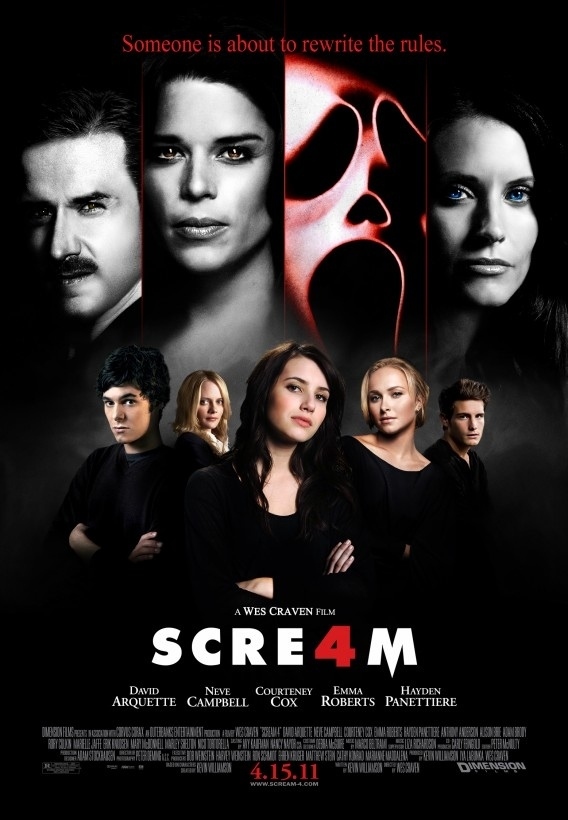
Four years ago I was very excited that there was a new “Scream” film. I didn’t note at the time that it had coincidentally been filmed right here in Michigan. I wasn’t living here at the time but had learned of the filming from local friends.

I’m having some giddy enthusiasm over the prospect of seeing SCREAM 4 today at the movies. I’m sure this is due to the memory of the SCREAM series being a big deal “back in the day” and the curiosity of seeing if this film lives up to its predecessors. I’m deliberately holding off reading any reviews of the film and will do so after seeing it. In a few other recent film-going experiences (BLACK SWAN comes to mind) I regretted taking a close look at the publicity before seeing the film.

I never saw the original SCREAM in the cinemas …. in fact, I don’t think it was originally released to the North Shore. This was before the Danvers 20 screen megaplex opened, and screening options were limited. I do remember the runaway success of the film, and watching with interest as it continued to be shown well into mid 1997. I do miss those days of long running movie hits, as the screen to DVD window is so tight now, it’s almost better to wait for the video. I did find out recently that the original film was shot in my area of California. A friend of a friend had a small supporting role. The climax of the film was shot at a house which I have driven by a few times, without realizing its so-called historical significance.

SCREAM 2 was another story. This time, it was a big deal to see the film as soon as it came out, and I eagerly compared impressions with my classmates. My dad and I were regular visitors to the Solomon Pond Mall cinema in Marlborough, MA. This complex had achieved local acclaim as “New England’s first stadium seating megaplex” and was virtually unique for the first 6 months to 1 year of operations. Hoyts quickly opened similar complexes in nearby Westborough and Bellingham, but there was something special about the first space. Or it could have been “never as good as the first time” for film goers. I think I actually saw the film again a few weeks later in Vermont, either sneaking in to the R-rated movie or going with an accompanying adult. The “live” nature of seeing it on opening weekend, with a full sold out audience also looking at it for the first time, stands out very clearly in my memory. It also helped that it was on an enormous cinema screen with stadium seating and perfect presentation.

SCREAM 3 was also a unique experience. This time, we traveled to the Showcase Cinemas in Randolph for my first (and still only) visit to that South Shore megaplex. I could tell from the start that the enthusiasm wasn’t there for the production team in this installment. Neve Campbell’s virtual absence from the story, and the overly tongue in cheek Hollywood nature of the script, suggested to me that there was not a lot of excitement in the tale.

What will SCREAM 4 bring? I’m looking forward to going over to the Larkspur Landing Cinema this afternoon to find out.

Standard
Traveling

Visits with Secret Agent Friends

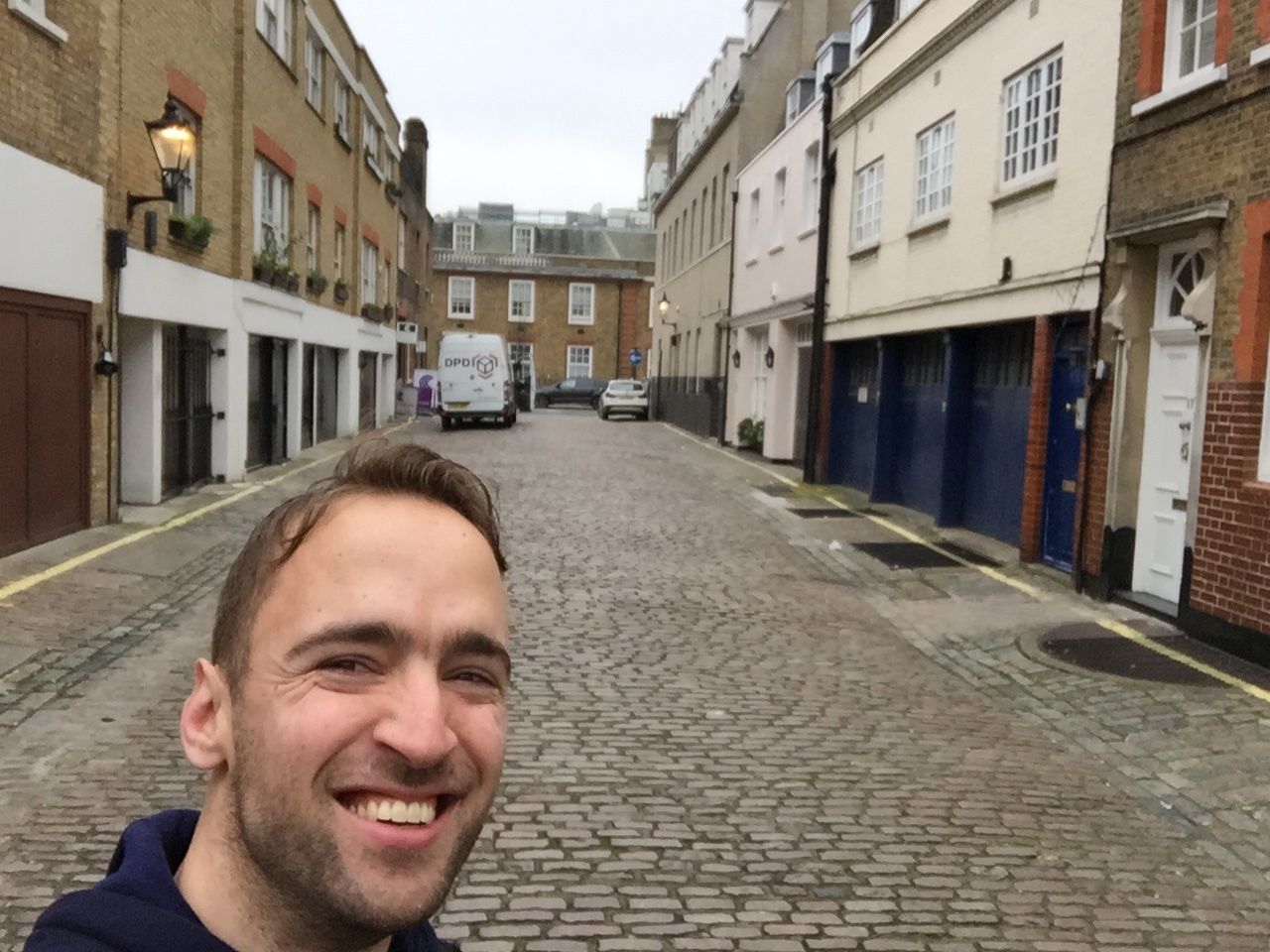
Paying homage to The Avengers (at one of the series' primary filming locations) while back in London.

Paying homage to The Avengers (at one of the series’ primary filming locations) while back in London.

My recent visit back to England gave me some nostalgia over my original introductions to British culture, which came in the visual entertainment format of The Avengers television show and the James Bond film series. So I decided to re-visit some of their output during some downtime back here in the USA.

First up was the Avengers fourth season episode entitled A Surfeit of H20. This story comes right in the middle of the series’ best season, and it made me quite unsettled when I watched it in my younger years. It seems to take a more unique spin on the standard Avengers formula than the episodes surrounding it, with two particularly eccentric guest allies complimented by two particularly devious guest villains. As always, the story is anchored the inimitable Patrick Macnee as the suave John Steed and Diana Rigg as his stylish partner Emma Peel. As an aside, the episode’s plot gets summed up rather well via Tumblr.

In the modern era it is intriguing for me to look back (or rather look again) at many of the episodes which were frequent childhood/younger years viewing material for me. This had its ebbs and flows, coming first with the series showing regularly on the A&E network around 1990, and then a few years later on the Encore Networks “Mystery” channel from around 1995 to 97. The point is that I got to know the material very well.

But, of course, with the now-older personal perspective, the material seems … different. wittier. more classic as time goes on. Those feelings felt particularly evident in the case of this episode, which, as I mentioned, spooked me when I was younger with its atmospheric black and white sequences, but now more amused me. At the same time it stands as a hallmark of the series’ black and white filmed era, with a tight attention to detail, location filming, and carefully chosen guest stars.

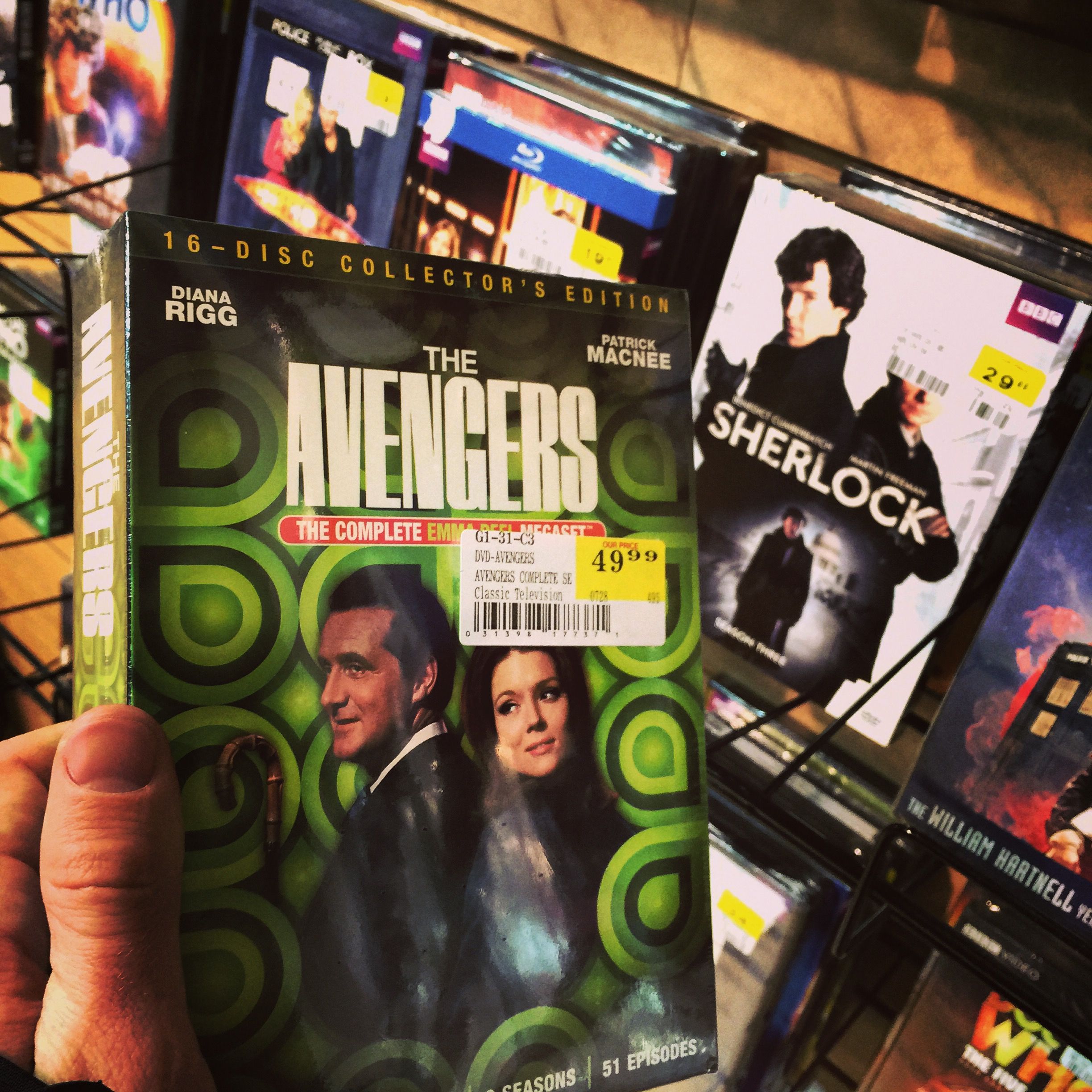
Avengers DVD setNext up was a look at one of the color episodes of the Emma Peel era, Something Nasty in the Nursery. This is another one that I remember particularly enjoying when I was younger, but somewhat neglecting in the years since.

The story takes a more pedestrian slant than most of the earlier tales in the series, but it’s indicative of the general campier and goofier direction of the series at this point in the production history. Steed and Mrs. Peel are tasked with discovering why top secret “hush hush” secrets are (again) leaking from higher-up government operatives. Turns our that the men in question had (conveniently) all been disciples of one Nanny Roberts, who later oversaw development of “GONN”, the Guild of Noble Nannies, a seemingly well-mannered finishing school for ladies in training. But it turns out that the current leaders of GONN, a Mr. Goat and Miss Lester, have other plans.

This episode lacks the memorable style and depth of some other installments, and has a number of continuity errors (or simply bad edits) that detract from its appeal. A side plot involving an ultra upper class toy shop is more intriguing than the primary plot. But the story continues to show the series’ careful, deliberate and tasteful attention to style – especially in the color era – with vibrant hues bouncing off the screen and distinctive characterizations that live up to what writer Rodney Marshall calls the “subversive champagne” of the series, where dramatic layers are presented subtly with a slightly humorous edge.

Finally, my re-viewing extended to a pair of James Bond films made thirty years apart – Casino Royale and The Spy Who Loved Me. But I will save those thoughts for another post.

Standard
Movies, Theatre

A New Play plays the provocation card

This weekend’s entertainment/arts culture vulture journeys led me to take in two stories that both explored the art and challenges of what is known and unknown in any given situation, and how individuals work around those issues – or not – and maintain a sense of awareness in their possible confusion.

I’ll save the movie for a separate post; here is a focus on the play:

Meadow Brook Theatre in Rochester, MI, is currently offering (just) the third professional production of Luce, a new play by JC Lee that premiered at NYC’s Lincoln Center last year. I learned that Lee had been a writer in residence for a year at my California hometown theatre, Marin Theatre Company.

The play is very much of the moment, with references to Facebook, mobile technology, teen obsession with texting, high school social dynamics and more. But the broad portrayal seen at Meadow Brook, while commendable, did not seem to fit with the ethos of emphasizing the smaller moments that the playwright was clearly going for.

Experienced and versatile local actress Serab Kamoo carries the show as Amy, Luce’s adoptive mother who wants nothing more than the best for her son. The rest of the cast gives strong effort to their roles, but I felt that only Kamoo truly convinced in her part. As Luce himself, Leroy S. Graham fares best with a monologue partway through the show, which is the only chance that the character has to truly speak for himself.

I couldn’t help but wonder if the show would have played differently on a smaller stage and with a more unified sense of direction. The script never spells our Luce’s specific intentions when his actions are called into question, but it never allows the character to get to the heart of the matter, either. Meadow Brook’s stage is well used in the design, with a clever conceit of a downstage area doubling as two locations thanks to some lighting maneuvering, but some of the intimacy of the drama is also lost in the wide space.

The play is performed without intermission and suffers from a sense of anticlimax. Several scenes close to the end could easily be the end, and when the last scene comes around, the resolution feels less satisfying than if the story had closed on a more ambiguous note. Similarly, since Luce’s true intentions are never made clear after his actions are called into question, a note of uncertainty might have driven the plot home in a deeper and more direct way.

All this isn’t to say that I didn’t enjoy the play. I am always grateful when a theatre presents a new piece, and especially if it is something that stimulates a feeling of engagement and discussion.

Standard
marin county

Throwback Thursday: Life in West Marin County

California has been on my mind since yesterday’s announcement of mandatory water rationing in the state. I wrote this post on Blogspot just under four years ago… and can’t believe that much time has passed!

I’m highly enjoying my current (temporary) routine of making a visit toWest Marin County at least once per week. This mini-region of Marin (it does feel like a character of its own) has been my favorite part of the County since I began to get to know it better in early 2009. (Hmm, that is a very long sentence.)

I am going to West Marin regularly to ride at Halleck Creek Ranch in Nicasio, a local stable specializing in offering opportunities for individuals with varying physical abilities. The farm is at the end of a 2.5 mile long dirt/gravel road, so getting there is an adventure in itself. Last week I got a flat tire soon after my visit there. This week I was more cautious about staying under the speed limit. The hills of Halleck Creek were an addictive shade of green that day, as you can see in the image on the right side of the text.

I’ve been extending each visit to West Marin with a stop in Point Reyes Station, an artsy one-horse, yet character filled town that is the center of the region. It’s also home to the Bovine Bakery, the best bakery in all of Marin County, where I am often tempted by a cookie or other treat they will offer.

Yesterday I took the trip one step further and headed south to Bolinas, a remote town that is so far out, it’s on another geologic plate. (No, really – the San Andreas Fault separates Bolinas and the Point Reyes Peninsula from the rest of California.) As Wikipedia says, “The community is perhaps best known for its reclusive residents. Historically, it is only accessible via unmarked roads; any road sign along nearby Highway One that points the way into town has been torn down by residents.” The town is very difficult to access, with just one road in and out, and two curvaceous roads giving connections to that aforementioned one road.

I’ve found the place to be highly intriguing ever since my first visit there in March of 2009. In fact, I have toyed with the idea of spending some time as a resident there, even going so far (last fall) as to apply for a live-in childcare position. But nothing came of that job, and I ultimately decided that the town is a little too far out for it to work for me. Not to mention that with the current high gas prices, I would be spending a lot of time and money at the pump.

It’s clear when I am in Bolinas that the people who are there WANT to be there, and value their local privacy. The town is so distinct that it stands out from anywhere else, with the ocean surrounding it on three sides and a high area (“The Mesa”) just a short distance away. It would be interesting to stay out there… just for a night … sometime, so I hope to get that opportunity.

Standard
Movies

Bookending March at the Maple Theatre

IMG_1171I was pleased to realize upon March’s conclusion that (in the US at least!) I only visited independent cinemas this month, and in an unintentional coincidence, trips to The Maple Theatre (pictured at right) north of Detroit bookended my spring break adventures abroad.

I did deliberately choose to catch The Second Best Exotic Marigold Hotel prior to spring break, where it stars a number of well-known elder British actors. And the sequel is more or less an excuse to let them act again in a beautiful location. It’s most notable for the central performances of Maggie Smith and Judi Dench, given more dramatic space than in some of their other film portrayals, and Smith especially reminds the viewer of how much she can do with actual acting beyond just raising an eyebrow or giving a witty remark.

Last night I changed my earlier view and went back to the Maple to catch their last showing of Still Alice, the movie that gave Julianne Moore a well-deserved Academy Award and is now making its way out of theatres. As expected, the film is a showcase for Moore’s bravura and sensitive performance depicting a woman who faces a diagnosis of early onset Alzheimer’s disease. Something that may have gone less noticed in the awards season conversation is the effective supporting cast that surrounds Moore, most notably Alec Baldwin as her husband and Kristen Stewart as her youngest daughter.

While the film inevitably feels like a “movie of the week” at a few moments and has a slightly overcomplicated plot (does Stewart’s character really need to live in California if she can conveniently make it home for most of the film’s major scenes?), Moore’s sympathetic and nuanced portrayal overshadows those deficiencies to create a poignant and powerfully thoughtful cinematic experience.

*** for both films

Standard
Movies

London Cinema becomes a Sneak Preview Opportunity

My time in London is now in the rearview mirror and I hope to be back there again soon. Or at least sooner than 7 years from now!

As befitting a world class cultural center, my visit allowed for taking in of two films not yet released in the USA.

The first, Ex Machina, was an excellent and positive example of mismarketing. I recall the film’s trailer promising an explosive and somewhat action packed adventure and suggesting that the movie would be a familiar “rise of the machines” type action drama.

But the real film turned out to be a surprisingly intimate and provocative drama, with a few traces of action, that asks timely questions about the nature of intelligence and humanity. While the debate between man and machine is also covered along the lines of Blade Runner or some other of its cinematic cousins, this film also adds a gendered element where the machine is considered a female, while (her) observers and makers are male. In its use of an artificial or foreign female protagonist, the film recalls last year’s Under the Skin and could be seen as a continuation of that same story.

Domnhall Gleeson stars as a young prodigy seemingly randomly picked to spend a week at the secluded lab of Nathan (Oscar Isaac) who is a senior ranking member of his unnamed software and computer development company. The film drops us right in to the arrival and meeting of the minds, and wastes little time on unnecessary exposition. What follows stays in the realm of eerie plausibility as Gleeson meets Isaac’s latest artificial intelligence creation, the mysterious and inquisitive Ava, played by Alicia Vikander. Ava presents as female, leading to an eventual attraction between the two characters.

Although Isaac’s role could easily descend into a Dr. Frankenstein – ish extreme, his subtle portrayal, with several modern touches, ensures that the audience continues to think of him as an equal and not maniacal player in the equation between the central trio. Sonoya Mizuno also joins the fray in a minimalistic supporting turn, with one great out of left field moment.

The film eventually forces itself into a dramatic denouement along the lines of what one might suspect as the story goes on. But it never loses its initial air of intrigue and thoughtful (and somewhat plausible) integrity.

My Rating: ***1/2

The second film, I Am Michael, has attracted modest attention in the US press, from what I have seen, and seems to be awaiting an official release date as it slowly makes the festival rounds. It features a trio of well – known actors in the leading roles, with James Franco tackling the central role – and real person – Michael Glatze, a former gay activist who dramatically renounced his homosexuality and instead turned to a life as a Christian pastor in Wyoming, complete with bible school education. Zachary Quinto costars as Glatze’s long-term partner, with Emma Roberts appearing late in the film as a woman who becomes Glatze’s heterosexual partner.

I was not familiar with Glatze’s story, which was described in a New York Times article a few years back that served as the basis for this film. At some point I learned that Glatze had spent time at a Buddhist meditation center in Colorado where I have also spent time, and I might have met him, so that curiosity drew me in to see the film.

Franco appears to renounce his recent run of comedic (self-parodying) performances, which likely reached its peak or nadir with the Christmas spectacle The Interview, in this role. Instead of a smirking and self-satisfied attempt to channel a person, I again saw a real acting performance, with close attention paid to conveying Glatze’s internal struggle of how to define himself in the world.

Though Roberts and Qunito’s screen time is limited, both actors maintain the drama of the story arc. I haven’t seen much of Roberts’ work in other films, but did feel that she was particularly successful here in playing a more adult-oriented character, also presumably based on a real person.

The Buddhist connection that made me curious about the film is given limited exploration, and features primarily in a section of the film that feels like it rushes through what happens next in Glatze’s life after he breaks from his gay lifestyle. Veteran actress Daryl Hannah, who seems to have disappeared from films in recent years, appears briefly as the mediation center’s director.

The integrity and commitment of the performers felt somewhat let down by a poorly thought out script, which drew several (presumably) unintentional laughs from the audience in response to multiple instances of cliched dialogue. It seems inevitable that biopics also devolve into a run of greatest hits of the particular person’s lives.

Nonetheless, I hope this film finds an audience when it does reach the USA, if only for a closer look at several hardworking actors and a dramatic look at sexual identity, which remains a topic that is rarely seen in mainstream cinema.

My Rating: ***

Standard
Theatre

London Theatre Doubleheader

What a treat it is to be back in a place where I can choose my theatregoing based on the venue’s reputation – and my previous experiences seeing shows there – rather than the title itself.

That’s just what I did for two plays yesterday at the Royal Court and Almeida theatres at opposite ends of London. I joined the legions of tube and on foot commuters in the interim period with an extended stop at Leicester Square, which just happened to be on full showman mode with the UK premiere of Cinderella.

IMG_1002But back to the plays. First up was How To Hold Your Breath, running at the Royal Court. In some ways it was difficult to follow exactly what was going on in this story, but as the tale went on, it became clear that was part of the point. We’re introduced to Dana (Maxine Peake), a woman who appears to be in her 30’s or 40’s and is struggling to make ends meet. In the beginning of the story, she may or may not have sold herself for romance with Jarron (Michael Shaeffer), but (since this is a play!) they have an argument that sets the plot in motion and leads to Dana thinking that Jarron also holds supernatural powers which haunt her as the story goes on.

Dana brings her sister and roommate Jasmine (Christine Bottomley) into the action, and is trailed by a mysterious librarian (Peter Forbes) as her journey goes on. The supernatural thread expands with the story, leading to a series of arresting and memorable physical images near the climax when Dana is isolated against an army of people also suffering from her plight.

Because the plot meandered from point to point, it was difficult to tell when the conclusion was being set up and led to the story feeling anticlimactic for me – it would have surely been more effective with a dramatic denouement in the image described above, for instance. However, the design team offered a crackerjack sense of compactness, with backdrops rising on top of each other in the modestly sized Royal Court stage, and effective hints of sound design sprinkled throughout the narrative.

When the script by Zinnie Harris played with its lines and a sense of repetition, also near the end, that also created a feeling of taut anxiety and uncertainty. Although in a broader sense the play remained successful simply from showing two strong female leads and the sense of a realistic world nestled within current events.

(If I knew more about current political affairs in Europe I might have appreciated the play more, but I certainly felt like it could still be appreciated on its own merits.)

_________

In the evening I ventured back up to the Almeida Theatre in north-central London’s Islington district. Their current production, Game, drew me in with its promise of a unique viewing experience, and convenient “late show” 9:30pm start – the performances are actually twice per night because it’s a short length play. The show has drawn strong reviews from all major local sources.

The show takes a provocative premise and really runs with it. We’re introduced to a young couple moving into an affordable house and getting to know their new living quarters. But it immediately becomes apparent that their presence in the house is part of a sadistic plot for members of the public to improve their shooting skills. In a sharply constructed 60 minute viewing experience, we’re given a sense of what the couple must endure to live in that environment and how their efforts to live a “normal” life are severely compromised. Although the voyeuristic shooters remain somewhat thinly drawn, they get a moral conscience with one character who rises in importance during the story.

I’m sure I will remember the show most for the novelty of its staging, in which the Almeida’s modestly sized auditorium was reworked into a series of arcade style viewing experiences, with the audience (divided into three or four separate sections) seated on backless benches looking in at the central set. Viewing was also augmented by medium sized televisions above the set, and all of the scenes not involving the couple took place in areas that are part of the audience seating area, with the images being transmitted to those in other sections. Finally, the audio of the experience was through headphones rather than live listening, and the actors had to expertly coordinate between their lines onstage and off, and sometimes overlapping.

It’s clear that the writer, Mike Bartlett, intended for his piece to be cultural commentary in our ever – expanding age of reality shows and celebrity obsession. I would say that he and the design team, led by director Sacha Wares, succeed in balancing a sense of satire and one of nervous drama.

While it’s possible this show experience would be different if it was a longer or less radically conceived piece, I think it was right in tune with the challenges of today and how things could turn if we collectively don’t take more humane charge of our future lives.

Standard
Theatre

A Satisfying and Overdue Return to London Theatregoing

Barbican SignI’m writing this from my old stomping grounds of London, England, and very happy to be back here for the first time in just over seven years.

Although this is a short trip, theatregoing is naturally still a focus, and so I made sure to include at least a few plays on my itinerary. First up this afternoon was Antigone at the Barbican Centre, in a new translation by Anne Carson. Coincidentally I worked on another Sophocles translation by Carson with The Penny Seats last summer.

It was such a pleasure to be back amongst the appreciative UK theatre crowd, who treats theatre like Americans treat the movies (as a frequent and enjoyable pasttime) and are respectful about the process of putting on the show without being overly gregarious; standing ovations are rare!

As for this production, I feel like it did not fully realize its potential, although there were certainly some strong moments. And perhaps the performance will improve as time goes on, where the cast is proceeding on an extensive tour after the London engagement, traveling to multiple countries over the next six months.

Binoche anchors the story with an expected gravitas. However, I was intrigued and pleased by her choice to play the character much softer than many of her film roles. I feel that she often projects a natural confidence or comfort onscreen in many of her performances, whereas in this role, there was a humbleness and meek quality I picked up on that seemed like a completely new component of her work. As Antigone, she’s not quite as visible in the story as one might think, leaving a large chunk of the story to the work of the ensemble cast.

That was where my challenges with the show came in. Not so much with the ensemble performers, who all worked strongly with each other, although I can’t single them out because I don’t know their other work. The performers worked off a modest but spacious set and a generous lighting design. A key component of the lighting was a large center stage moon that changed as the play went on from smaller to larger. But once it expanded to its full size, it was right in my line of sight from my seat, and kept taking my attention away from the actors, like if a television was on at the same time you’re trying to talk with someone in a casual setting.

Similarly, the production couldn’t seem to decide how much modern touches it wanted to include. A large screen was occasionally used to accentuate the narrative, and led to some dramatic moments, but also felt jarring in its inclusion, like the narrative wanted to add a grander touch and move away from the focus on the words.

To conclude, it’s commendable that the Barbican hosted a production like this and clearly continues its objective to bring a wide global range of theatre to discerning audiences in London. I’m thrilled to have made the effort to see this show and to get a chance to update my experiences with one of London’s most unique artistic venues.

Barbican Flyers

Standard