Movies

International Indies

As the summer movie season continued to rev up its engines this past weekend, I was pleased to go the other direction and take in two independent films, on opposite sides of the border.

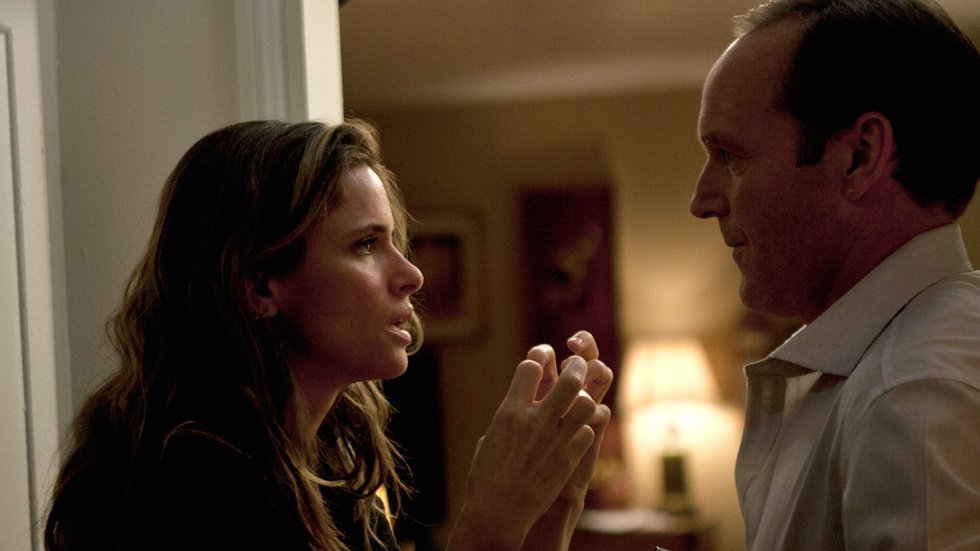
On Friday I happened to notice that Trust Me had appeared at the Quality 16. I had not heard much about this film, but a look at the cast list (written and directed by Clark Gregg, with featured roles for Amanda Peet, Allison Janney, Felicity Huffman, Sam Rockwell, and several other notable actors) showed that it might be a project of note.

Gregg wrote and directed the film, in addition to playing the lead role, and so I wondered how cathartic or personal the experience had been for him. Some scenes, most notably involving Huffman’s agent/casting supervisor character, had a strong industry bite to them, while others, mostly focused on Gregg’s own likable but awkward main character, went on for too long or did not seem well thought out.

The plot focused on Gregg’s character, a former child star turned acting coach for young actors, and his troubles fitting in to the fast – moving, changeable Hollywood system, as seen through his interactions with two primary younger clients. After meeting the second one (Saxon Sherbino) by chance, he quickly gets drawn into her and her father’s world as Hollywood outsiders, with him serving as the guide for the out-of-towners coming in from Oklahoma. Along the way, he is glad to get to know his neighbor (Peet) more intimately.

But in a sudden shift for the plot and for the film as a whole, Gregg discovers that the girl and father may not be what they seem, and spends the remainder of the movie (this is all crammed in to the last half – hour) trying to get to “the truth” and putting bis career on the line, which ultimately creates challenging and surprising results for everyone involved.

I feel like this movie had good intentions and rose above the label of “vanity project” thanks to plot and commitment of the esteemed actors. But what if the late in the film plot twist had not occurred and the story went in a different, yet still unpredictable direction? I wonder if that would have made things easier to digest or reinforced the allegorical parody style of the script. As it stood in finished form, the ending put a somewhat sour taste in my mouth, though I wasn’t completely down on the whole film.

peet and gregg

The next day, while on a visit back over to Windsor, Ontario, I noticed that the Devonshire Mall Cineplex Odeon was again offering a not-advertised-as-such Sneak Preview of a film not yet enjoying a wide US release. In this case, The Grand Seduction had been on my radar as a film spotlighting the majestic Canadian Maritime Provinces (it was filmed in Newfoundland) and offering a possibly rare starring role for character actor Brendan Gleeson, with Taylor Kitsch in a co-leading role, and a slew of Canadian actors in supporting roles, including Gordon Pinsent, who’d shown a more dramatic side in Away from Her several years ago. I didn’t realize that Pinsent is over 80 years old; he doesn’t seem it.

This film made laugh out loud and gaze with awe at the cinematic landscapes more than any other film I have seen in recent memory, but, the plot should have been simplified. Gleeson is the self-appointed mayor of a small Newfoundland coastal town falling on hard times based on lack of employment and job opportunities in general. Someone in the town, I forget who, decides that the town has an opportunity to serve as a site of a new oil and gas (or something like that) production factory. But first they have to prove they are ready to host the new factory, which is where Kitsch comes in as the young hotshot doctor that the town goes to extreme lengths to convince that he may want to stay there more than one month.

Sounds like a crowd pleaser, right? It was, but there was just TOO MUCH PLOT. Kitsch’s opening scene should have been cut, and his second scene, which does a better job of setting up his character, put in his place. Gleeson’s wife moves to the mainland for another job at the start of the film, which sets the plot in motion, but then (minor spoiler) she decides to return home at the end with what felt like the flick of a hand. Other townspeople are introduced, most notably a crafty and younger postmistress who may or may not have eyes for Kitsch, but the movie eventually becomes so overstuffed, it’s impossible to get a sense of their various character arcs. And towards the end of the film, Kitsch makes a not-quite-believable quick decision that contributes to the end of the story, but felt like a cop-out to me.

In spite of that, the movie is filmed completely on location, with the lush, green cliffs of coastal Atlantic Canada on full display, and the picturesque village coming across as a character of its own. The film’s music score makes use of charming, and regionally appropriate, fiddle music at multiple instances in the story.

So, if the viewer is game for going along with the ride, and feeling like they are part of a small coastal town where everyone knows your name, but doesn’t want to think too much about the plot (or just suspend their disbelief) this one is a great choice. Interestingly, it was originally a French – Quebec film; I can’t recall seeing an example of a Canadian company remaking a film from elsewhere in the country, although I am sure it has happened.
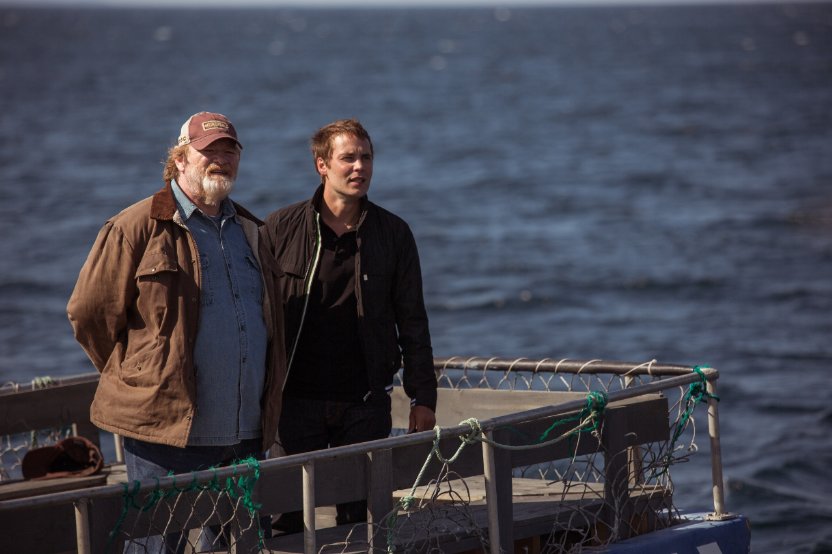


grand seduction

Standard
Theatre

Sudden End of an era in the South Bay Area

Today San Jose Repertory Theatre announced that it has filed for bankruptcy and will no longer produce shows or any output, immediately canceling the remainder of its season and its planned 2014-15 offerings.

Although I never made it to see a show there, I was familiar with its output as a notable producer of plays in the South Bay region. Additionally, I had worked with its now-former artistic director, Rick Lombardo, in the Boston area, and he and I actually made the move to California at the same time, though bound for different locations.

It’s a shame – and seems quite incredulous, actually – that the Rep couldn’t form an alliance with one of the deep – pocketed tech companies in the Silicon Valley area. I don’t know the whole story, of course, though it may be tied in to downtown San Jose’s ups and downs with making itself into a destination rather than just a place that people work. I applied to work there at least once between 2008 and 2011, though it was always just a little too far from my Marin County home base to go for a night. However, many regional actors based more in the central Bay Area (SF, Oakland, Berkeley) appeared there regularly in a variety of shows and roles.

There are uncomfortable parallels with a similar situation unfolding here in Ann Arbor at the moment with the city’s premiere resident theatre company, Performance Network, although in that case the organization’s board has “suspended operations” and a new business model is set to be presented to the board at their upcoming meeting next week.

And on a personal note, this news comes just as I’ve been accepted to study for an MFA at an arts management program. But I remain committed and hopeful that the power of the arts as a beacon of the community – and way for people and places to come together – will shine through.

Standard
Uncategorized

Personal Blog: Life in a Self Sustaining Place

Having just passed my one year anniversary of arrival in Ann Arbor, I’ve been reflecting on how life in this city is only the second time I have ever experienced living in a “self-sustaining” place – I’ll say more about what that means in a moment – and the longest time I have ever experienced such a setup in my life.

When I say “self-sustaining” town, I mean a place that fends for itself in that residents don’t have to go to a neighboring town for groceries, entertainment, school, cultural offerings, outdoor excursions, and so on and so forth. The only other time I experienced such an arrangement was with eight months living in Santa Maria, California in 2008, a place that’s even more of an outpost town in that Santa Barbara, the next major city to the south, is 75 miles southeast, while San Luis Obispo, its largest northern neighbor, is 30 miles north. And in that part of California, you can’t go any farther west, and east is an even greater distance to the next major city; for the record it is Bakersfield at 138 miles east. Admittedly there are towns in between, but those are the major landmarks.

Most of the towns I’ve lived in over the years, most notably in the North Shore region of Massachusetts along with Marin County in California, are nestled into a patchwork of towns that depend on one another in symbiotic ways. You might live in one town but work in another (or the nearest largest city) or depend on a nearby town for specific elements of your daily life, but it’s rare that you’ll stay within your own town or city limits on a daily basis.

I mention this because I notice that it is still hard for me to adjust to life in a town that fends for itself and could be fine without any interruptions to other locations (Detroit, Royal Oak, Flint, Toledo, Pontiac…) for various activities. I’ve gotten so used to depending on having offerings in other towns, and moving between said locations, that it feels weird to not be doing so. For example, yesterday – and it seems like this happens every week to 10 days – I was feeling the fishbowl bubble of life in Ann Arbor, and randomly decided to drive east to Canton and Novi for what amounted to little more than visual amusement, a good meal and some sightseeing on a fair spring day. And even though that excursion was just three hours, I came back to Ann Arbor feeling considerably more refreshed and with none of the exasperated feeling that had plagued me as I set out.

I don’t have to go to Windsor for fun, to Detroit for a show, to Royal Oak or Birmingham for a film, to the west side of the state for sightseeing, into Canadian locations for further sightseeing and cultural events… I do all this because I want to, and it is admittedly enriching.

But I might be interested to hear the opposite perspective of this setup, where someone who is accustomed to and quite content with living in a self-sustaining town goes out into the world and has to move around on a larger scale.

Standard
Uncategorized

Sassy tuneful nostalgia

I’m offering some short hot off the press impressions of an appearance this evening from singer-songwriter Cheryl Wheeler at the Ann Arbor Ark, which also functioned as a very belated first visit for me to the acclaimed local music venue.

Wheeler, who has long been a familiar presence on my family’s playlist, continues to shine in the live setting, treating the audience like old friends. However, this isn’t to say that she loses focus on the music — it seemed to be quite the opposite, as she worked very specifically from a (presumed) outline of songs from her catalog. She was quite generous in offering a range of personal anecdotes that mostly focused on East and West Coast experiences, whether walking with her wife and animals at Horseneck Beach in Massachusetts or driving the long haul from Seattle to California destinations (Petaluma and Santa Monica both got specific shootouts) and writing a song or two along the way. She expertly segued her narrative so that the last quarter or so of her concert focused solely on the music, after plenty of laughs and chat in the earlier part of the evening.

I’m pleased that Wheeler included “Driving Home” – one of my favorites of her recordings – and a few other of her older songs. She offered a subdued interpretation of “Aces”, another older tune, earlier in the evening, leading me to think she was choosing not to use her higher register, but later selections showed that range to still be in place and in excellent form.

Of course I also appreciated the strong New England feel of the concert. She even included her song “When Fall Comes to New England”, which was a frequent sight on my iPod playlist for a time, most notably during a series of driving commutes in Western Massachusetts in the summer and fall of 2007.

She got the most reaction out of the (nearly sold out) crowd before her final song, which she humorously prefaced with a “fake final” song of her fan favorite “Potato” (yes, that’s the song name) – explaining that she doesn’t like the forced tradition of the singer leaving and then being called back to the stage for “…just one more.” And so she proceeded with the most heartfelt tune of the evening (wish I knew the name) written in honor of her father’s 75th birthday.

Although some might say that Wheeler flies under the radar in her music career, she seems just fine with that and willingly capable of doing whatever she wants with her music, with a loyal and appreciative fan base that is right there cheering her on.

Standard
Theatre

Two Days of Two Handers

I finally returned to the theatergoing life this weekend by taking in a play on Saturday and another show on Sunday afternoon, both of which were “two-handers”, only starring two actors, just talking with each other, for an hour and a half or so. Clearly time well spent!

williamston-theatre-jpg-1

Saturday afternoon took me to the somewhat far afield but well regarded Willamston Theatre for their production of Frankie and Johnny in the Clair de Lune, a play that seems to be well known in the theatre canon but I had never seen performed. It was also made into a 1991 film that I recall seeing in video stores for some years afterward, though also have never seen.

This production took on a realistic look at two co-workers (I want to say “lost souls” but that seems a little too harsh) getting to know each other more intimately on a Saturday night in the New York City of 1987. We see them move through the motions of a first date, starting at the peak and going back down… and up again… and through their differing stages and perspectives of intimacy and acceptance.

As the couple, John Lepard and Suzi Regan are clearly acting pros, showcasing an easy, yet caustic rapport with each other and mostly believable roller coaster of emotions in reaction to one another. They were helped by an extremely detailed set, squeezed in to a narrow thrust/theatre-in-the-round type space, with a working refrigerator, stove top, sink and adjacent bathroom all helping to add realism to the story. Not to forget the wide range of costumes visible in a closet and artfully strewn about the floor.

While the script has dated slightly, giving the impression of a grimier and more violent NYC than exists today, along with some now-anachronisms like calling a radio station to ask for the title of a song, I felt that didn’t distract from the impact of the performance. I also felt like the actors effectively conveyed a sense of not overly dramatic, but urgent desperation in each other’s role — they want to connect with the other partner, but they might not know just how to do that.

This afternoon I walked steps from my front door to catch Performance Network‘s closing performance of Venus in Fur, a play that holds the honor of being the most-produced title at US theaters this season.

While this version didn’t feel quite as lively as it could be at times, in my opinion, it clearly showed the spark of David Ives’ writing and why the play has become so popular. Stressed out writer Thomas Novachek has completed a round of unsuccessful auditions for the new play that he’s also directing, based on a 19th century novel. As he’s getting ready to leave, in walks Vanda, who holds the same name as the play’s protagonist and quickly establishes a game of verbal cat and mouse with Thomas as she reveals more than she initially lets on.

The constant shift in balance of power – and characters not being what they seem – reminded me of a 2011 film, Certified Copy, which I promptly checked out from the Ann Arbor library and hope to revisit this week.

Actors Sebastian Gerstner and Maggie Meyer showed a deft command of the piece as they navigated the twists and turns of the plot. Meyer, in particular, seemed to be having fun with the demands of her role, requiring her to vamp it up to Noo Yawk levels at times, while building up the English/European character at other moments… and parade around in a sexy costume at the same time. I felt that Daniel C. Walker’s lighting design was another star of the show, emphasizing shadows at many instances, which added complexity to the pauses and banter of the two characters.

But I did feel like the production could have been livelier or snappier at times. I can’t put my finger on exactly what needed to be quickened, and it could be a reaction to seeing David Ives name as the writer, where he is best known for snappy comedies. I wouldn’t count this as a major fault, though, and it was clear that the simplicity of the piece – just two actors, etc – and relative modernity (a simple tale becomes more than it seems) have contributed greatly to the show’s appeal across the world.

Venus

Photo from main Performance Network VENUS IN FUR page, copyright Sean Carter photography


Standard
Uncategorized

Catching up on Oscar Bait

My filmgoing in 2014 continues to be a catch-up on films released at the end of 2013.

I wasn’t rushing out to see the adaptation of August: Osage County, and am disappointed that I still haven’t seen a version of the original play, but a recent afternoon found me near the Michigan Theater at the time of its first matinee of the day, and so I thought, oh, why not?

As I expected, the film was mostly a case of Actors Trying Too Hard To Give A Good Performance, which might have been affected by a director unaccustomed to stage-to-film material. The director, John Wells, brought a similar bland tone to the story that he displayed in a previous film, The Company Men, which I saw in the theatre because I was living in California at the time and eager to see my home state of Massachusetts on the big screen.

Perhaps unsurprisingly, the “lesser – known” actors delivered the more notable performances, although at this point Meryl Streep will make anything watchable and memorable. (Massachusetts native) Julianne Nicholson stood out as the middle of the three sisters in the family, evoking a sense of desperation and wanting to make something of her life. Chris Cooper and Benedict Cumberbatch delivered more sensitive turns than some of their recent work, although I wondered why British actors Cumberbatch and Ewan McGregor were recruited for this very American piece, with McGregor offering an unconvincing American accent. Julia Roberts deliberately went less glam than her image, and did well, mostly, but it must be challenging for someone like her to get people to look beyond her well – known work. However it seems like she’s been successful with this effort, as seen in her ensuing Golden Globe and Academy Award nominations.

The film offered two examples of the “previous couples re-appearing on screen” phenomenon that I discussed in a recent post, with Adaptation co-stars Streep and Cooper re-teaming alongside My Best Friend’s Wedding co-stars Roberts and Dermot Mulroney. (Pretty weird to realize those films are now 11 and almost 17 years old, respectively.)

And that was about it, really. I still want to see the stage play.

Last night I was in the mood for a conventional “Friday night at the movies” experience, which I enjoyed several times last summer, and infrequently since then, and so I found my way back to the Quality 16 for The Wolf of Wall Street. Easily one of the most bloated movies I have ever seen (in several ways), but… oddly compelling.

Leonardo DiCaprio gives one of his best performances as real-life financier Jordan Belfort, who took Wall Street by storm in the 1990’s before falling from grace and later achieving a form of redemption. He’s supported by Jonah Hill, who continues his surprisingly rapid transition away from low-brow comedy as Belfort’s self-anoited but later endearing business partner. And the cast sprawls out from there, with a couple of veteran performers offering standout supporting roles, most notably Rob Reiner (returning to acting after a decade’s absence!) as DiCaprio’s loudmouth but supportive father, and one of my favorite British actresses Joanna Lumley, who I once had the honor of briefly meeting in person, shining brightly in a few scenes crucial to the story. (A minor spoiler, but the press is having fun discussing Lumley & DiCaprio’s scene together, as seen here and here.)

If the film had been tighter in its editing and story (two hours instead of three, perhaps?) I might have appreciated it more. But I did find it to be a well-made look at an often corruptive industry, told with zeal and excess appropriate for the story and setting.

Standard
Movies

YA on screen with Ender’s Game and How I Live Now

Both of my filmgoing ventures this week centered around young adult novels coming to the screen, in an unplanned coincidence. Unfortunately I can’t comment on these films’ efforts bringing their literary source material to the big screen, but it has raised my interest to seek out their original written forms, especially in the case of the latter film.

On Monday I took in a showing of Ender’s Game, once again venturing over to the Quality 16. I found the film to be an entertaining throwback, in some ways, to a simpler time in moviegoing that was focused on the experience of the story and less about quick cuts and overblown visuals that seem to be widespread in typical fast-paced commercial fare these days. In his review, my friend Gabe noted a directorial flatness at times in this film, and I found in retrospect that I have to agree with that – scenes and the storyline were engaging, but didn’t pop in a directly relatable, immediate way. However, by the time the surprise ending appeared (suddenly, but not unpredictably, where the finale is staged in a “you know this must be the finale” style), I was appreciative that the film chose to close on a more philosophical and contemplative note than your typical adventure film. It was good to see now-senior actors Harrison Ford and Ben Kingsley taking mentor-type roles with the younger actors, although Viola Davis felt underused as another leader figure. The younger actors were serviceable if not outstanding; I was the most surprised to see onetime young ingenue Abigail Breslin in an older teen role and definitely looking moved on from her Little Miss Sunshine days.

Time will tell if a follow up appears to Ender, likely determined by financial receipts of the film though the possibility is left wide open at the end of this initial movie.

This afternoon I ventured back to the State Theatre for How I Live Nowwhich I might have only heard about just last week but wanted to catch based on my love of British films and the fact that this was its last day showing at the State. On a side note, I learned on returning home that the film is available for iTunes instant streaming/downloading, which I still have never taken advantage of as I greatly prefer the in -the-theatre viewing experience…

This film made for a great pair with All Is Lost in mirroring intensity and drama of story! In contrast to Ender, there were consistent and vivid directorial and cinematographic touches that enlivened the material throughout the film. Not that it needed to be boosted, as it featured a (mostly) strong through line in the story, but those choices took it to another level. The director (Kevin MacDonald) and his work caught my eye a decade ago with Touching the Void, an extremely intense docudrama, and he later went on to film The Last King of Scotland, which I did not see.

The narrative was expertly carried by young actress Saoirse Ronan, whom I’ve found intriguing ever since seeing her break out in Atonement almost exactly six years ago. (I had the privilege of seeing that film in London in November 2007 shortly before it took the USA by storm.) In fact, some segments of this film could easily serve as a sequel to her role in Hanna two years ago, as Ronan (looking more adult and mature than ever) once again powers through the great unknown of open landscapes and absent parental figures. There was a similar and slightly odd parallel with young British actor Tom Holland, whom I saw in The Impossible earlier this year (released last year), who also found himself again in a  “searching for parents after a disaster” role, though with a few distinct twists.

How I Live Now benefitted from a compelling storyline – how would I/we react to society in a time of crisis, and how far might we go for those we love – that has admittedly been told before but seemed to find just enough quirks, alongside the aforementioned visual flourishes and a very present musical score, to keep it fresh. Some ambiguity is allowed in the conclusion here as well (as with Ender) although I’m sure it’s less likely the story would be picked up again later.

I feel that the adage of “the book is better than the movie” is probably still true with these two films, but found them both to be appealing works of cinema, and a good taster for me of a (YA to film) market I haven’t paid much attention to in recent years.

Standard
Uncategorized

All is Not Lost for the film and the movie theatre

I have enjoyed a series of highly memorable films at Ann Arbor’s State Theater over the past six months and was saddened to see a recent article revealing that it may be transitioning out of film exhibition. While it is admittedly an older venue, there is a distinct retro and neighborhood charm to the place, and the marquee is downright iconic and beautiful. I also feel there is an obvious – though perhaps legally/logistically difficult – opportunity to bring the State back to its former glory by booting out the downstairs generic Urban Outfitters, which has MAINTAINED THE MAIN MOVIE SCREEN IT REPLACED, and reconfigure it back into a movie palace. But will that happen???

With these thoughts in mind I ventured to the State on Friday night to catch the new release All Is Lost. The film has drawn attention for its casting novelty of only featuring Robert Redford, and is the followup film from J.C. Chandor, who made a splash in 2011 with the drama Margin Call, one of my favorite films I saw that year.

This film does not disappoint and offers an at-times harrowing intensity seeing Redford brave against the elements of the Indian Ocean (actually filmed in Baja California and various other points in the Southern California/Northwest Mexico regions). Some might say it’s more of a filmed staged play, as there’s very little dialogue and Redford is (ably) forced to carry the narrative on his active shoulders. The 77 year old actor did not shy away from that challenge, as he willingly performed most if not all of his stunts according to published reports. I am rarely disappointed with films/narratives that offer a full spectrum human experience.

Standard
Uncategorized

One-Two Punch: An Iliad & The Counselor

I seem to be gradually re-gaining my frequent theatregoer routine, which is definitely a positive development. For some reason my filmgoing routine has been in overdrive these last several months, often seeing 2 films per week – I ought to have chronicled them more immediately but might try to do a reverse chronological list before the year is out.

I returned to the local Performance Network Theatre a few nights ago to catch An Iliad, their season opener that will be closing this weekend. I found the show to be the most impressive one I’ve seen there yet, and while I’ve only been to 3 or 4 productions there so far, it was a welcome reminder to pay attention to what the company has to offer, as my previous impressions had been more mixed.

This Iliad was a one-man show, and the narrative traced the familiar mythological story, adding some contemporary touches towards the conclusion. I found actor John Manfredi’s performance to be consistently engaging, even though individual moments tend to stand out more in my reflections on the play than the piece as a whole. There were many intriguing uses of set and light design that seemed to be some of the most versatile I had seen on stage in a long while. For example, the stage appeared to be sparsely illuminated by a series of search lights, but those same lights came on and off at very specific times throughout the narrative. Sound design also added a perceptive layer through use of a record player, recorded music and many individual LPs on stage that banded together for a late plot point. And I can’t forget the set as a whole, which used the entirety of PNT’s wide rectangular space to its maximum advantage.

Yesterday I ventured over to the Quality 16 (definitely the oddest named cinema I’ve ever been a regular patron of) to catch new release The Counselor. In retrospect I’m not sure why I rushed out to see this film, but suspect a glitzy advertising campaign and good memory of seeing previous New Mexico/Texas-based Cormac McCarthy (and Javier Bardem) film No Country for Old Men might have contributed to the “want to see” effect. Unfortunately this did not live up to the strong standards of No Country.

McCarthy’s first film script sees him exploring familiar bleak themes of life and death in an arid and lonely landscape. Unfortunately character motivation remains vague throughout the film, and the layered plot is never completely nor clearly unfolded. The featured actors fare inconsistently, and I felt particularly disappointed to see Penelope Cruz regressing to a glorified supportive girlfriend part that might have been more common for her earlier in her career. On the other hand, Cameron Diaz turns in a scenery-chewing performance in multiple ways, though looking noticeably older on-screen – I realize I haven’t chosen to see a new release of hers since The Box in 2009, which only drew me in because it was filmed in my home region of Massachusetts. Of the three primary men in the film, Javier Bardem fares the best, again playing up character eccentricities (a similar approach was seen in Skyfall last year) to create a memorable screen presence.

Two better known in the 90’s Latino actors (John Leguizamo and Rosie Perez) appeared in cameo roles, making me wonder what they’ve been up to the last several years. And the technical makeup of the film impressed me, but that’s not a surprise coming from the skilled hands of veteran filmmaker Ridley Scott.

Next up on my film list is clandestine Disney documentary Escape from Tomorrow, playing a very limited engagement at the Michigan Theater this week.

Standard
Uncategorized

Circle Mirror Transformation – transforms?

Last Friday night, I finally saw Circle Mirror Transformation, a play by Annie Baker, with my own eyes. This production was also my first time inside Ann Arbor’s Kerrytown Concert House, a venue that seemed to have some esteem and local renown – and was charmingly intimate inside (and walking distance from my new apartment).

I remain very impressed with Baker’s writing, and am eager to see her most recent piece, The Flick, produced somewhere as it begins to make the regional rounds. I will always remember her quote in a Boston Globe interview that her theatrical universe town of Shirley, Vermont, is “a cross between Amherst, Massachusetts, Putney, Vermont, and Bolinas, California” since I know two of those three towns very well and have a passing acquaintance with the other one.

The production had some nice moments, but suffered, in my opinion, from an overly leisurely running time. The story unfolded for two hours and five minutes, but when I looked up other productions, they had told the same tale in as much as 25 fewer minutes. I got a bad feeling when a non-verbal prologue became … prolonged, and that reminded me of how I often depend on the play – or any piece of entertainment, really – to hook me in (or keep my interest high) within the first 5-10 minutes of the show.

I was intrigued by several scenes in the play containing exercises I’d come across in my drama therapy coursework of 2009-11, with one scene featuring verbatim an infamous game known as “I Want It… You Can’t Have It”. Much of the plot seemed intended to be drama therapy in fictional action and more than just theatre games. 

Did Baker intend for it to be that way? A Google search tells me that she did.

I wish I’d seen this play earlier! I may write more about that revelatory experience of seeing DT in action again.

Standard