Movies

Under the Skin and into the psyche

Soooooo…. Under The Skin.

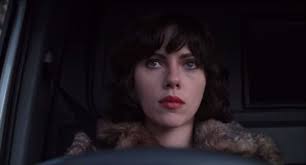
What is sure to be one of the most polarizing films of this year has gained more appreciation from me since seeing it at the State Theatre‘s late show last Friday night. It’s a perfect film for a late show, with macabre themes and plenty of unsettling imagery.

scarjo

Scarlett Johansson adds to an impressive recent repertoire of roles with this performance, The actress strips away (quite literally at times) her aura of Sex Symbolness and Appeal, taking us back to an earlier era somewhere around ten years ago when she was more known just for her performances and less for her off-screen activities. Long stretches of the film are devoted to her character being off on her own, and while Johansson does not carry the movie in as quite an assured way as elder veterans Sandra Bullock and Robert Redford (among others) did in recent films, she commits to the character and losing herself — or rather her assumed “ScarJo” self — in the storyline.

But what is the storyline, exactly? After an assured and striking Kubrick-style opening sequence, we are quickly dropped in to the outskirts of Glasgow, Scotland. Johansson’s unnamed female character is just there, with an immediate predatory orientation established. She relates to a few people, who could be considered accomplices, but their exact relationship is not clearly explained. Soon the character is on her own behind the wheel of a bulky white van and exploring the outer neighborhoods of the Glasgowegian surroundings.

At one point early in the film the woman finds herself on a beach, in a memorably unsettling sequence where she does the opposite of what a Good Samaritan might do, helping to clarify her character intent and give a hint of what might be lying ahead in the story.

It quickly becomes apparent that she’s looking for some people – namely, seemingly aimless men who “won’t be missed”, to quote other reviewers, if they don’t come home at night. This is most strikingly and unsettlingly seen in a series of late night liaisons that the woman initiates by taking men back to “her place,” but what happens after that is a bit darker than a hot mess. It’s at these moments that the film’s music score, like a modern-day Bernard Hermann scoring Hitchcock, is at its most striking and unsettling, as a theme is established for these incidents that makes it clear that the moments are important to the larger story.

I will add that those sequences – when the woman is predatory towards the man – were unsettling for me as a male viewer, as if a later point that the film makes about gender, which I won’t spoil, is foreshadowed and turned on its head.

Johansson’s character continues to explore and, seemingly, struggle to comprehend life in Glasgow and the immediate surroundings. While these sequences were possibly the most distant or unclear, narratively, of the film, they shine a rich and telling spotlight on metropolitan Scotland, reminding me (having been there in Glasgow and many other regions of the country) of its unusual combination of a brutal and invigorating quality of life, rich street culture and heightened regionalism, which is also seen in the movie in a series of incomprehensible statements, given their thick Scottish accents, from a range of people peripherally coming in and out of the main story, some of whom apparently didn’t know they were being featured in a movie or interacting with a well – known actress.

When an attempted encounter with another loner guy (who is a real individual and hopes to use his role to bring awareness to a health issue/seen and not being seen) doesn’t go as she’s planned, the woman heads north to the Scottish Highlands and the film makes a noticeable change in tone, shifting from urgency to something more … reflective. It suggests through action (dialogue is at is most minimal here) that the woman is somehow more willing and accepting to try human life at this point, as if the rejection from the other man challenged her to look at her own choices, more individually. I found this section of the film to be the most abstract and challenging to grasp, but I think it has stood out with more meaning in the days since.

I don’t know what this film means (who can, really?) but I feel appreciative of its willingness to challenge and provoke the audience in a subtle way, along with a willingness to let actions speak louder than words complimented by an atypical story.

Standard
Uncategorized

Catching up on Oscar Bait

My filmgoing in 2014 continues to be a catch-up on films released at the end of 2013.

I wasn’t rushing out to see the adaptation of August: Osage County, and am disappointed that I still haven’t seen a version of the original play, but a recent afternoon found me near the Michigan Theater at the time of its first matinee of the day, and so I thought, oh, why not?

As I expected, the film was mostly a case of Actors Trying Too Hard To Give A Good Performance, which might have been affected by a director unaccustomed to stage-to-film material. The director, John Wells, brought a similar bland tone to the story that he displayed in a previous film, The Company Men, which I saw in the theatre because I was living in California at the time and eager to see my home state of Massachusetts on the big screen.

Perhaps unsurprisingly, the “lesser – known” actors delivered the more notable performances, although at this point Meryl Streep will make anything watchable and memorable. (Massachusetts native) Julianne Nicholson stood out as the middle of the three sisters in the family, evoking a sense of desperation and wanting to make something of her life. Chris Cooper and Benedict Cumberbatch delivered more sensitive turns than some of their recent work, although I wondered why British actors Cumberbatch and Ewan McGregor were recruited for this very American piece, with McGregor offering an unconvincing American accent. Julia Roberts deliberately went less glam than her image, and did well, mostly, but it must be challenging for someone like her to get people to look beyond her well – known work. However it seems like she’s been successful with this effort, as seen in her ensuing Golden Globe and Academy Award nominations.

The film offered two examples of the “previous couples re-appearing on screen” phenomenon that I discussed in a recent post, with Adaptation co-stars Streep and Cooper re-teaming alongside My Best Friend’s Wedding co-stars Roberts and Dermot Mulroney. (Pretty weird to realize those films are now 11 and almost 17 years old, respectively.)

And that was about it, really. I still want to see the stage play.

Last night I was in the mood for a conventional “Friday night at the movies” experience, which I enjoyed several times last summer, and infrequently since then, and so I found my way back to the Quality 16 for The Wolf of Wall Street. Easily one of the most bloated movies I have ever seen (in several ways), but… oddly compelling.

Leonardo DiCaprio gives one of his best performances as real-life financier Jordan Belfort, who took Wall Street by storm in the 1990’s before falling from grace and later achieving a form of redemption. He’s supported by Jonah Hill, who continues his surprisingly rapid transition away from low-brow comedy as Belfort’s self-anoited but later endearing business partner. And the cast sprawls out from there, with a couple of veteran performers offering standout supporting roles, most notably Rob Reiner (returning to acting after a decade’s absence!) as DiCaprio’s loudmouth but supportive father, and one of my favorite British actresses Joanna Lumley, who I once had the honor of briefly meeting in person, shining brightly in a few scenes crucial to the story. (A minor spoiler, but the press is having fun discussing Lumley & DiCaprio’s scene together, as seen here and here.)

If the film had been tighter in its editing and story (two hours instead of three, perhaps?) I might have appreciated it more. But I did find it to be a well-made look at an often corruptive industry, told with zeal and excess appropriate for the story and setting.

Standard
Uncategorized

Quartet of New Year Filmgoing

So far I’ve caught four films at the movies in the New Year, but it may be until February (at least) before I see a film that was actually released in 2014.

This year I have decided to keep a spreadsheet of the films i see at the movies in an effort to better keep track of them and retain a memory of what I saw when.

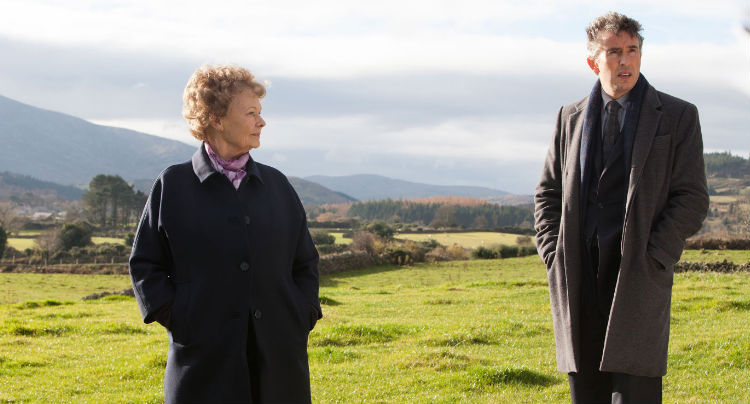
So, the filmgoing year began with PHILOMENA, which I felt was an appropriate way to return to the movies after experiencing some personal loss at the end of the old year/start of the new year. A story that appeared to be standardly sentimental at first took on a more intriguing feel of mystery as it went on. The mystery didn’t come so much from a “whodunit” feel, and was more along the lines of “what’s going to happen next?”which is often more compelling, dramatically. 
ImageJudi Dench was unsurprisingly excellent in the title role, bringing many layers to a complicated storyline, and subtly playing with the initial impressions of a “twee old lady” to create something more complex. However, I did think at times during the film that it’s unfortunate she doesn’t seem to often have the opportunity to create EVEN MORE complex characters on film (versus what she does on stage) – the most recent cinematic example possibly being her work in Notes On A Scandal back in 2006.

Steve Coogan shone brightly in a dual role of co-writer and co-star here, showing none of his comedic talents that he is known for and keeping things quite straight, even more serious at times, throughout the story. From his many credits related to the film (writer, producer, co-star, optioned the story, etc) one can tell that the material struck a chord with him.

I was interested to learn that this movie marked the first time that Dench has portrayed a real, living person onscreen. The experience seems to have resonated with her, and it’s been sweet to observe the real Philomena Lee participate in some of the movie’s press events and publicity activities, which will probably continue in a modified form leading up to the Oscars, for which Dench recently netted a deserved Best Actress nomination.

Next up for me was SAVING MR. BANKS, a film that I wanted to enjoy, and would have liked a lot more if it had been made differently.

Image

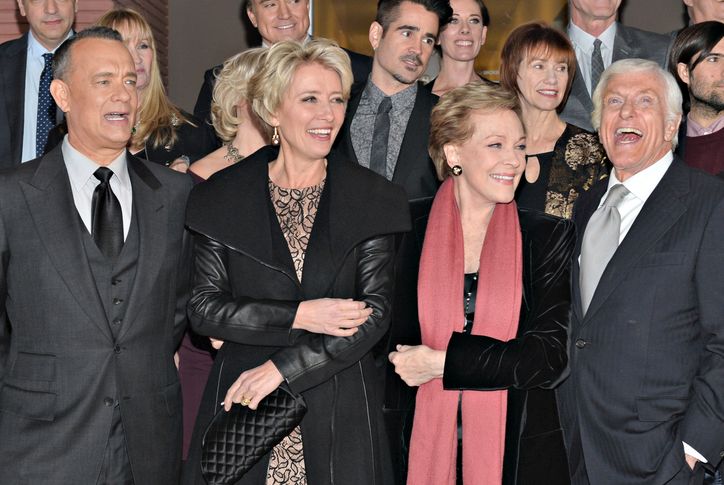
The film’s stars meet the veteran stars at the premiere. I hadn’t seen this image until today and love it!

The film tells the not previously explored on film story of the making of MARY POPPINS, focusing on the challenges that existed between author PL Travers’ interpretation of the work versus Walt Disney’s vision of what the film adaptation should be. Travers and the studio went back and forth on visions and agreements for over 20 years (!) before the film was finally released in 1964.

For some inexplicable reason, the writer decided that this already compelling and familiar story needed to be augmented by a narrative from Travers’ childhood detailing her recollections of growing up with a difficult father in Australia. I might not have had a problem with this if it was told in a traditional part 1/part 2 narrative, but the film constantly intercuts between the two stories throughout the entire film, causing me to lose interest in the total story because it keeps getting muddled between the two time periods. Additionally, some threads of the later (1960’s) narrative are not given time to develop in a way that could leave things clearer for the audience and make it into a more meaningful film experience. (Perhaps this is why the film was almost completely shut out of the recent Oscar nominations in spite of it being a clear and obvious tailor-made contender for awards.)

Having said that, it was delightful to see Emma Thompson back in a leading role for the first time in several years. Thompson has spoken often in press interviews for the film of her pleasure in getting to play a complex part – and it was clear to see she has been enjoying the various publicity endeavors for the film, from singing along at various events tying into the film’s music to her recent throwaway appearance at the Golden Globes last weekend.

Next up was INSIDE LLEWYN DAVIS, the latest film from the Coen Brothers, which I felt like I’d been hearing about for well over a year – though maybe it’s only been a year – and was pleased to finally see in its finished form. After seeing it I also reflected on how the Coens are masters in creating truly cinematic experiences where their story takes you away to a distinct time and space, and it takes… some time to come back to reality after the film. Or the experience lingers in your mind. Or both.

Image

GIF courtesy of Vogue article on the film.

This story exuded an authentic and weary sensibility looking at the competitive and colorful Greenwich Village folk scene of the early 1960’s. I could obviously identify with the narrative thread of “artist traveling with a cat” – and the presence of the cat in the story turned out to be an intriguing barometer of Llewyn, the main character’s, moral compass. The story was bleak at times but never in an unforgiving way, and boasted a keen sense of detail throughout the story. Not to forget about the catchy songs paying tribute to the era, some featuring the talents of Justin Timberlake in a role far away from his well-known pop persona, but clearly highlighting his musical ability.

This film and the next one had me noticing the nuances of screen pairings and couplings, where Oscar Isaac and Carey Mulligan again appeared onscreen following an earlier – and drastically different – pairing in the 2011 film DRIVE. Similarly, in the film discussed below, Joaquin Phoenix and Amy Adams again appear opposite each other just a year after sharing scenes in the also drastically different THE MASTER. It got me thinking about what that must be like for the actors themselves – familial? cordial? old home week? distant? – and if other audience members pick up on the reuniting. (Based on press reports and interviews it seems that both instances were friendly and enjoyable for each pair of actors.)

So, that brings me to HER, seen yesterday back at the reliable Quality 16 – though it’s a film more appropriate for the downtown venues of the Michigan or State Theatres. I’m still feeling awestruck from this film and likely will continue to feel that way for several days. I also feel like it vaulted to the top of my top films in 2013 list, and can see I’m not alone in that sensation. Why did it resonate? It tells a futuristic yet realistic tale with nothing but humanity – no sensationalism, no whirlwind special effects, a strong look at the lead character’s life and story arc, and intense commitment from the principal actors.
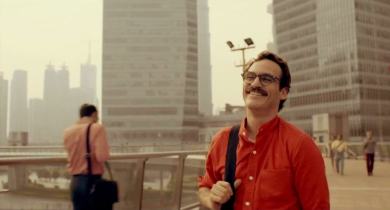
ImageHER looks at the life of Theodore Twombly (great character name), thoughtfully played by Joaquin Phoenix and even more so when you realize that many scenes were him acting alone, similar to other 2013 releases GRAVITY and ALL IS LOST but told in the most down to earth style of the three. Theodore struggles with his life after his longtime love (Rooney Mara, continuing to show impressive character depth and command of the screen) leaves him. I should add that Theodore and his ex’s storyline is conveyed almost completely in flashback, yet in a completely opposite and more resonant way from SAVING MR. BANKS. And when the two characters meet in person again, it drives the point of the whole story home in a powerfully abrupt moment. Theodore has a few other women in his life, with Olivia Wilde appearing in a  well-used blind date cameo role, and Amy Adams supporting him as a neighbor and close friend. Adams continues to show versatility and command in her roles, bearing in mind that this was released in tandem with her (ahem) showier part in AMERICAN HUSTLE. She also gets to deliver one of the movie’s best lines – in a stellar screenplay – which I’ll quote here:

“We are only here briefly. And while we’re here, I want to allow myself joy.”

That line also seems to capture the story arc between Theodore and his personal OS, Samantha, voiced by Scarlett Johansson. I don’t want to go into detail about their storyline here, since I feel that you have to see the film to experience it. But I will say that it is very humane and resonant, with an eerily realistic feel to it when you consider how much time people in the present era (myself included) spend looking at their mobile devices, laptops, large screen televisions…

A few “industry observer” type notes on this film:

  • It’s really interesting to note that Johansson was actually a late replacement for the voice role after filming had been completed, where British actress Samantha Morton had originally voiced the role, and apparently been present with Phoenix on-set in many scenes… but then director Spike Jonze felt in post – production that the part needed to go in a different direction.
  • The film is one of few recent films to make use of locations actually in Los Angeles, although augmented by some additional scenes shot in Shanghai. A recent Los Angeles Times article made note of this as California struggles to retain its dominance in film production in the face of extensive tax credit/rebate production programs in place in other US states.
  • The film’s score is composed by Arcade Fire, possibly their first contribution to film scoring, and reflecting a trend of better known for pop/rock composers dabbling in film scoring.
  • I was impressed with the film’s vision of a future expanded Los Angeles regional subway system (and the region is on its way to something like that) – and others have also taken note of the vision, as Gizmodo explains in this article.

To conclude I feel that HER shows an honesty and simplicity rarely seen in modern filmmaking, and reminiscent of an old favorite ETERNAL SUNSHINE OF THE SPOTLESS MIND – which I can’t believe is 10 years old this year. It will be hard to top a film experience like that, but that’s part of the fun of filmgoing – always keeping an eye for that Next Big Thing, and noting the sensations along the way.

Standard
Uncategorized

All is Not Lost for the film and the movie theatre

I have enjoyed a series of highly memorable films at Ann Arbor’s State Theater over the past six months and was saddened to see a recent article revealing that it may be transitioning out of film exhibition. While it is admittedly an older venue, there is a distinct retro and neighborhood charm to the place, and the marquee is downright iconic and beautiful. I also feel there is an obvious – though perhaps legally/logistically difficult – opportunity to bring the State back to its former glory by booting out the downstairs generic Urban Outfitters, which has MAINTAINED THE MAIN MOVIE SCREEN IT REPLACED, and reconfigure it back into a movie palace. But will that happen???

With these thoughts in mind I ventured to the State on Friday night to catch the new release All Is Lost. The film has drawn attention for its casting novelty of only featuring Robert Redford, and is the followup film from J.C. Chandor, who made a splash in 2011 with the drama Margin Call, one of my favorite films I saw that year.

This film does not disappoint and offers an at-times harrowing intensity seeing Redford brave against the elements of the Indian Ocean (actually filmed in Baja California and various other points in the Southern California/Northwest Mexico regions). Some might say it’s more of a filmed staged play, as there’s very little dialogue and Redford is (ably) forced to carry the narrative on his active shoulders. The 77 year old actor did not shy away from that challenge, as he willingly performed most if not all of his stunts according to published reports. I am rarely disappointed with films/narratives that offer a full spectrum human experience.

Standard
Uncategorized

One-Two Punch: An Iliad & The Counselor

I seem to be gradually re-gaining my frequent theatregoer routine, which is definitely a positive development. For some reason my filmgoing routine has been in overdrive these last several months, often seeing 2 films per week – I ought to have chronicled them more immediately but might try to do a reverse chronological list before the year is out.

I returned to the local Performance Network Theatre a few nights ago to catch An Iliad, their season opener that will be closing this weekend. I found the show to be the most impressive one I’ve seen there yet, and while I’ve only been to 3 or 4 productions there so far, it was a welcome reminder to pay attention to what the company has to offer, as my previous impressions had been more mixed.

This Iliad was a one-man show, and the narrative traced the familiar mythological story, adding some contemporary touches towards the conclusion. I found actor John Manfredi’s performance to be consistently engaging, even though individual moments tend to stand out more in my reflections on the play than the piece as a whole. There were many intriguing uses of set and light design that seemed to be some of the most versatile I had seen on stage in a long while. For example, the stage appeared to be sparsely illuminated by a series of search lights, but those same lights came on and off at very specific times throughout the narrative. Sound design also added a perceptive layer through use of a record player, recorded music and many individual LPs on stage that banded together for a late plot point. And I can’t forget the set as a whole, which used the entirety of PNT’s wide rectangular space to its maximum advantage.

Yesterday I ventured over to the Quality 16 (definitely the oddest named cinema I’ve ever been a regular patron of) to catch new release The Counselor. In retrospect I’m not sure why I rushed out to see this film, but suspect a glitzy advertising campaign and good memory of seeing previous New Mexico/Texas-based Cormac McCarthy (and Javier Bardem) film No Country for Old Men might have contributed to the “want to see” effect. Unfortunately this did not live up to the strong standards of No Country.

McCarthy’s first film script sees him exploring familiar bleak themes of life and death in an arid and lonely landscape. Unfortunately character motivation remains vague throughout the film, and the layered plot is never completely nor clearly unfolded. The featured actors fare inconsistently, and I felt particularly disappointed to see Penelope Cruz regressing to a glorified supportive girlfriend part that might have been more common for her earlier in her career. On the other hand, Cameron Diaz turns in a scenery-chewing performance in multiple ways, though looking noticeably older on-screen – I realize I haven’t chosen to see a new release of hers since The Box in 2009, which only drew me in because it was filmed in my home region of Massachusetts. Of the three primary men in the film, Javier Bardem fares the best, again playing up character eccentricities (a similar approach was seen in Skyfall last year) to create a memorable screen presence.

Two better known in the 90’s Latino actors (John Leguizamo and Rosie Perez) appeared in cameo roles, making me wonder what they’ve been up to the last several years. And the technical makeup of the film impressed me, but that’s not a surprise coming from the skilled hands of veteran filmmaker Ridley Scott.

Next up on my film list is clandestine Disney documentary Escape from Tomorrow, playing a very limited engagement at the Michigan Theater this week.

Standard
Uncategorized

In a World… where comedy is rooted in reality

I was very pleased that the Michigan Theater belatedly brought the movie In A World.. to Ann Arbor. Something about this movie stood out to me when I became aware of it over the summer. I’m not sure if it was the striking image of Lake Bell prepping a voceover that serves as the film’s poster, something about a news article or publicity item I read, or something else entirely, but I wanted to see it, and even considered making a trip to Royal Oak specifically to see it at the Landmark – but then I learned it was on the calendar at the Michigan.

Versatile actress Lake Bell served as writer, director and star for this film, clearly putting much thought and heart into the project. Bell has an appealingly everyday screen presence, though this was perhaps enhanced by a dowdy wardrobe and several “aw, shucks” character choices. I think what made this film stand out to me was her choice to root the comedy in a very real situation, which is something I feel like films don’t often dare to choose.

In this case the plot revolved around the trials and tribulations of making it in the voiceover industry, which is something I’ve had some observational – but not direct – experience of over the years. Bell confronts the reality (and it is a reality) of no women ever voicing movie trailers – and decides to do something about it. With the help of some friends and colleagues. And … her father. Sort of. Who is also a bigshot in the industry and has his own networks and goals. 

The film cast a light on the (occasionally narcissistic) competitiveness of the performing arts industry – and actually acknowledged that trait! I give Bell big props for being willing to go there with her work while finding a resolution to the storyline. She also poked some fun at Los Angeles culture – and made me miss it (though I will be back there, briefly, in February.) I’m not sure her plot really needed several dramatic interludes that felt like padding in the wider scheme of the film, but she led the character arc to a suitable and thoughtful conclusion. Her script was peppered with extensive witticisms and frequent industry in-jokes that I appreciated.

I’m sure this film will stand out on my year-end list.

Standard