marin county, Movies

Recent and older titles revisited

This week I’ve actually been making use of my DVD collection, which happens a lot less often than you might think, and so have chosen to pull out some titles from the library that I continue to build at a selective rate.

First up was last summer’s Blue Jasmine, which has stayed in the public consciousness pretty continuously since then thanks to the strength of Cate Blanchett’s performance and some other more recent events. I should have written about it here last summer, but guess that when I saw it in August was shortly before I made the “official” decision to include film commentary here on a more regular basis.

The actors emote in my former homeland (Marin County)

      The actors emote in my California homeland (Marin County)

Frankly, the film did not hold up as well as I recalled from my cinematic impression. By no means a terrible film, it just felt… flimsier … without the dramatic heft that some individuals/critics might be attaching to it in light of Blanchett’s skill and high probability of capturing the Best Actress prize on Sunday night. There are a few plot points that reek of contrivance, especially in the situation that leads to the end of the story. However, my opinion may be colored by being a Bay Area local, and knowing that it does not take two minutes to get from the Marina District to Oakland, nor is it likely that someone who lives on Great Highway or 48th Avenue would randomly be at the corner of Grant and Bush… but you get the picture. And on the other hand, Allen offers a refreshingly relatively local view of my California homeland Marin County, with no tourist-themed driving over the Golden Gate Bridge shot, and cutting right into a realistic-looking social gathering in Tiburon. Similarly, Sally Hawkins’ character lives in an apartment on the edge of the SOMA and Mission districts, with a quirky mix of modern and classic decor bumping right up against the noisy main street below the residence – and I’m fairly sure that they shot at a real apartment. So maybe it’s a toss up…

But Cate Blanchett’s performance is definitely not a toss-up. Appearing in almost every scene of the film, she expertly carries the pathos and tragicomedy of her character, aided by a slowly unweaving narrative – with a surprise ending that hasn’t really generated that much response, to my surprise – and skilled support from all the actors, most notably Hawkins as her adopted sister. It seems that it may be rare in modern cinema to see an actor who draws you in so completely to their part, making you forget about their outside associations (a point I’ll raise in my second commentary below) and go right along with them in the story they are telling.

On a note of local trivia, Blue Jasmine enjoyed the longest run I have seen at the Michigan and State Theaters, playing continuously at one or the other of the downtown cinemas for three months.

My second choice for a film flashback was 1998’s Out of Sight, a film that captivated me as a 13/14 year old – and for several years after that – with its effortless cool and web of stylish intrigue. As with Jackie Brown last week, it’s very weird to realize how old the film is now in 2014. And it’s probable that seeing Jackie Brown reminded me of this film, as they are set in the same Elmore Leonard universe and share one character.

The film stars George Clooney and Jennifer Lopez before they became the entertainment personalities we know them as today (I’m bolding that because it was a key realization for me while watching the film) with Clooney now effortlessly comfortable and charming as the actor/statesman and Lopez arguably known more for music and her high-profile relationships than her acting capability and credits. I felt that Lopez showed more potential here than in any of her pre-music film roles and would be interested to see a parallel universe representation of a world where she only focused on film acting. out of sight
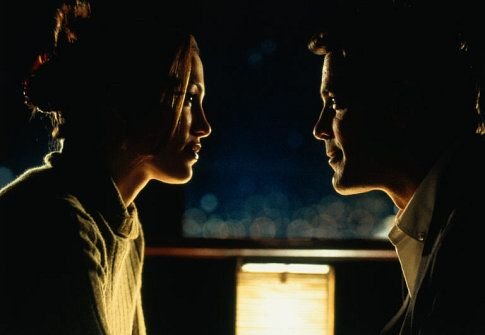
Undoubtedly related to their lack of actor-baggage at the time of the film’s release, and helped by director Steven Soderbergh (also lesser known then vs. now) and his stylistic choices, the two leads draw the viewer right in to the film’s complex storyline, and the success of the narrative arguably hinges on their chemistry, which is very present (sizzling!) through an initial meet-cute scene and later interactions, which are kept to a minimum by the mechanics of the plot – and thus made more appealing.

I would say this is a film that is definitely more interesting in hindsight/many years later, a clear instance of knowledge of actors and filmmakers careers after the film was made (supporting actors Don Cheadle and Catherine Kenner were also not as well known at the time of release, and Viola Davis appears briefly in only her second film credit)  playing in to the perception of how the film unspools – and enhancing the experience.

On a local trivia note for this film, it was certainly interesting seeing many images of Detroit circa 1997 – 98, most notably the (then) State and (now) Fillmore Theatre in downtown. I never would have anticipated watching the film in 1998 that I would one day get to know Michigan on a very personal level.
Standard
Movies

Appreciating the Appreciated: Pam Grier visits Detroit

Last night I had the pleasure of attending the Redford Theatre‘s finale of its weekend tribute to actress Pam Grier. The theatre staff said this event had been “a year in the making”, arranging three separate screenings of (arguably) Grier’s most iconic films, Coffy, Foxy Brown and (the finale) Jackie Brown. pam grier at the radfordMs. Grier herself was on hand for the entire weekend, which also included a higher-priced dinner with her earlier on Saturday evening. I can’t think of a better bargain than the $6/per film ticket price at the Redford, though!

The Redford rose to the occasion of glitzing out for the screening, with many unique souvenirs offered as one walked into the theatre and a long line in place an hour before the show to have an autograph and photo with Ms. Grier. It seems that the theatre does this type of event at least once or twice per year, and they eagerly mentioned plans to have Rita Moreno come to the theatre this fall for a similar event centered around screenings of West Side Story.

Ms. Grier appeared at the opening and intermission of the film, expressing gratitude for Detroit’s role in her personal career history/trajectory (she attended her first film premiere of The Big Doll House here) and emphasizing an interesting and thoughtful point that she wouldn’t be where she is without the support of strong and supportive audiences. I feel like I don’t often hear actors of her stature turn it back to the fans like that, and this audience (myself included) clearly appreciated her honesty.

She didn’t offer very many comments on the film at hand, Jackie Brown, aside from clear appreciation for Quentin Tarantino’s effort to write a film role especially for her, an interesting Method-actor type effort (that I would have liked to have heard a little more about) where she lived in her character’s apartment while the film was shooting, and a satisfied recollection of being able to point a gun at Samuel L. Jackson. But perhaps with her comments in mind, I felt that her satisfaction and pleasure in the role was more evident as I watched the film than how I had recalled it; I may have seen the film only once before.

I should add that since the screening took place in Detroit, this film’s role as a movie adapted from an Elmore Leonard novel was explicitly noted. Pam Grier and Leonard had met on several occasions, not only while making the film, and she shared an amusing anecdote of waiting in line for a book signing he did (as a regular customer) until Leonard noticed she was there and called attention to “the star of one of my film adaptations” or something like that being right there in the bookstore.

And finally the film itself. Weird to realize that the movie is now 16 years old, where I remember the long-building excitement of its role as Tarantino’s Pulp Fiction follow up, and a possible sense of commercial disappointment following its release on Christmas Day 1997. But time has been kind to the film, and it seems to have aged well, with only a few dated moments. Perhaps inevitably with what is now an older film, I found myself wondering “what the hell happened?/where are they now?” about most of the supporting cast, where Bridget Fonda abruptly left acting after 2002, Michael Keaton appears in films very rarely these days, and Robert DeNiro seems to (for the most part) value quantity over quality of roles. However Samuel L. Jackson and Robert Forster continue to be regular film presences. And Pam Grier herself is most likely somewhere in between, and her relaxed demeanor at last night’s event showed she’s most likely perfectly fine with that.

Standard
Uncategorized

Catching up on Oscar Bait

My filmgoing in 2014 continues to be a catch-up on films released at the end of 2013.

I wasn’t rushing out to see the adaptation of August: Osage County, and am disappointed that I still haven’t seen a version of the original play, but a recent afternoon found me near the Michigan Theater at the time of its first matinee of the day, and so I thought, oh, why not?

As I expected, the film was mostly a case of Actors Trying Too Hard To Give A Good Performance, which might have been affected by a director unaccustomed to stage-to-film material. The director, John Wells, brought a similar bland tone to the story that he displayed in a previous film, The Company Men, which I saw in the theatre because I was living in California at the time and eager to see my home state of Massachusetts on the big screen.

Perhaps unsurprisingly, the “lesser – known” actors delivered the more notable performances, although at this point Meryl Streep will make anything watchable and memorable. (Massachusetts native) Julianne Nicholson stood out as the middle of the three sisters in the family, evoking a sense of desperation and wanting to make something of her life. Chris Cooper and Benedict Cumberbatch delivered more sensitive turns than some of their recent work, although I wondered why British actors Cumberbatch and Ewan McGregor were recruited for this very American piece, with McGregor offering an unconvincing American accent. Julia Roberts deliberately went less glam than her image, and did well, mostly, but it must be challenging for someone like her to get people to look beyond her well – known work. However it seems like she’s been successful with this effort, as seen in her ensuing Golden Globe and Academy Award nominations.

The film offered two examples of the “previous couples re-appearing on screen” phenomenon that I discussed in a recent post, with Adaptation co-stars Streep and Cooper re-teaming alongside My Best Friend’s Wedding co-stars Roberts and Dermot Mulroney. (Pretty weird to realize those films are now 11 and almost 17 years old, respectively.)

And that was about it, really. I still want to see the stage play.

Last night I was in the mood for a conventional “Friday night at the movies” experience, which I enjoyed several times last summer, and infrequently since then, and so I found my way back to the Quality 16 for The Wolf of Wall Street. Easily one of the most bloated movies I have ever seen (in several ways), but… oddly compelling.

Leonardo DiCaprio gives one of his best performances as real-life financier Jordan Belfort, who took Wall Street by storm in the 1990’s before falling from grace and later achieving a form of redemption. He’s supported by Jonah Hill, who continues his surprisingly rapid transition away from low-brow comedy as Belfort’s self-anoited but later endearing business partner. And the cast sprawls out from there, with a couple of veteran performers offering standout supporting roles, most notably Rob Reiner (returning to acting after a decade’s absence!) as DiCaprio’s loudmouth but supportive father, and one of my favorite British actresses Joanna Lumley, who I once had the honor of briefly meeting in person, shining brightly in a few scenes crucial to the story. (A minor spoiler, but the press is having fun discussing Lumley & DiCaprio’s scene together, as seen here and here.)

If the film had been tighter in its editing and story (two hours instead of three, perhaps?) I might have appreciated it more. But I did find it to be a well-made look at an often corruptive industry, told with zeal and excess appropriate for the story and setting.

Standard
Uncategorized

Dharma as Music

I recently found an old iPod that I hadn’t used in at least two years – doesn’t seem like a long time, but because I hadn’t used it AT ALL I had a strong feeling of “oh yeah, that song!” or “I forgot about that one!” while looking through the playlist.

The playlist includes all four songs from dharma teacher Sakyong Mipham Rinpoche‘s EP, Mipham, released around 2005 as an experiment in spoken word for a normally traditionally dharma – oriented teacher, and also just before he settled down in a new way by getting married and (later) having two daughters.

(Full disclosure: the Sakyong leads the Buddhist community I grew up in, I’ve met him many times, and I know the man featured in the video.)

I thought I’d post the video for the lead single, “What About Me”, here, as it boasts a message worth reminding of and is well worth viewing. I had almost forgotten about it and am glad that it still resonates.


>> Actually I can’t seem to post it directly into the blog, but the link is here. Tara Slone adds backup vocals.

Standard
Uncategorized

Quartet of New Year Filmgoing

So far I’ve caught four films at the movies in the New Year, but it may be until February (at least) before I see a film that was actually released in 2014.

This year I have decided to keep a spreadsheet of the films i see at the movies in an effort to better keep track of them and retain a memory of what I saw when.

So, the filmgoing year began with PHILOMENA, which I felt was an appropriate way to return to the movies after experiencing some personal loss at the end of the old year/start of the new year. A story that appeared to be standardly sentimental at first took on a more intriguing feel of mystery as it went on. The mystery didn’t come so much from a “whodunit” feel, and was more along the lines of “what’s going to happen next?”which is often more compelling, dramatically. 

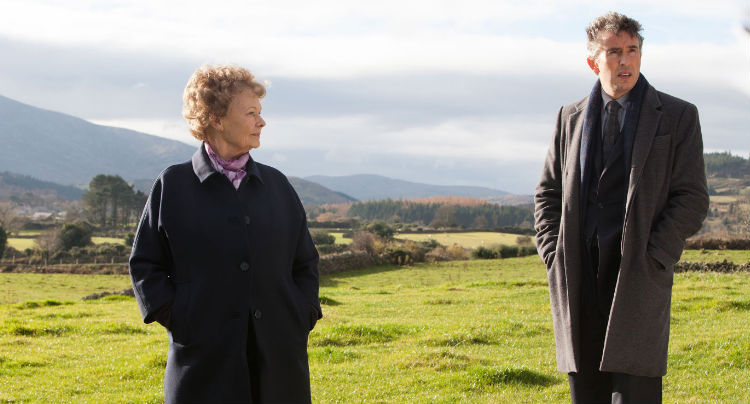
ImageJudi Dench was unsurprisingly excellent in the title role, bringing many layers to a complicated storyline, and subtly playing with the initial impressions of a “twee old lady” to create something more complex. However, I did think at times during the film that it’s unfortunate she doesn’t seem to often have the opportunity to create EVEN MORE complex characters on film (versus what she does on stage) – the most recent cinematic example possibly being her work in Notes On A Scandal back in 2006.

Steve Coogan shone brightly in a dual role of co-writer and co-star here, showing none of his comedic talents that he is known for and keeping things quite straight, even more serious at times, throughout the story. From his many credits related to the film (writer, producer, co-star, optioned the story, etc) one can tell that the material struck a chord with him.

I was interested to learn that this movie marked the first time that Dench has portrayed a real, living person onscreen. The experience seems to have resonated with her, and it’s been sweet to observe the real Philomena Lee participate in some of the movie’s press events and publicity activities, which will probably continue in a modified form leading up to the Oscars, for which Dench recently netted a deserved Best Actress nomination.

Next up for me was SAVING MR. BANKS, a film that I wanted to enjoy, and would have liked a lot more if it had been made differently.

Image

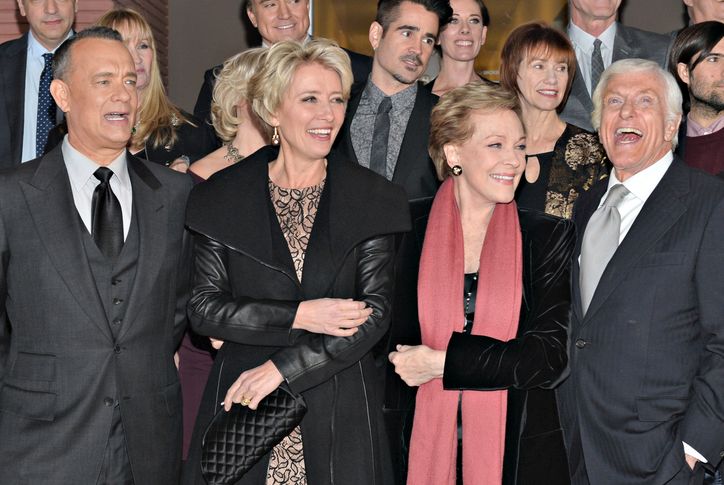
The film’s stars meet the veteran stars at the premiere. I hadn’t seen this image until today and love it!

The film tells the not previously explored on film story of the making of MARY POPPINS, focusing on the challenges that existed between author PL Travers’ interpretation of the work versus Walt Disney’s vision of what the film adaptation should be. Travers and the studio went back and forth on visions and agreements for over 20 years (!) before the film was finally released in 1964.

For some inexplicable reason, the writer decided that this already compelling and familiar story needed to be augmented by a narrative from Travers’ childhood detailing her recollections of growing up with a difficult father in Australia. I might not have had a problem with this if it was told in a traditional part 1/part 2 narrative, but the film constantly intercuts between the two stories throughout the entire film, causing me to lose interest in the total story because it keeps getting muddled between the two time periods. Additionally, some threads of the later (1960’s) narrative are not given time to develop in a way that could leave things clearer for the audience and make it into a more meaningful film experience. (Perhaps this is why the film was almost completely shut out of the recent Oscar nominations in spite of it being a clear and obvious tailor-made contender for awards.)

Having said that, it was delightful to see Emma Thompson back in a leading role for the first time in several years. Thompson has spoken often in press interviews for the film of her pleasure in getting to play a complex part – and it was clear to see she has been enjoying the various publicity endeavors for the film, from singing along at various events tying into the film’s music to her recent throwaway appearance at the Golden Globes last weekend.

Next up was INSIDE LLEWYN DAVIS, the latest film from the Coen Brothers, which I felt like I’d been hearing about for well over a year – though maybe it’s only been a year – and was pleased to finally see in its finished form. After seeing it I also reflected on how the Coens are masters in creating truly cinematic experiences where their story takes you away to a distinct time and space, and it takes… some time to come back to reality after the film. Or the experience lingers in your mind. Or both.

Image

GIF courtesy of Vogue article on the film.

This story exuded an authentic and weary sensibility looking at the competitive and colorful Greenwich Village folk scene of the early 1960’s. I could obviously identify with the narrative thread of “artist traveling with a cat” – and the presence of the cat in the story turned out to be an intriguing barometer of Llewyn, the main character’s, moral compass. The story was bleak at times but never in an unforgiving way, and boasted a keen sense of detail throughout the story. Not to forget about the catchy songs paying tribute to the era, some featuring the talents of Justin Timberlake in a role far away from his well-known pop persona, but clearly highlighting his musical ability.

This film and the next one had me noticing the nuances of screen pairings and couplings, where Oscar Isaac and Carey Mulligan again appeared onscreen following an earlier – and drastically different – pairing in the 2011 film DRIVE. Similarly, in the film discussed below, Joaquin Phoenix and Amy Adams again appear opposite each other just a year after sharing scenes in the also drastically different THE MASTER. It got me thinking about what that must be like for the actors themselves – familial? cordial? old home week? distant? – and if other audience members pick up on the reuniting. (Based on press reports and interviews it seems that both instances were friendly and enjoyable for each pair of actors.)

So, that brings me to HER, seen yesterday back at the reliable Quality 16 – though it’s a film more appropriate for the downtown venues of the Michigan or State Theatres. I’m still feeling awestruck from this film and likely will continue to feel that way for several days. I also feel like it vaulted to the top of my top films in 2013 list, and can see I’m not alone in that sensation. Why did it resonate? It tells a futuristic yet realistic tale with nothing but humanity – no sensationalism, no whirlwind special effects, a strong look at the lead character’s life and story arc, and intense commitment from the principal actors.

ImageHER looks at the life of Theodore Twombly (great character name), thoughtfully played by Joaquin Phoenix and even more so when you realize that many scenes were him acting alone, similar to other 2013 releases GRAVITY and ALL IS LOST but told in the most down to earth style of the three. Theodore struggles with his life after his longtime love (Rooney Mara, continuing to show impressive character depth and command of the screen) leaves him. I should add that Theodore and his ex’s storyline is conveyed almost completely in flashback, yet in a completely opposite and more resonant way from SAVING MR. BANKS. And when the two characters meet in person again, it drives the point of the whole story home in a powerfully abrupt moment. Theodore has a few other women in his life, with Olivia Wilde appearing in a  well-used blind date cameo role, and Amy Adams supporting him as a neighbor and close friend. Adams continues to show versatility and command in her roles, bearing in mind that this was released in tandem with her (ahem) showier part in AMERICAN HUSTLE. She also gets to deliver one of the movie’s best lines – in a stellar screenplay – which I’ll quote here:

“We are only here briefly. And while we’re here, I want to allow myself joy.”

That line also seems to capture the story arc between Theodore and his personal OS, Samantha, voiced by Scarlett Johansson. I don’t want to go into detail about their storyline here, since I feel that you have to see the film to experience it. But I will say that it is very humane and resonant, with an eerily realistic feel to it when you consider how much time people in the present era (myself included) spend looking at their mobile devices, laptops, large screen televisions…

A few “industry observer” type notes on this film:

  • It’s really interesting to note that Johansson was actually a late replacement for the voice role after filming had been completed, where British actress Samantha Morton had originally voiced the role, and apparently been present with Phoenix on-set in many scenes… but then director Spike Jonze felt in post – production that the part needed to go in a different direction.
  • The film is one of few recent films to make use of locations actually in Los Angeles, although augmented by some additional scenes shot in Shanghai. A recent Los Angeles Times article made note of this as California struggles to retain its dominance in film production in the face of extensive tax credit/rebate production programs in place in other US states.
  • The film’s score is composed by Arcade Fire, possibly their first contribution to film scoring, and reflecting a trend of better known for pop/rock composers dabbling in film scoring.
  • I was impressed with the film’s vision of a future expanded Los Angeles regional subway system (and the region is on its way to something like that) – and others have also taken note of the vision, as Gizmodo explains in this article.

To conclude I feel that HER shows an honesty and simplicity rarely seen in modern filmmaking, and reminiscent of an old favorite ETERNAL SUNSHINE OF THE SPOTLESS MIND – which I can’t believe is 10 years old this year. It will be hard to top a film experience like that, but that’s part of the fun of filmgoing – always keeping an eye for that Next Big Thing, and noting the sensations along the way.

Standard
Movies

13 films I will remember from 2013

A few nights ago I sat down to create a list of 13 films that I saw last year and would consider highly memorable. To my chagrin, I didn’t fill the list, but I did write out 13 films. So here they are with brief comments. It’s worth noting that I saw all but one of these films in the vicinity of Ann Arbor, and 2/3 of the titles were seen by me at either the Michigan or State theaters.


Definitely will remember!

In The House
A French refreshment seen in early June. Clever storyline and just the right European verve. Kristin Scott Thomas continues her strong streak in European cinema – not that it was ever broken.

American Hustle
Not the clearest or tightest storyline I’ve ever seen at the movies, but strongly overcompensated by exuberant performances from all five main cast members, most notably Amy Adams and Jennifer Lawrence in the two lead female roles. Was disappointed that the shooting location of Boston (my home city) was not used as itself and actually stood in for locations in New York and New Jersey.

Much Ado About Nothing
Another summer refreshment, this time coming way out of left field from the mind of Joss Whedon – and filmed in his Santa Monica (or environs) backyard! Who knew Shakespeare could be so modern and fun?

In A World
I wrote about this in detail here on this blog; to recap, a clever comedy from Lake Bell that used the truth of the competitive voice over industry in a way that felt honest, likable, and real.

Enough Said
A brutally and comically honest study of modern relationships featuring mature, thoughtful performances from the central trio of Julia Louis-Dreyfus, James Gandolfini and Catherine Keener.

Before Midnight
Chapter 3 of a long running saga first seen in 1995. But this time, Ethan Hawke and Julie Delpy brought a world weariness to their characters that made them more relatable than ever, as the audience could pick up on their shared history as if it was (their) own life, and draw their own conclusions from a dramatically intense, realistic storyline.

12 Years A Slave
Also mentioned on this blog shortly after seeing it – not an easy film to watch, but an important tale. 

How I Live Now
Probably the “sleeper” of the group, in that it was little – seen by a wide audience, but reminded me of a transcendent teen/young adult state of mind where nothing seems to matter besides what you are doing in the here and now. And with this story, that was exactly the point.

Maybe I’ll remember them, maybe I won’t??

The Place Beyond the Pines
This April release boasted a uniquely complex narrative and sterling performances from leads Ryan Gosling and Bradley Cooper. However, it was almost too ambitious and could have been a tighter story.

Gravity
Made a boat load of money in the fall and continued Sandra Bullock’s stellar second act twenty years into her career. But I wasn’t captivated by it when I saw it, though I did appreciate the effort put into the film and its tightness as just a 90 minute movie.

Don Jon
Impressive directorial debut from Joseph Gordon – Levitt with luminous co-lead performances from Scarlett Johannson and Julianne Moore. However, was also “slight” in the comedic way – not life changing or affecting.

Blue Jasmine
I enjoyed this one the most for the San Francisco and Marin County filming locations, plus Cate Blanchett’s immersive and captivating lead performance, then the rest of the familiar storyline. I will remember that it name drops my two favorite places of Martha’s Vineyard and Marin County, and features cameo appearances from a few people I know through Bay Area theatre.

Prisoners
One of the most unsettling films I’ve seen in the theatre in several years, with incredibly committed work from Hugh Jackman, Jake Gyllenhaal and Melissa Leo, among others… but so full of dread and dark and gloom and murky camerawork that it’s hard to single it out.

Standard
Uncategorized

A Highly Theatrical week in London (flashback from February, 2007)

Again cut and pasted from live journal. I’d like to combine these recent two archival entries into a “then and now” post to be made here on this blog.

_______

One of the best things about this particular week was that each day was theatre centered, 

On Monday night, I caught one of the final performances of Therese Raquin, a mesmerizing thriller that was the best directed show I’ve seen since returning to London. Last year I was similarly impressed by Pillars of the Community done by the same director. The show was preceded by an intriguing Q&A session with the two main female stars, and it was fascinating to see them “out of character” and then completely inhibiting their roles just 45 minutes later. 

Tuesday night I finally made it down to the Battersea Arts Centre, a boiling pot of contemporary theatre work. Every Tuesday night they have an “after-hours masterclass”, which is essentially a short lecture about a different topic of theatre-dom. This week it was playwriting, taught by Julian Fox, and I was pleased to get back in the groove of creative writing, crafting a stream of consciousness piece and then editing it down to something more concise. It will also likely be an effective precursor for a “play in a day” writing workshop which I’ll attend all day tomorrow at the Soho Theatre. On the way home I ran into a friend from Hampshire on the tube (the number of coincidences needed to make that work was extraordinary) and we exchanged contact info to hang out sometime soon.

Earlier on Tuesday night, I got a 24-hours notice email about a special question and answer session that would happen the following evening at the Old Vic Theatre. It sounded like a perfect way to get more professional advice about theatre company work, so I emailed back that I wanted to attend. Wednesday mid-day brought a reply that the event was “regretfully fully booked”. On hearing that news, I felt both annoyed that they had given such short notice, and also ambitious and daring – I really wanted to hear what those people had to say. So I decided to go anyway. 

Getting into the event was much easier than expected; I simply walked up to the stage door of the theatre, signed in, and then went upstairs to a top floor rehearsal room, and joined the crowd already there to hear the panel. Their advice was fascinating and informative – some of it familiar, others consisting of pr/marketing/publicity angles I had not considered. 

Thursday night brought a trip down to the Shunt Theatre, located underneath London Bridge railway station, to see my former professor Mick Barnfather’s show that he directed, called Bitches Ball. I’d seen an earlier version of the play when I was here in December, 2005, which had been focused on the physical comedy and overly grotesque elements of the storyline. Mick had let me know that this version was quite different, and I was impressed how he (and the actors, presumably) had changed the focus of the play completely. They went from deriding the main character, Mary, to humanizing her and making her story captivate the audience as she had various misadventures along her career track to being an actress. I thought that some deliberate parallels were drawn to current “actresses” who are in fact more famous for only being in the gossip pages. The performances were typically high-energy and as they’d just finished a UK tour, I sensed a contentness of being back in London.

The SPACE for the show was INCREDIBLE. I walked into a dimly lit long corridor that had the appearance and atmosphere of a subliminal cathedral, with very little lighting and lots of stone and some brick in the walls. I could see a light at the end of the tunnel (literally) which turned out to be the performance space, a large room converted into the equivalent of an indoor ampitheatre. One rounded the corner to reach the bar area, also carved into the walls with ease, and flanked by numerous tables lit by candles, as there was very minimal natural lighting in the entire club. It felt like a film set inhabited by extras there to enjoy the atmosphere (instead of just to be seen) and I have full intentions of going back there for a drink and show again sometime.

Tonight it’s back to the Donmar Warehouse for a production of Ibsen’s John Gabriel Borkman with Ian McDirmid (better known as Star Wars’ Emperor Palaptine) taking the lead role.

Tomorrow I’ll return to the Soho Theatre for a special “write a play in a day” workshop, which should be exciting and a fun opportunity to meet some like-minded peers.

On Sunday afternoon, am planning to see the final performance of Rock’n’Roll by Tom Stoppard. I hope it will be better than the last play of his I saw, which was the aptly named Travesties in SF.

Standard
Uncategorized

Flashback: Theatre Workshop at the BAC in London, March, 2007

Just pulled this off my live journal; it was written in September, 2007.

———

Exactly six months ago at this time, I was riding an energy high from one of my most memorable nights living back in London. I never really wrote about the experience at that time, and would like to do so a little bit now on the anniversary. However, I think I’ll make this a “To Be Continued” story, as the pictures and video from that night (to be posted later on from my own laptop) may tell the story better.

The leaflet advertising that week’s After Hours workshop at the Battersea Arts Centre described the next class, entitled “The Wrong Moment”, as Using physical performance and digital media we will be focusing on the unconsious, awkward, unexpected spaces between our deliberate actions. It sounded different and exciting to me, so I decided to go down for it, even though it was an hour’s tube and bus ride from home, and the show was particularly draining that week as we went to locations in Southwark.

—-

I never did write a follow up, but maybe I should here.

Standard
Uncategorized

Crowdfunding and the Arts

Recently something had led me to believe that crowd funding had passed its moment, with sites like Kickstarter and its relations seeming to have lost their novelty – and more awareness about accompanying service fees or editorial challenges that the various sites might impose on their funders.

But, two current projects involving music have shown me that’s not the case, and so I wanted to give them a quick shout out here.

My longtime friend Christa has successfully funded a Kickstarter project for her second album generating support from 142 (!) backers including myself. (Her folk-based music is definitely worth a listen and can be heard here.)

Meanwhile, famous musical daughter – and versatile artist in her own right – Sally Taylor, whom I followed during her active musical touring career throughout my high school years, has launched a new Indiegogo campaign for an ambitious and unique-sounding multidisciplinary art project due to debut next summer on Martha’s Vineyard.

I am sure there are many more examples of crowd funding continuing to make an impact, but those are the two that have my attention right now.

Standard
Movies, Theatre

Familiarity breeds appreciation

Yesterday brought two currently rare examples of seeing people I know perform onstage – and in film. Initially thought it was the first time that had happened in over two years, but I now recall there have been a handful of occurrences since leaving the Bay Area (where that situation was much more frequent.)

In the afternoon I cheered on friends from The Penny Seats for their annual “Five Bowls of Oatmeal” performance given in collaboration with local non-profit 826michigan, which is itself, coincidentally, an offshoot of a San Francisco-based organization. This event was the culmination of several weeks of writing workshops with 826 volunteers and local middle school aged students, collaborating with the students to write short plays that (VERY IMPORTANT) had to have oatmeal incorporated into them. And the students succeeded! Many writers were in the audience yesterday to see their work and be (humorously and thoughtfully) interviewed in between some of the plays.

Of course for me there was an extra appeal in the performance: seeing my friends take on new and often outlandish roles, like a loaf of bread, a winter storm, a few babies, children who are budding actors, police officers and various types of food (just to name a few…) with everyone clearly having a great time loosening up and honoring the student’s written word. I can’t forget to mention the creative cartoon-style props and thoughtful attention to sound design that were an integral part of the complete performance.

In the evening I again ventured to the State Theater (quickly becoming my most frequently visited local cinema) to see the acclaimed film 12 Years A Slave, featuring college friend Lupita Nyong’o in a key supporting role. I’m not exaggerating when I mention that Lupita has received considerable press attention for her work in this film, with corresponding Oscar buzz. A quick Google search yielded many recent examples including 3 from the past 10 days (!) which I will link to here:

The New York Times highlights Lupita’s fashion sense
The LA Times checks in with Lupita as the Oscar season begins
and most honorably…
The Springfield Republican interviews several of our Hampshire professors about their experiences working with Lupita.

The Republican’s opening comment that “But for those who knew her when she was a student at Hampshire College, the applause is nothing but expected” resonated with me for obvious reasons, as I was always impressed with Lupita’s dedication to her/our college pursuits that I observed, and am happy to observe support for her continuing to come from our alumni community.

Where both of the observations in this post stem from college theatre connections, it makes me feel very grateful for my time at Hampshire College. Relatedly, there’s a good chance I would not be here in Ann Arbor right now if I hadn’t gone to Hampshire… but that’s for an alternate reality science fiction-style post.

The film – 12 Years A Slave? Easily one of the most intense, visceral and harrowing films I’ve ever seen in the movie theatre. I’m sure those feelings were connected to knowing that the story is based on a real event, combined with a sad knowledge of slavery’s reality and heavy footprint in history. It’s a film that generates quiet contemplation (there are no words, really) although I am sure it will be a recurring presence in the film awards season ahead.

An esteemed cast gave power to the characters, with Chiwitel Ejofor in the devastating lead role (and seeming to make a comeback of sorts after being less visible on screen for the past several years), easily rising to the front of Best Actor conversations, while several well-known actors offered supporting portrayals of varying importance to the story.

I had some quibbles with a few technical aspects of the film, but can’t deny that director Steve McQueen brought a powerful tone, emotional resonance and consistency to the story.

“12 Years” is definitely not an easy film to absorb, but one that is clearly a must-see, if you are up for it.

Standard