Movies

Cinematic Looks at History

This week’s Oscar nominations have created much discussion in the blogsphere and social networking brigade. I’m not looking to add to that conversation with this post. But I am pleased that I have now seen all of the Best Picture nominees for 2014.

Selma has built up quick and impressive word of mouth since its wide release began last Friday, and that was why I went to see it last Tuesday night. The film takes a detailed look at events surrounding the mid-1960’s segment of the Civil Rights Movement, focusing on Dr. Martin Luther King Jr.’s leadership role in the saga of events in the Deep South, which eventually led to a march from Selma to Montgomery, Alabama, in 1965.

The film is exquisitely well-cast in its central ensemble of committed African-American actors portraying real people. Those that stood out for me included David Oyelwo as King, Carmen Ejogo as Coretta Scott King, and the extensive range of supporting actors around them; it was particularly cool to see former Bay Area actor Colman Domingo appear in a prominent role. I felt less agreeable about the Caucasian casting choices, such as Tom Wilkinson as Lyndon Johnson – surely there was a Texan or Southern actor who might have been more suitable? Or even someone like Bryan Cranston, expanding upon his recent stage success as the same person? Fellow British actor Tim Roth as George Wallace also seemed to be overemphasizing certain aspects of his portrayal.

Director Ava DuVernay uses a lyrical simplicity to convey the storyline of events, with many shots focusing just on the character in action, and little use of supporting objects and visual distractions. I would have preferred a few key dramatic moments to go without the musical accompaniment she chose, but I can understand why they are there. I’m undecided about her implied allegories towards recent national events, but I agree that there is more work to be done.

My Rating: ***


Clint Eastwood’s American Sniper has smashed box office records this weekend, but I would not have gone to see it if it hadn’t received a Best Picture nomination.

The film tells the story of Chris Kyle, a Texan who became known as the most successful sniper ever for the US, with “more than 150 confirmed kills in his career” according to multiple sources. Sadly, four years after ending his Army career to be with his family in Texas, Kyle was killed in February 2013, allegedly by a fellow war veteran he was attempting to help cope with PTSD.

Bradley Cooper stars as Kyle and continues an impressive run of recent acclaimed performances. Much attention has been paid to his “bulking up” for the role, but I found his use of character subtleties to be much more interesting. As Kyle, he displays an easy comfort with the role of command and methodical attention to detail in his lethal missions. But when he comes back to the USA, home of his wife (played by Sienna Miller) and growing family, Kyle doesn’t know what to make of the calm setting, literally worlds away from his war-torn “workplace”, and becomes distractedly distant. Cooper conveys this unease especially adroitly in these home-based scenes, which run the range from poignant to troubling.

I would have liked the film much more if it paid sharper focus to that tension in Kyle’s life between his role as a war hero and role as a family man. As it is expressed in the finish film, there is too much attention paid to the mechanics of the war, and it feels like a war movie, not one that is adapted from Kyle’s actual memoir. Cooper is left to convey the psychological and physiological tension over the course of several effective but brief scenes, while long stretches of the film focus broadly on the war mechanics. That’s not to say that they aren’t well-made (they are, of course, with Eastwood at the helm) but it lends the movie a different aftertaste than what might have been. I have to wonder what the story would have been like if original director David O. Russell had stayed at the helm (Three Kings 2.0?) or in the eyes of a female director, as seen in Kimberly Peirce’s underrated Stop-Loss back in 2008.

Sienna Miller deserves special mention for reaching new dramatic ground with her performance. The actress, who was better known for being tabloid fodder 5-10 years ago, has matured into a confident and assured performer. I’m sure that a close personal connection with the real life Mrs. Kyle helped her to draw the emotional truth of the role. I also look forward to seeing what Miller does next with a broader role, whether on film or on stage.

My Rating: **

Standard
Movies

The Great Outdoors Welcomes the Cinema Lens

DFTI returned to the filmgoing life this past weekend with a pair of films set in the outdoors, and both showing very different aspects of what the surroundings can offer us.

The first film, Force Majeure, seen at the luminous Detroit Film Theatre, took a sharp look at how a seemingly minor event can perhaps irreversibly alter an interpersonal dynamic. This type of storyline is often seen with significant dramatic heft, such as The Impossible from a few years back, but rarely in subtlety, and that made it all the more intriguing.

We’re introduced to a Swedish family of four as they settle in to their long-awaited holiday in the French Alps. Dad’s a workaholic, Mom is career-oriented but staying aware of the family, and the kids are tuned in to the electronic generation, but happy to be there. A veranda mountaintop lunch near the start of their trip initially seems scenic and pleasant, until a loud crack is heard and an avalanche starts heading directly at them. Only problem is, Dad freaks out and leaves the other three out in the chill. It’s not a spoiler to say that everything is fine, physically, after that, but everything is not cool, mentally, following that development. The story dabbles in gender politics as the man and woman initially demonstrate differing opinions and memories of the incident, and they struggle to determine how they can best move on as a family from the situation.

The director, Ruben Östlund, adds numerous subtle artful touches throughout the story, such as a recurring piece of classical music, artistic framing with the characters in one corner of the image, and a careful control of performances range, as in one scene an action or objective may be implied but the next may be quite differently stated. He’s aided by capable and committed performers, particularly Lisa Loven Kongsli in the central role of the mother. I also appreciated how the film built to a surprisingly ambiguous conclusion, with two last-act surprises testing the will of the family as they prepare to make their way back to their Real Lives.

My Rating – new for 2015! – ***1/2 stars

The next night (last Saturday the 10th) I returned to The Maple Theater, perhaps this area’s second – most classiest film venue after the Detroit Film Theatre. I’m sure that the Friday DFT visit put me in the mood to go there again, and where there were several options on where to see Wild, the film of the night, this choice added to the experience.

maple theatreWith a movie at the Maple, it isn’t so much about the screening rooms themselves, which are clearly 70’s-80’s style slightly bigger than shoebox auditoriums – and very reminiscent of my hometown movie theatre – it’s the initial experience of going to the venue, which was refreshingly evident that night as a jazz concert (pictured at right) took place in the coffee/wine bar section of the building. It may be seen by some as a snobby touch, but for me, something like that is very important to set the tone of the evening and make it into more of an experience, especially in this day and age with so many forms of media and personal entertainment devices competing with each other (and us, as audience members) for time and attention.

The movie itself, Wild, was a great choice to begin my Hollywood film year, where I began my 2015 with several days back in the Northwest, where the majority of the film takes place, and had been in California prior to that. The film is quite obviously meant as a return to dramatic form for actress Reese Witherspoon, who also produced the project and has noticeably struggled with audience expectations of her film performances since winning an Oscar for Walk the Line back in 2005. Having followed Witherspoon’s career slightly since her earlier films in the mid-90’s, it seemed to me that this movie was her attempt to channel several of those earlier roles as well, such as doing nudity on screen for the first time since Twilight (no, not that Twilight), adding vampy looks and excessive makeup as she did in Freeway, and showing a mix of cunning, sweetness and resourcefulness as she did in Cruel Intentions. Needless to say, Witherspoon has just been rewarded for her efforts with an unsurprising Oscar nomination for Best Actress… but I think it will be more interesting to observe where she goes from here with her regained dramatic momentum.

I was not familiar with the story of Cheryl Strayed and her 1995 trek up the Pacific Crest Trail prior to seeing this film. I’m sure that it is a case of the book being better than the movie, but the movie version, while ultimately unfocused, did have some redeeming qualities. Director Jean-Marc Vallée creates an intriguing dream-like atmosphere by focusing on Cheryl (Witherspoon) and her immediate experiences hiking the trail, but often cutting away to memories from her past, many of which involve her late mother (Laura Dern) as a way of filling in her backstory. The frequent cutting away reached a point of being distracting for me as the story went on, and I would have preferred that it stop after a certain point. When it did get less frequent, about two-thirds of the way through the story, I found that added much more dramatic intensity to the immediate story. The film does an excellent job of evoking period detail from 1995, including spontaneous celebrations of Jerry Garcia’s life, now-anachronistic reliance on payphones, and a reminder of a very annoying pop song that was popular towards the end of that summer that I can’t find the title of.

Witherspoon expectedly performs well in the demanding lead role, but at times seems to be trying too hard to show and use range, perhaps going back to the idea that this was a pet project for her. Laura Dern creates a warm presence as the mother, but is not given much time to develop the part due to the constant back and forth of the story. Still, it was refreshing to see Dern appear in the film, as she often seems like an actress who doesn’t fit the stereotype of the Hollywood character actress and thus may not be seen onscreen as much as she could or should. Indie darling Gaby Hoffmann appears in a few scenes as a friend of Cheryl’s, and I would have liked to have seen more of her. The nature of the story doesn’t allow for a much more substantial supporting cast beyond that.

My Rating – **1/2

Standard
Uncategorized

Chocolate: More Than Sweet

I wrote an article that is featured in the program for the Hilberry Theatre’s soon to open production of THE WAY OF THE WORLD.

wsutheatre's avatarThe Hilberry Theatre

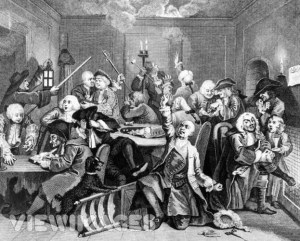
Chocolate House BW Image Source: http://www.worldstandards.eu/chocolate%20-%20history.html

When you sip a cup of hot chocolate today, you may not realize that the well-loved drink had a completely different identity during the age of The Way of the World. Chocolate, then an exotic spice to many eyes and palettes, first arrived in continental Europe in 1585. Over the next few years, the taste and aroma quickly became fashionable in many locations around the continent.

For those living in England, chocolate remained unknown until the mid-17th century. At that time, the city’s first chocolate house opened in East London, run by a Frenchman who sold a beverage described as an “excellent West India drink.” The mysterious substance quickly gained a strong reputation from those “in the know.” Various advertisements claimed that chocolate would reverse the aging process, serve as an aphrodisiac, and cure the previous evening’s hangover. Recipes for chocolate drinks included such mixtures as sugar…

View original post 327 more words

Standard
Movies, Theatre

Cinematic Wrap on 2014

My mission to chronicle all the films I saw during 2014 was a success!

60 films total for the year. At times I felt like I was running parallel to – but not competing with! – my friends Gabe and Roy, although I ultimately staked out a distinct independent film orientation, with occasional exceptions.

Will I do it again this year? Probably.

But my final entertainment experience of 2014 was, fittingly, back at a theatre that I know well in Berkeley, California, and the immediacy and satisfaction and poignancy of being in that audience made me want to re-focus on theatregoing here in Michigan – not just making it, but seeing it – so I hope that the new year will bring a renewed commentary on live theatre, as was once more common in this blog.

However, it wouldn’t be fair to 2014 to leave it without a top ten list, so here’s mine with a few brief comments taken from the individual write-ups.

1. BOYHOOD
This was easily the most humane movie I’ve seen since Toy Story 3, with its tear-jerker of an ending, back in 2010. And this film touches the heart in a similar and different way, showing that life is relatable in its small, poignant, important moments, and drawing emotional truth, recognition and reflection from those same narrative themes.

2. THE ONE I LOVE
the film… cleverly does not spell everything out for the viewer and leaves several elements up to discernment and imagination — something I always appreciate and often prefer in published or written works. Duplass and Moss rise to the challenge of the material and are tasked with carrying nearly the entire film only on their shoulders.

3. CLOUDS OF SILS MARIA
The two actresses rise to the challenge of working together and carrying the film almost completely on their shoulders. Binoche, accustomed to the lead role both in fiction and real life, commands with an increasingly dislocated sense of reality and heightened awareness of the passage of time for someone in the acting industry… The film deserves to be seen as a return to form or start of a new chapter for Stewart… easily one of the most unique films I have seen this year.

4. CHEF
The story… is told in such a warm – hearted and also exuberant style, including an emphasis on colors in the frame, tantalizing shots of food onscreen, and the family relationships of the characters pushed to the front of the story, that this became one of the most appealing and satisfying films I have seen in some time.

5. BLUE RUIN
(features) one of the most “normal” protagonists I have ever seen in such a film, and although the movie eventually leads itself to a somewhat familiar and inevitable climax, it maintains the minimalism and character uncertainty to make it seem refreshing and unusual to the viewer.

6. UNDER THE SKIN
I don’t know what this film means (who can, really?) but I feel appreciative of its willingness to challenge and provoke the audience in a subtle way, along with a willingness to let actions speak louder than words complimented by an atypical story.

7. NIGHTCRAWLER
Nightcrawler is constructed coldly yet beautifully for the audience, with sleek cinematography by Robert Elswit and several fitting themes composed by James Newton Howard. Writer and director Dan Gilroy, making a later career debut behind the camera, shines a light on an unsettling angle of contemporary culture… the topicality of the subject matter ensures that the viewers might continue to think about their own role in taking in current media, and the pros and cons of continued life engulfed in the digital age.

8. A MASTER BUILDER
The film unsurprisingly holds the story’s dramatic intensity through the entire length of the film without betraying its stage roots. Shawn seems to have achieved a timeless quality with the text…

9. BEYOND THE LIGHTS
The film puts a pragmatic and realistic spin on a familiar story, and is really a showcase for a dynamic and revelatory performance by Mbatha-Raw…

10. SNOWPIERCER
The greater plot element of a class system on a contained environment is notable, and continues to find relevance in the present era…

Stay tuned! (image taken in December, 2014, near Martha's Vineyard, MA)

Stay tuned! (image taken in December, 2014, near Martha’s Vineyard, MA)

Standard
Movies

Multiple forms of Whiplash at the movies

So apparently I lied about being done with my moviegoing for the year, and this morning I ended up at the recently opened MJR cinema in Troy for a screening of Whiplash, a film I had tried to see a few times over the past month.

I think it’s very cool that MJR has their own theme song, a great nod to movie theatre traditions of the past. Here it is on YouTube:

The song reminds me greatly of the Loews Theatres jingle I grew up with, also viewable on YouTube:

Back to Whiplash

The film is much darker than what I had expected, focusing right in on promising music student Andrew Naiman (Miles Teller) and his struggle to fit in at a prestigious music conservatory in New York City. Soon after his arrival, Andrew encounters a teacher (JK Simmons) who notices his talent, and recruits him to be part of an upper-level band. But Andrew soon learns that the teacher excels at pushing his students to the brink, in order to get the most out of them, and Andrew finds himself making changes in his life and becoming increasingly, fanatically, focused on the music.

The film evokes a complicated line of thought recalling mentors and teachers one might have had, and how much they pushed you/their students to be successful. A more subtle thread in the story looks at trust and forgiveness – if we are bothered by some thing or action that a person caused, can we even speak with or trust them again? And finally, how much do you/I/we want to achieve for a lifelong dream? I know I have felt all of those sensations at different times in my life.

Native Detroiter Simmons (recently interviewed by the Free Press about the film and his hometown connections) captivates in a demanding multifaceted role. Perhaps most impressively, just when I thought the film had closed up his character, and the storyline, a third act appears that turns his character around and fills in the shadings, while also setting up a provocative finale.

I wasn’t familiar with Teller prior to this film, although I see from IMDB that he’s become quite well known thanks to several big hits aimed at audiences slightly younger than me. He scores a 10 on the music scenes, thanks to his existing musical background and a similar ferocious intensity, but I felt that he didn’t fully inhabit some of the dramatic scenes of the film. Admittedly, that may have been part of the point, where the character was getting so consumed by his work as to neglect other parts of his life.

The supporting cast includes few well – known names, save for veteran actor Paul Reiser as Andrew’s dad. Reiser hasn’t changed from his affable presence as seen on 1990’s television and several films in that decade, and I felt that touch was just what the role needed, where his son faces such high personal stakes.

The film’s story is conducted in a broadly familiar way, and so I could tell where the narrative was going, with a few exceptions. However the intensity of the story is such a surprise, with a powerful punch, that I often still was on the edge of my seat. Hope that the film continues to stay in the awards season conversation.

Standard
Movies

Film Flashback: Nemesis, and my first California filmgoing experience

NemesisposterMy Star Trek: The Next Generation film flashback series concludes with a look at the “generation’s final journey”, Star Trek: Nemesis, which was released 12 years ago tomorrow. The film was dropped into a very crowded 2002 holiday movie season, with other franchise releases including Harry Potter and the Chamber of SecretsDie Another Day and (just five days after NemesisThe Lord of the Rings: The Two Towers. Because of this, and a general increasing antipathy towards Star Trek at the time, Nemesis suffered the dubious distinction of becoming the lowest – grossing film in the franchise and not even debuting at #1 on its opening weekend, as every previous film had done prior to its release. It was beaten by the extremely forgettable Jennifer Lopez vehicle Maid in Manhattan, and disappeared from theatres quickly over the course of the holiday season and New Year into 2003.

But let’s rewind.

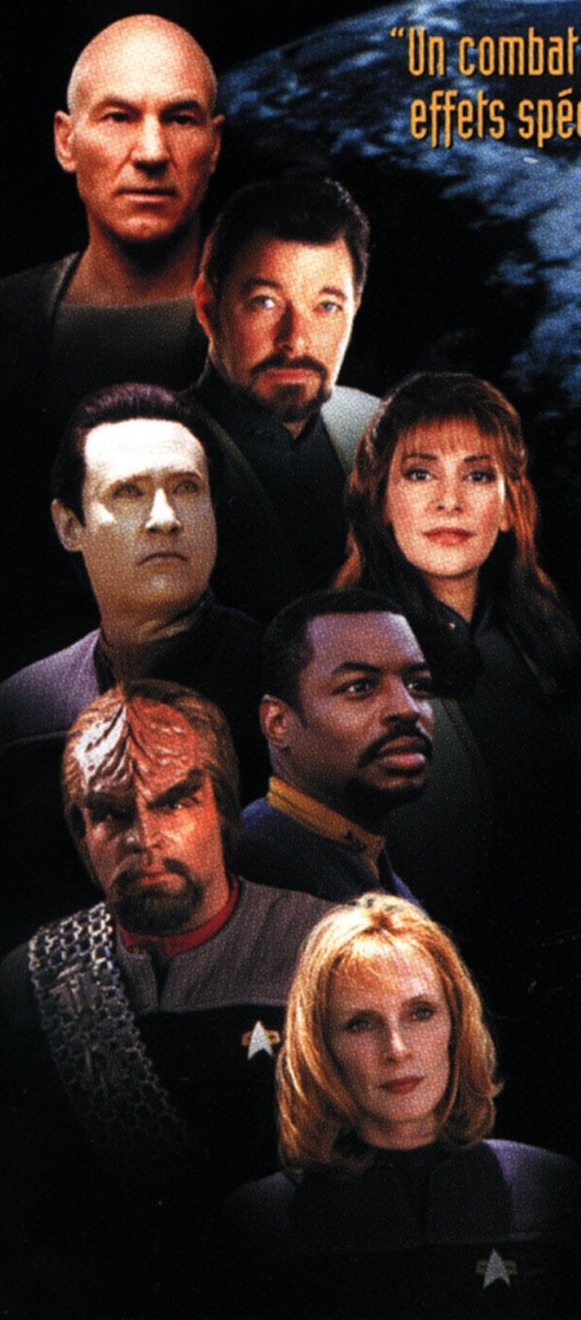
In the fall of 2002 I was a freshman at Hampshire College and (once again) increasingly excited about that year’s Star Trek movie. I was confused as to why the film was already being marketed as “a (the next) generation’s final journey”. Why had Paramount already decided to phase out my favorite cast? Surely the studio was being overly judgmental. The original cast had not faced that same tagline when The Undiscovered Country was released in 1991. There was a modest amount of pre – release buzz, and at some point I got my hands on a promotional CD that included the above image, and so I made it the backdrop on my computer for a time.

Thanks to a plan to tag along with my mom on business trip she would be making to Los Angeles, I was also VERY excited that I’d be seeing the new movie IN HOLLYWOOD not far from where The Next Generation was filmed ON THE OPENING WEEKEND of the new movie at the world famous Grauman’s Chinese Theatre, home of many celebrity handprints, unique architecture, and with Hollywood Boulevard right at its footsteps. Nemesis had its world premiere there on December 9, just three days before we arrived in town.

It was my first time in California, and I was awestruck by the palm trees and glamour. I also had no idea of the prominent role the state would eventually play in my life, with two encore visits in January 2004, additional teasers in the fall of 2006, and then a whole new and vibrant life starting in early 2008 and continuing in a modified form today.

And so once Friday the 13th rolled around, we worked our schedule out so that we (I) could attend an opening day matinee of the new film. We had swung by the theatre with some of our hosts the night before to see the area and the then-new adjacent Kodak Theatre, home of the Academy Awards. Our host sent us some digital pictures from that evening, but I think they have been lost to the sands of time and the rapidly evolving digital age. Needless to say, it was eye-opening for this kid from New England to finally see the bright lights of Hollywood Boulevard, with a surprisingly grungy feel clearly visible not far from the main tourist sights. I’m sure I was quite insistent that we had to make the matinee on time, even though we were coming from Culver City over to Hollywood on one of those so close but so far LA trafficked afternoons, and we did.

(Interestingly, this came full circle from Star Trek: Generations eight years earlier, which I first saw with my mom, the non-fan parent, on opening day.)

We sat near the back of the auditorium so as to get the whole Grauman’s Chinese experience, with its lush red velvet seats, intricate aisles and large, but not enormous, cinema screen. I’m sure the surround sound was up to the current standards of the time.

As for the film itself…

The cast looked noticeably older, four years after their previous voyage with Insurrection. A sense of finality pervaded the atmosphere, with dark tones around the screen. Oddly, the early moments of the film also included several out of character moments, most egregiously seen when Picard, Data and Worf stop the whole plot to go for a car chase, which leads them to a heretofore undiscovered clone of Data (even though another “brother” android had become well-established during the run of the TV series) and it figures prominently in the plot, alongside a mysterious and clearly villainous Romulan man, played by a then-unknown British actor, Tom Hardy.

Oh, and longtime on-off couple Will Riker and Deanna Troi GET MARRIED, with a short wedding scene briefly drawing Wesley Crusher and Guinan back with their old crewmates.

The plot uncomfortably mirrors Trek’s best cinematic entry, The Wrath of Khan, and I’m sure I noticed some allusions on that first viewing. Mainly I wanted to spend more time with my favorite Trek characters and take in the experience of the movie. This “family” feeling made the film’s ending, when android Data sacrifices himself for the good of the crew, come as a brutal shock, and actually made me cry in the theatre, since my favorite character was gone. It seems a little silly to think about now, but it was devastating to know that iconic character was gone.

I got over it, and in spite of the movie’s poor box office and my mixed impressions, I saw it again two more times in the theatre.

The first time was less than a week later with my dad, back in Boston at the Fenway Theatre’s largest screen. It was obvious the film would be bumped from all the showplace screens with release of The Two Towers the next day. I don’t recall my specific impressions from that viewing, and the third time around, in early January 2003 at the Cinemark in Hadley, MA, stands out clearer. By that time it was clear the film had not been a hit and would put Trek into a downward spiral. And yet, watching it again, I felt appreciative to see my favorite characters have another adventure, and spend time with them, again, like being part of a family.

In subsequent years I have rarely revisited the film, but writing about it makes me curious to do so at some point. In the mean time, the cast has often gone on record about their dislike of director Stuart Baird, who was hired by Paramount with no knowledge of the television series, and contributed greatly to the film’s focus away from established canon and roles.

Looking at the film now, it is undeniably unfortunate that The Next Generation crew’s journey ended with such a thud. They still deserve one last adventure, the series has enjoyed renewed interest since its 25th anniversary two years ago, and the cast members still are fond of each other. The sky’s the limit.

Standard
Movies

Boyhood – a tribute to and exploration of life

I’m grateful that The Maple Theater chose to bring BOYHOOD back to the Detroit area for one week only, and ventured up there yesterday for an encore viewing after first seeing the film on August 1 in Ann Arbor. The film remains at #1 in my top 10 list of films this year, and I’m not alone in that sentiment.

On this second viewing, I felt that the releateability and emotional truth of the story came through even clearer. I found myself focusing less on the technical novelty of the production, as I had noted in my August review, and more on the honesty of the characterizations.

A few examples of mirroring and foreshadowing were visible as well; it’s amazing to think that Richard Linklater conceived of and executed the project over such a long time span.

In closing my previous post, I wistfully noted that the film was “Best film of my year so far. I’m sure it will be hard to top. I almost don’t want to see another film this year after seeing this one.” I still stand by those comments, and this time I will take them to heart – I don’t think I will be seeing any more narrative films this year and just one documentary. There’s no better film to close the year on a high note and let the dramatic experience and strong story linger and resonate.

Standard
Movies

Late Review: “The Theory of Everything”

wilmington moviesMy Thanksgiving visit back to Delaware (my adopted home state) included a return visit to downtown Wilmington’s Penn Cinema Riverfront, which opened with much fanfare in late 2012 as it brought the first IMAX screen to Delaware. At the time in my handful of early visits there, I felt like the cinema might have been rushed into opening and some interior aspects seemed unwelcoming or unfinished. I was happy to see a brighter interior this time around and fully functioning poster displays outside each auditorium. However, I still don’t understand why the cinema never constructed a separate ticket kiosk; it continues to awkwardly funnel customers into making their purchases at the concession stand.

That being said, it’s great that Northern Delaware now has more moviegoing variety between this complex, the just – opened Cinemark complex at the Christiana Mall, a year – old complex in Middletown, and older complexes in Glasgow, Newark and Brandywine Hundred. The smaller scale Theatre N also soldiers on in downtown Wilmington.

Our feature of choice was The Theory of Everything, a recently released biopic chronicling a segment of the life of Stephen Hawking, well – known scientist and professor, as seen through the eyes of his first wife. It can’t be easy to construct a film structured around someone’s LIFE STORY and condense it down to around two hours. The script of the film suffers from a few too many montages meant to depict Hawking’s different stages of life and familial growth. A more interesting approach might have involved focusing on a few key events, without having the sense of rushing from point to point.

penn cinemaThe strength of this film lies in its performances, most especially with British actor Eddie Redmayne as Hawking. The actor so completely inhabits the real person that I felt like the lines between performance and life had fallen away. Hawking himself was reportedly so impressed by the portrayal that he allowed the filmmakers to use his copyrighted real voice. He is expectedly matched by Felicity Jones as Jane Hawking, who believably matures over the course of the story and gives a strong sense of the emotional and psychological challenges her marriage develops. Jane also faces a long stream of “what might have been or could be” thoughts, which eventually culminates (no spoiler here) in the dissolution of their marriage.

A modest supporting cast includes veteran David Thewlis as Stephen’s academic mentor, Charlie Cox as a family friend who becomes intimately involved with their life, and brief cameos from Simon McBurney and Emily Watson, among others, as older relatives.

The film is well – made; director James Marsh was also responsible for the documentary Man on Wire a few years back. But several narrative flourishes, most notably seen in an early sequence involving blue and white lighting and a dreamlike atmosphere, disappear as the film settles in to a more conventional narrative. A music score by Jóhann Jóhannsson does add nuance throughout the length of the story.

So, the film is unavoidably a mixed bag… but I would still say it is worth seeing for the power of the real – life story and intense commitment of the performers and the filmmaker.

Standard
Movies

Film Flashback: Insurrection

Continuing my series of posts focusing on the Star Trek: The Next Generation adventures on the big screen, the 16th anniversary of the crew’s third cinematic foray, Insurrection, is coming up next Thursday.

Once again I was excited to see my favorite space crew on the big screen, and proceeded to see their latest voyage three times during its original cinematic release. First up was an opening day screening at the then – new Showcase Cinemas Lowell, which was just coming up to its first anniversary of opening. I remember it was a winter concert night at my high school (which I was performing in) a few towns away from Lowell, so my dad picked me up and we rushed to the cinema and then hurried right back so I could make it to the evening event. Unfortunately, that rushed state led to me leaving my first point and shoot camera there in the movie theatre, and I was unable to recover it, which disappointed me and my parents as it contained a few photos that could not be replicated. (why did I even take it into the theatre? probably to take a picture of the poster… interesting how those things stand out in the memory…)

A week later, my dad and I caught the film a second time on Opening Night of the new and long – awaited Loews Theatres Liberty Tree Mall. I remember feeling disappointed that Insurrection was shoehorned into one of the complex’s smallest screening rooms, even though it was just in its second week of release. We would get to know the rest of the complex very well over the next several years.

This film serves as half of the answer to a regional trivia question in that it was one of the two final films to screen at the Loews Liberty Tree Mall twin cinema, which closed down after screenings on December 17, 1998, to make way for the new 20-plex.

Finally, I saw the film a third time in St. Johnsbury, VT, near the end of that month, with my mom and several other friends. I highly doubt that St. J’s Star Theater has changed much since that screening!

Insurrection DVDIt’s been awhile since I’ve actually watched Insurrection, and I’m aware that it has a bit of a “meh” reputation among fans. The film’s location photography in the Mammoth Lakes region of California stood out to me on those early viewings, with lush greenery and icy blues serving as fitting evocations of an alien planet. Veteran composer Jerry Goldsmith again delivered an expert tapestry of musical images to drum the story along and serve as a backdrop for the crew’s continuing mission. But I agree with a sentiment that I once saw somewhere indicating that this film shows the Next Generation crew at their most natural. They don’t have to ramp up the violence to show they can kick some ass and bring in box office, they don’t have to compare themselves to other Star Trek crews, and they don’t have to do a victory lap on their way out of the spotlight, they can simply be present in the story, and relate to each other with humanity and consideration. (The last point is something that the actors continue to do well in real life, as seen in writeups of their convention appearances over the last several years, and I saw for myself when I met Marina Sirtis here in Michigan a year and a half ago.)

I likely did not realize on first viewing that the “guest stars” for this installment drew heavily from the theatre world, where most of the regular cast members also have roots. It would be interesting to see some alternate universe mashup where Donna Murphy and F. Murray Abraham suddenly launched into dramatic monologue faceoffs with Patrick Stewart, Gates McFadden, Brent Spiner and the rest of the cast.

Standard
Movies, Theatre

Bright lights shine on a familiar cinematic story

fairlane cinemaI made a return visit to the garishly Disney World – esque AMC Fairlane Cinema (photo at right) this evening. Though this cinema is a relatively close neighbor to me in my present living situation, this was only my second time there. Their admission price of $7.25 seemed like a throwback to another era, although the average priced concessions made up for the initial cheapness.

The interior of the cinema offers a familiar design seen in many turn-of-the-millenium era Loews Theatres, which I know well from early visits to the Boston Common cinema, and I’m sure can be seen at other venues across the country. However, it doesn’t seem to have aged badly, and this particular complex has been well maintained.

This evening’s feature of choice was Beyond the Lights, a current release focusing on the story of Noni (Gugu Mbatha-Raw), a British R&B/urban singer and clear Rhianna/Katy Perry/insert your pop star here composite, who has found fame in her provocateur act and lives the high life in Los Angeles, but yearns to drop it all and go back to her more humane self. She faces conflicting guidance from an overbearing mother (Minnie Driver) and decides that she wants to get to know a noble police officer (Nate Parker) who came to her aid at a particularly challenging moment. Simultaneous to her challenges, her intense stardom tugs at her window and makes her struggle to decide which way she wants to take her life.

beyond the lightsThe film puts a pragmatic and realistic spin on a familiar story, and is really a showcase for a dynamic and revelatory performance by Mbatha-Raw (pictured at left), an actress who proved she was a talent to watch in Belle earlier this year – though I would have enjoyed seeing her Ophelia opposite Jude Law’s Hamlet a few years back on London and New York stages. She carries the film and does all of her own singing with charisma and smoldering heat through most of her scenes, creating a fully rounded character out of what could have just been a caricature. It was good to see Driver back on screen in a primary role; it feels like it has been several years since I’ve seen her in any widely released movie, though I understand she has been busy with television work. Veteran actor Danny Glover, whom I once met briefly in Massachusetts and have a 1 degree connection to in the Bay Area, appears in a supporting role as Parker’s father, and his familiar gravelly voice and committed screen presence were also a welcome sight.

I can’t recommend the film with super-enthusiasm due to its formulaic plot, but think it is worth seeking out at some point for its committed performances and the important fact that it’s made by a female filmmaker, Gina Prince-Bythewood, who knows how to tell a detailed and relatable story.

Standard